The future never feels fully certain. But in this time of rapid, intense transformation—political, technological, cultural, scientific—it’s as difficult as it ever has been to get a sense of what’s around the next corner.
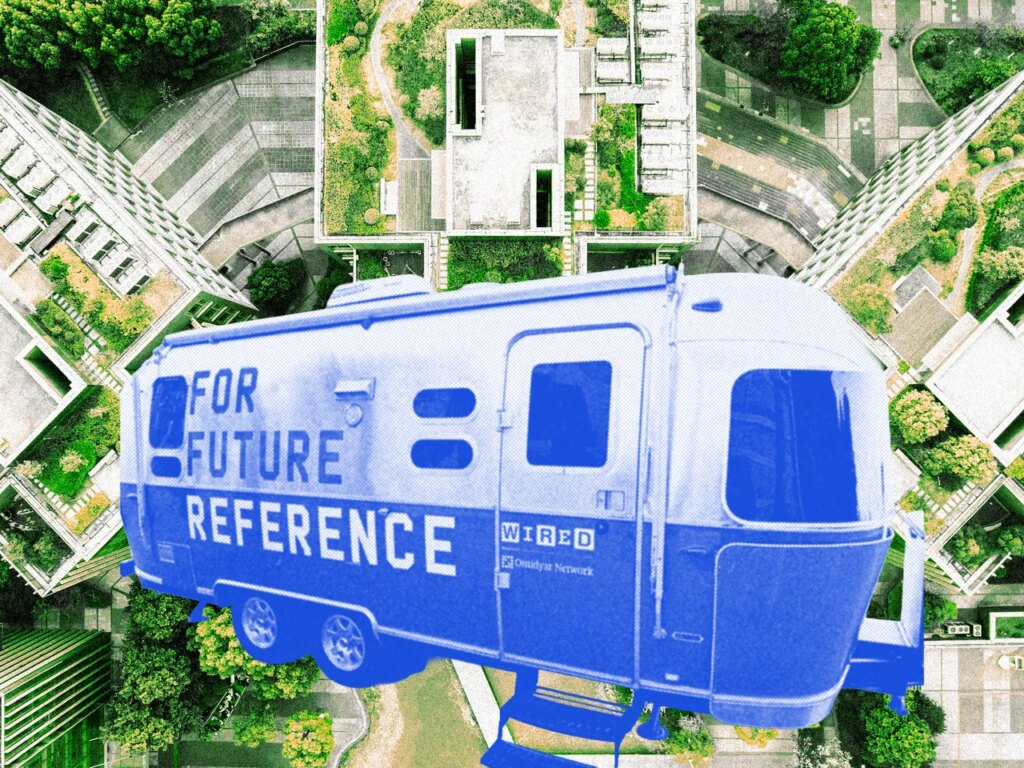
Here at WIRED, we’re obsessed with what comes next. Our pursuit of the future most often takes the form of vigorously reported stories, in-depth videos, and interviews with the people helping define it. That’s also why we recently embraced a new tagline: For Future Reference. We’re focused on stories that don’t just explain what’s ahead, but help shape it.
In that spirit, we recently interviewed a range of luminaries from the various worlds WIRED touches—and who participated in our recent Big Interview event in San Francisco—as well as students who have spent their whole lives inundated with technologies that seem increasingly likely to disrupt their lives and livelihoods. The main focus was unsurprisingly on artificial intelligence, but it extended to other areas of culture, tech, and politics. Think of it as a benchmark of how people think about the future today—and maybe even a rough map of where we’re going.
AI Everywhere, All the Time
What’s clear is that AI is already every bit as integrated into people’s lives as search has been since the Alta Vista days. Like search, the use cases tend toward the practical or mundane. “I use a lot of LLMs to answer any questions I have throughout the day,” says Angel Tramontin, a student at UC Berkeley’s Haas School of Business.
Several of our respondents noted that they’d used AI within the last few hours, even in the last few minutes. Lately, Anthropic cofounder and president Daniela Amodei has been using her company’s chatbot to assist with childcare. “Claude actually helped me and my husband potty-train our older son,” she says. “And I’ve recently used Claude to do the equivalent of panic-Googling symptoms for my daughter.”
She’s not the only one. Wicked director Jon M. Chu turned to LLMs “just to get some advice on my children’s health, which is maybe not the best,” he says. “But it’s a good starting reference point.”
AI companies themselves see health as a potential growth area. OpenAI announced ChatGPT Health earlier this month, disclosing that “hundreds of millions of people” use the chatbot to answer health and wellness questions each week. (ChatGPT Health introduces additional privacy measures, given the sensitivity of the queries.) Anthropic’s Claude for Healthcare targets hospitals and other health care systems as customers.
Not everyone we interviewed took such an immersive approach. “I try not to use it at all,” says UC Berkeley undergraduate student Sienna Villalobos. “When it comes down to doing your own work, it’s very easy to have an opinion. AI shouldn’t be able to give you an opinion. I think you should be able to make that for yourself.”
That view may be increasingly in the minority. Nearly two-thirds of US teens use chatbots, according to a recent Pew Research study. About 3 in 10 report using it daily. (Given how intertwined Google Gemini is with search these days, many more may use AI without even realizing it or intending to.)
Ready to Launch?
The pace of AI development and deployment is relentless, despite concerns about its potential impacts on mental health, the environment, and society at large. In this wide-open regulatory environment, companies are largely left to self-police. So what questions should AI companies ask themselves ahead of every launch, absent any guardrails from lawmakers?
“‘What might go wrong?’ is a really good and important question that I wish more companies would ask,” says Mike Masnick, founder of the tech and policy news site Techdirt.
That focus on consequences was a common theme across almost all of our respondents—including Anthropic’s Amodei. Prior to launching a new AI agent, she says, companies need to ask themselves, “How confident are we that we’ve done enough safety testing on this model?” Similar to car manufacturers doing crash tests, chatbot makers need to make sure that what they’re producing is as reliable as possible. “We’re actually putting this out into the world; it’s something people are going to rely on every day,” she says. “Is this something that I would be comfortable giving to my own child to use?”
Cloudflare CEO Matthew Prince emphasized AI companies should work to establish trust before launching a new product. A recent YouGov survey found that while 35 percent of US adults say they use AI daily, only 5 percent “trust AI a lot,” and 41 percent are distrustful. An Ipsos poll showed that trust in AI companies to protect personal data actually fell globally from 2023 to 2024. “I think a lot of them put financial gain over morality, and that’s one of the biggest dangers.” says Villalobos.
A series of high-profile lawsuits over alleged harms caused by AI has further strained the public’s view of some chatbot providers in particular. Which again gets back to the question of consequences.
“Who does it hurt, and who does it harm?” says Michele Jawando, president of the nonprofit Omidyar Network, which partnered with WIRED on this project. “If you don’t know the answer, you don’t have enough people in the room.”
Risk and Reward
As befits a technology that’s rapidly evolving and multifaceted, our interviewees didn’t settle on one frame through which to view AI.
Take Cloudflare’s Prince, whose company has done more than perhaps any other to keep AI companies accountable for their rampant scraping of websites for training data. Despite that confrontational relationship, he remains optimistic about the technology as a whole. “I’m pretty optimistic about AI,” Prince says. “I think it’s actually going to make humanity better, not worse.”
Several Berkeley students cited job security and data privacy as long-term concerns as AI continues to take hold. “A lot of people are really stressed on campus about whether or not the field they’re going into is going to still be a field,” says student Abigail Kaufman. Jeremy Allaire, CEO of digital financial company Circle, agrees: “The change in the nature of labor and how that can impact people and the economy … There’s a lot of major questions about that and major risks around that, and no one really seems to have good answers.”
Recent research from Stanford University economists has found that employment opportunities for young people are already in decline, and multiple tech giants have cited AI as a rationale for restructuring their workforces.
The open questions about AI extend to health care—despite how willingly some respondents have embraced AI in that context. “There’s concerns about patient care,” says physician Eric Topol, author of Super Agers. “We have lots of errors that are done by physicians, of course, and in medicine, but we also don’t want to have new ones, or make that any worse by AI.”
Still, concerns about future impacts haven’t stymied present-tense usefulness. “I am working on a presentation to teach people how to use AI in my country, Peru,” says Gonzalo Vasquez Negra, who is pursuing his MBA at Berkeley. “The last time I used AI was for writing poetry,” says Berkeley student Gilliane Balingit. “I have a hard time with editing my writing, so I used AI to just help me enhance my thoughts and my feelings.”
The post Where Tech Leaders and Students Really Think AI Is Going appeared first on Wired.