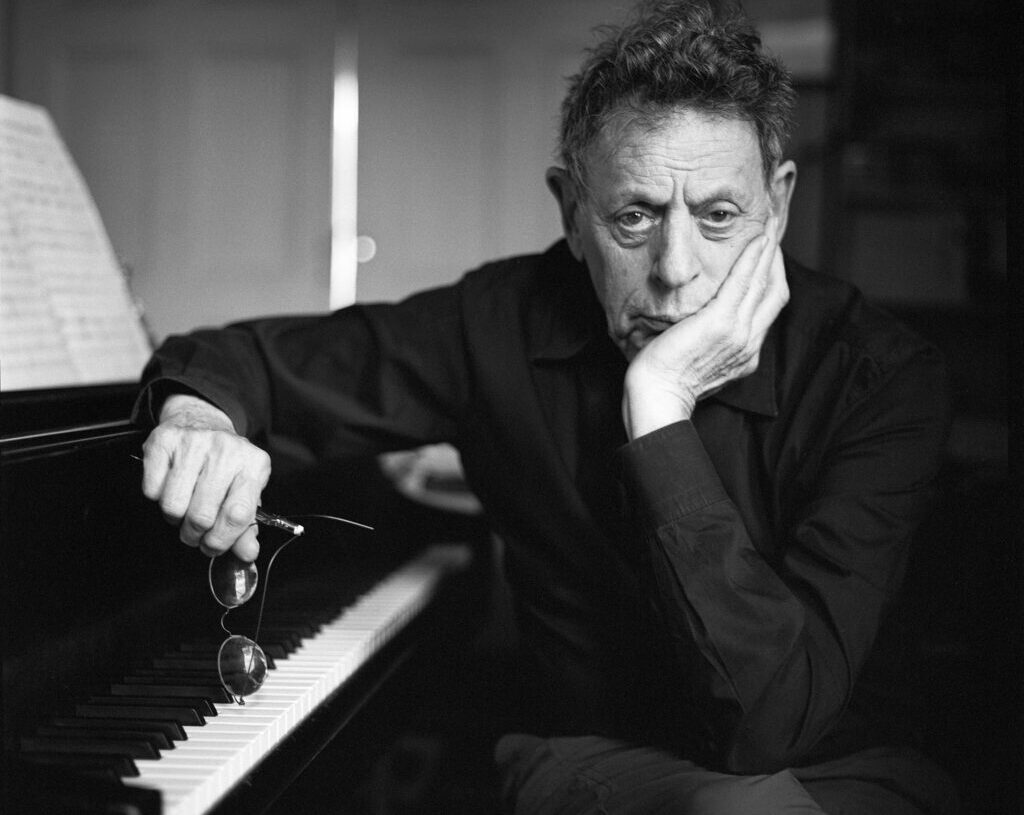
Composer Philip Glass has joined the list of artists, musicians and performers pulling back from previously scheduled engagements at the Kennedy Center, withdrawing his anticipated Symphony No. 15: “Lincoln” from the National Symphony Orchestra, which was to perform the world premiere this coming June.
“After thoughtful consideration, I have decided to withdraw my Symphony No. 15 ‘Lincoln’ from the John F. Kennedy Center for the Performing Arts,” Glass wrote in a statement provided to The Washington Post. “Symphony No. 15 is a portrait of Abraham Lincoln, and the values of the Kennedy Center today are in direct conflict with the message of the Symphony. Therefore, I feel an obligation to withdraw this Symphony premiere from the Kennedy Center under its current leadership.”
Glass, who will turn 89 at the end of this month, is a celebrated and influential American composer, who was awarded the Kennedy Center Honors in 2018. Though often credited as a pioneer of 20th-century minimalism, Glass’s music ranges from intimate piano études and chamber works to sprawling symphonies and ambitious, experimental operas such as “Einstein on the Beach,” “Satyagraha” and “Akhnaten,” about historical figures.
Symphony No. 15: “Lincoln” was co-commissioned by the Kennedy Center and the NSO, and has already been subject to several delays: It was originally scheduled to premiere in March 2022 and was later postponed to October 2022. This season, the piece was restored to the NSO’s calendar as a centerpiece of the Kennedy Center’s ongoing “250 Years of Us” programming.
Its withdrawal comes amid a wave of cancellations by artists and performers, prompted by the addition of President Donald Trump’s name to the center (as well as to the building’s facade), or attributed to scheduling conflicts or financial strains. It also lands against a backdrop of reputational crisis at the center, a stretch of politically charged changes (like Trump himself hosting the Kennedy Center Honors) that has been met with a sharp decline in ticket sales and an apparent audience boycott over the politicization of the nonpartisan venue.
Glass’s letter arrives 188 years to the day after Abraham Lincoln delivered his 1838 Lyceum Address, from which Glass adapts two movements of the symphony’s libretto — along with Lincoln’s Autobiographical Sketch of 1859, his Farewell Address of 1861 and assorted other writings and correspondence. (Baritone Zachary James was slated to sing the premiere performance in June, on a program led by conductor Karen Kamensek.)
“I think there is no American subject matter more interesting than Abraham Lincoln,” Glass told me in 2022 about the Symphony No. 15, then still in progress. “I read him almost like I would a writer, not a politician or someone in government. There’s a beautiful music to his writing.”
The withdrawal mars a long history between Glass and the center. And while it’s highly unusual for a composer to withdraw a work from a commissioning body as an act of protest, the composer’s work has responded to contemporary politics in the past.
In 2015, Washington National Opera, which this month parted ways with the Kennedy Center, gave the world premiere of an expanded version of Glass’s opera “Appomattox,” which draws a musical through line from the Civil War to the civil rights movement through the voices of Lincoln, the Rev. Martin Luther King Jr., Lyndon B. Johnson and others.
Glass and playwright Christopher Hampton revised the opera (which premiered in 2007) in response to a 2013 decision by the Supreme Court that invalidated key elements of the Voting Rights Act of 1965.
“It’s almost like a photojournalist approach to opera,” Glass told The Post at the time, “where the material is changing while you’re writing it.”
The post Philip Glass pulls world premiere from Kennedy Center appeared first on Washington Post.