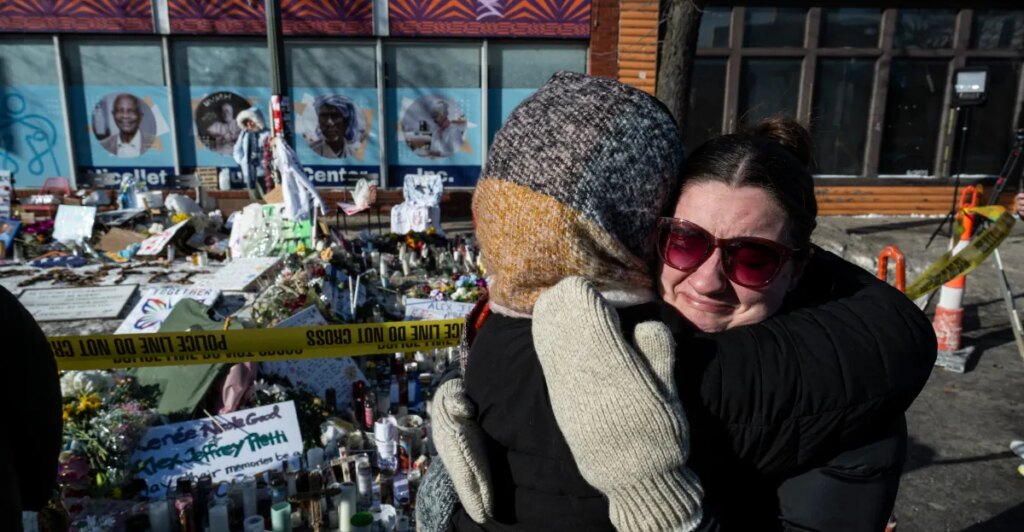
In recent weeks, Minnesota has borne the brunt of the Trump administration’s aggressive immigration strategy, with federal officials detaining thousands of people, from preschoolers to, occasionally, US citizens. Minnesotans on the ground have responded in turn by establishing remarkable models of community resistance, including vast networks of volunteers monitoring ICE activity, as well as handing out free diapers, food, and other essentials to families in need.
But over the weekend, tensions spiked after federal border patrol agents shot and killed yet another civilian, Alex Pretti, which came 17 days after an agent from Immigration and Customs Enforcement (ICE) killed Renee Nicole Good.
Such overt violence against immigrants and protesters — often captured in graphic video — has left many Americans feeling aghast, but also powerlessness over how to respond. Even conservatives have begun taking a much harder stance on ICE’s activities, with nearly one in five Republicans voicing support for abolishing the agency in the wake of Pretti’s killing.
At times like these, perhaps the best way to deal with these feelings is to channel them into helping people who need it, not just in Minneapolis, but in your community too. Fortunately there are countless organizations, religious groups, and mutual aid networks that have organized tirelessly over the past year or more to protect vulnerable populations. And it’s never too late for you to join them, whether through donating to immigrant groups, volunteering your time, or your advocacy for more humane policies.
Here’s how to help.
Where to donate and volunteer in Minnesota
If you want to support immigrants and their supporters in Minneapolis specifically, two local volunteers have created an extensive repository called Stand With Minnesota, filled with nonprofits, mutual aid networks, and crowdfunding links for specific schools, neighborhoods, and families that need support.
You can choose from an immigrant-serving nonprofit that’s over a century old to a GoFundMe offering rent relief in the same neighborhood where Good was killed. If you want someone else to make the decision for you on where to donate, the Immigrant Rapid Response Fund is a pooled philanthropic fund from the Women’s Foundation of Minnesota that can direct your donation to where it’s needed most.
Among the options that Stand With Minnesota offers are funds for purchasing safety equipment or links to buy dash cams for legal observers documenting ICE activities. These resources are important because they help volunteers safely capture the way ICE operates in their neighborhoods, shedding a light on their activities and ultimately offering evidence for accountability if abuse occurs.
If you do live in Minnesota, there are plenty of groups that train volunteer legal observers or need volunteers to help support immigrants who are afraid to leave their homes right now because of ICE activity. Some have stopped going to work or school — or even the supermarket — as usual.
- The nonprofit Monarca offers training to volunteers on constitutional rights and safety practices for locals who want to become legal observers. So does Defend 612, a local grassroots network of decentralized neighborhood watch groups.
- Many food banks, churches, and local community organizations — including the Sanneh Foundation, Twin Cities Food Justice, and Calvary Food Shelf — are looking for volunteers to pack up and deliver groceries to immigrant families.
- There are plenty of other ways to volunteer. My Pitbull Is Family has been helping vulnerable families take care of their pets, including when an owner is detained by ICE. The People’s Laundry has been helping Minnesotans clean their clothes if they can’t venture to the laundromat. And the Interfaith Coalition on Immigration (ICOM) needs help for all kinds of activities, like accompanying immigrants to federal check-ins, delivering emergency assistance, and doing community outreach.
Why legal aid is one of the most effective ways to support immigrants
The vast majority of those detained in Trump’s immigration crackdown never get to speak to a lawyer. But when they do have legal counsel, they are up to 10.5 times more likely to win the case, according to the Vera Institute of Justice.
Here are some other organizations recommended by local activists that focus on providing legal support to immigrant families across the state:
- Immigrant Law Center of Minnesota is actively working to connect immigrants affected by ICE’s crackdown in the state with free legal assistance.
- Mid-Minnesota Legal Aid is a nonprofit law firm providing free legal services — including immigration help — to Minnesotans in need.
- Southeastern Minnesota Interfaith Immigrant Legal Defense provides free legal defense services to immigrants in the state.
If you happen to speak multiple languages, many organizations like the Immigrant Law Center and ICOM need volunteers to help accompany or translate for immigrants navigating the court system, even if you don’t have any legal training. Freedom for Immigrants needs multilingual volunteers to help run its national hotline for people in detention and their families.
Stand with your city
Minnesota may be ground zero of Trump’s immigration crackdown today, but it is far from the only place in the country where families affected by ICE need your support.
Once again, if you have cash to donate, then giving to a local legal aid organization is a great way to make sure that more immigrants see a fair day in court. There are literally hundreds of organizations doing just that in every state of the country.
But if there’s something that we can learn from what’s happening in Minneapolis, it’s that standing with your neighbors really does matter.
For some people — especially US citizens who are far less vulnerable to ICE violence — that might mean connecting with a local organization and training to become a legal observer. (While it is legal to film ICE activities, keep in mind that becoming an observer does have its own risks, with plenty of reports of ICE conducting arrests or becoming physically aggressive.)
But support can also mean volunteering your time with local immigrant-led nonprofits or mutual aid organizations focused on making sure that families get the food, shelter, and support they need to feel safe. It might also be as simple as asking your own friends and neighbors what they need right now — and brushing up on your rights when ICE knocks on your door or enters your neighborhood in the process.
And finally, if you’re an American taxpayer and you’re unhappy with the Trump administration’s immigration enforcement policies, then ICE’s crackdown has been carried out on your dime. So don’t forget to take the two minutes it takes to call your representatives too.
The post How to help the resistance to ICE in Minnesota — and beyond appeared first on Vox.