

AI is remaking creative industries at breakneck speed. And the growing pile of AI tools is turning the creative process into a game of model-hopping as artists, designers, and writers bounce between different platforms.
Founded in Brooklyn, New York, in 2024, FLORA wants to help creatives streamline those processes. On Tuesday, FLORA revealed it had raised $42 million in Series A funding led by Redpoint Ventures. The company has raised $52 million in funding to date.
FLORA combines the latest AI models — such as Google’s Nano Banana and OpenAI’s ChatGPT 5.1 — into a single interface that lets teams collaborate on projects in real time.
The FLORA platform allows those teams to maintain control over their settings and brand assets. It enables them to create repeatable work — such as maintaining a consistent design style across thousands of ad campaign assets — even as the platform switches between the different large language models that work best for each part of the process.
“Our goal for FLORA is to make it feel like a power tool attuned to what you’re trying to do, just like a carpenter with their power tools has adjusted it to be exactly fit for the way that he or she works,” FLORA CEO Weber Wong said in an interview with Business Insider.
While established players like Adobe and Figma are also integrating models such as ChatGPT, Gemini, and Claude into their products, Wong said FLORA is building itself a defensible moat by covering the entire creative process — from coming up with ideas to the distribution of the final product.
“This new product category that we’ve created has an opportunity to be the biggest market ever for a creative tool because, in addition to just making one piece of media at a time, we can help handle the entire workflow,” Wong said.
FLORA charges clients based on usage, letting customers buy recurring credit packs to spend across the various LLMs it uses, without having to switch between multiple subscriptions. Wong said this is different from the traditional creative software business model, which is usually designed around seat-based pricing. (FLORA initially offered a seat-based pricing model, but switched to usage-based this week.)
FLORA’s clients include Levi’s and the design agency Pentagram. Wong said the studio Lionsgate has used FLORA to generate movie concepts using text-to-image and image-to-video generation tools, then stitching those together to create films to test in front of audiences.
“It really beats just looking at a script and trying to be like, I think this is good?” Wong said.
The AI Marketer reports on how artificial intelligence is disrupting advertising, branding, creativity, data, and the CMO’s role. Contact Lara O’Reilly for pitches or questions.
Wong said it plans to invest the fresh funds in its engineering team and in marketing. He forecasts the company will grow to about 75 people this year, up from 25.
FLORA’s main focus will be to improve the product so that creatives never need to leave the platform to achieve “pixel perfection,” as Wong described it. The company is also in the early stages of building agentic features into the platform, Wong said.
“We’re obsessed with making it so that we don’t waste creatives’ time,” Wong said.
Check out the pitch deck FLORA used to secure its $42 million Series A investment, shared exclusively with Business Insider. Some of the slides have been omitted or redacted.
Flora wants to streamline generative AI workflows for the creative industry.

It combines several different large language models into a single interface.
The FLORA team has prior experience at companies such as Menlo Ventures, Adobe, NASA, and Scale AI.

Wong was previously a creative technologist who worked on AI art installation projects. He also previously invested in startups at Menlo Ventures.
FLORA was born out of a frustration that AI tools weren’t well-designed for real-life creative workflows.
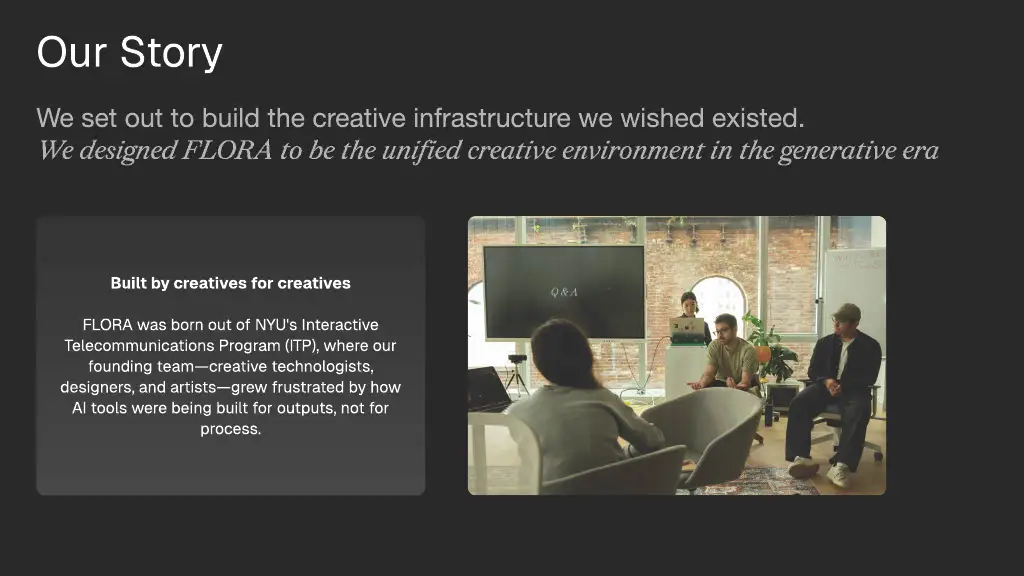
“Silicon Valley does not understand the professional creative industry,” Wong said. “They think AI models are for fun or a novelty.”
FLORA integrates leading AI models from Gemini to Pika.
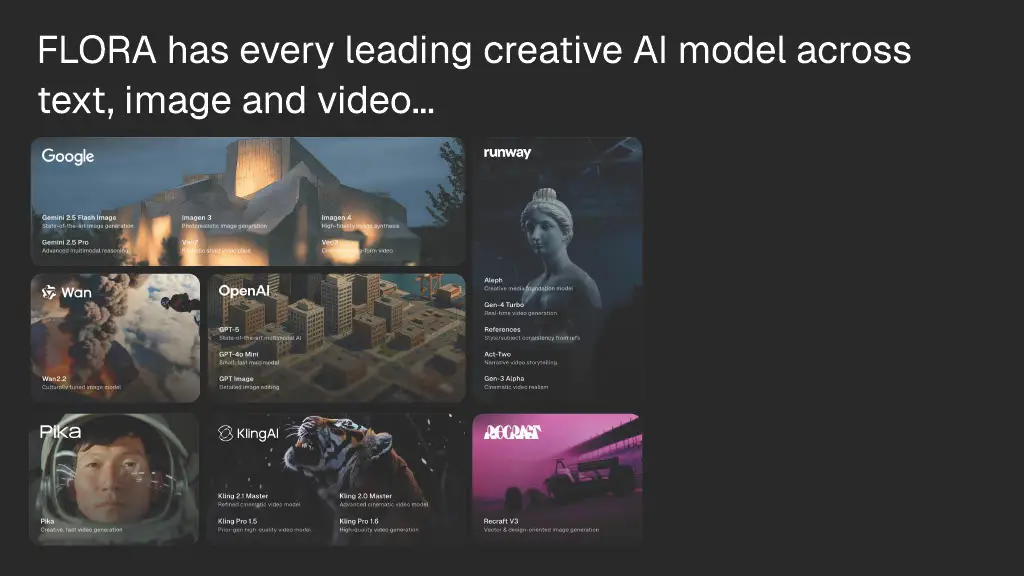
FLORA checks for updates to the latest models two to three times a week, Wong said.
The product is described as a singular ‘intuitive interface.’
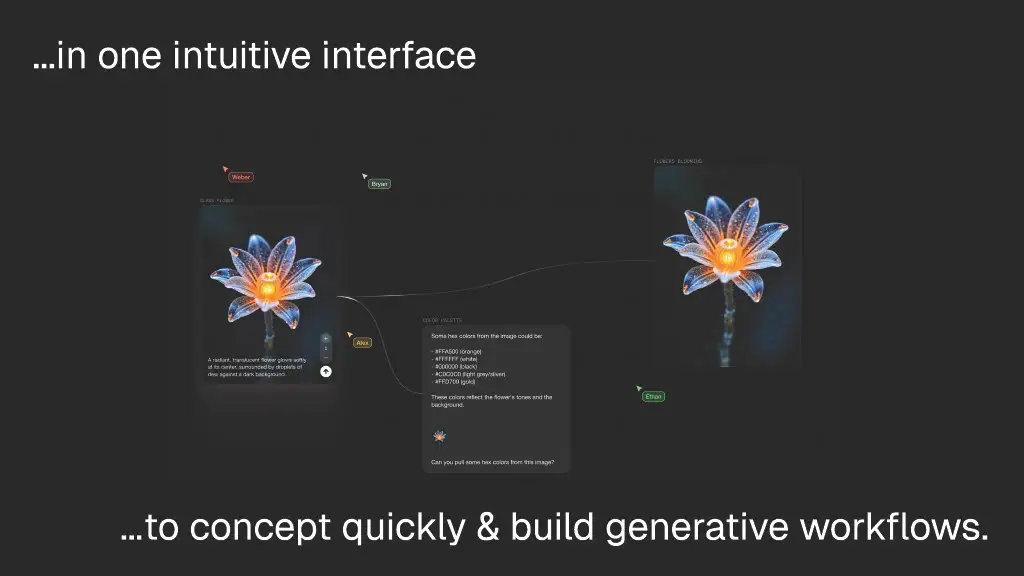
It’s designed to let teams quickly conceptualize and build workflows using generative AI.
Teams can collaborate on projects in real time.
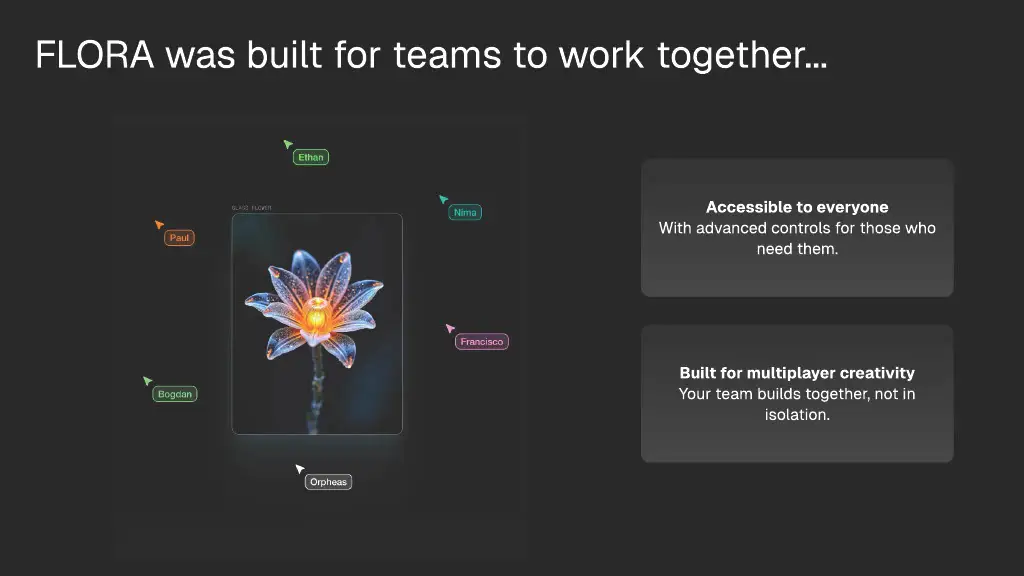
Certain team members can also access advanced controls if needed.
Wong said a usage-based pricing model was preferable because “you have one workspace where you can invite as many team members as you want and not pay for seats, and you can just buy recurring credit packs for the entire workspace that give you additional credits each month that roll over and don’t expire.”
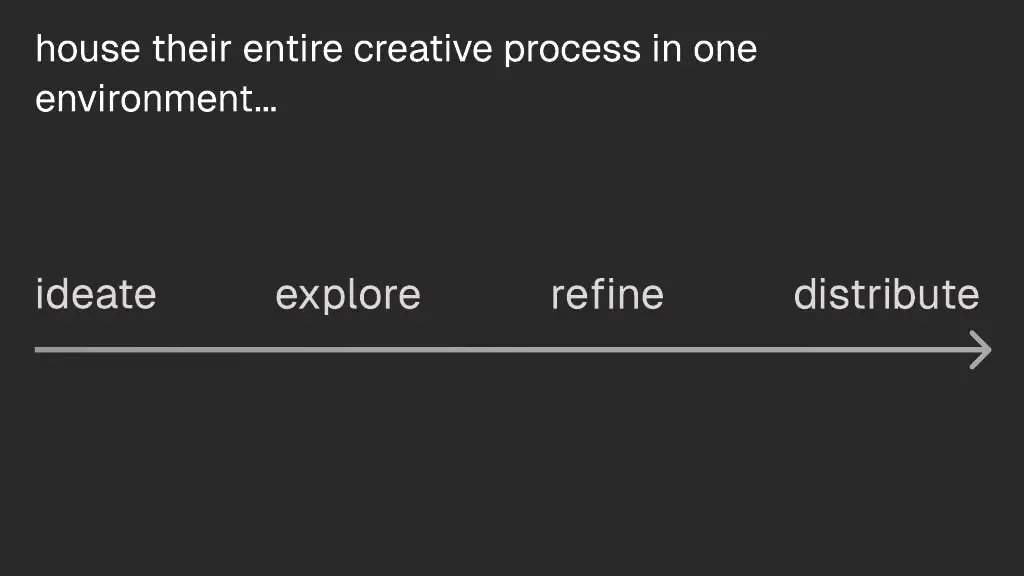
It’s built for the entire creative process, from idea generation to distribution.
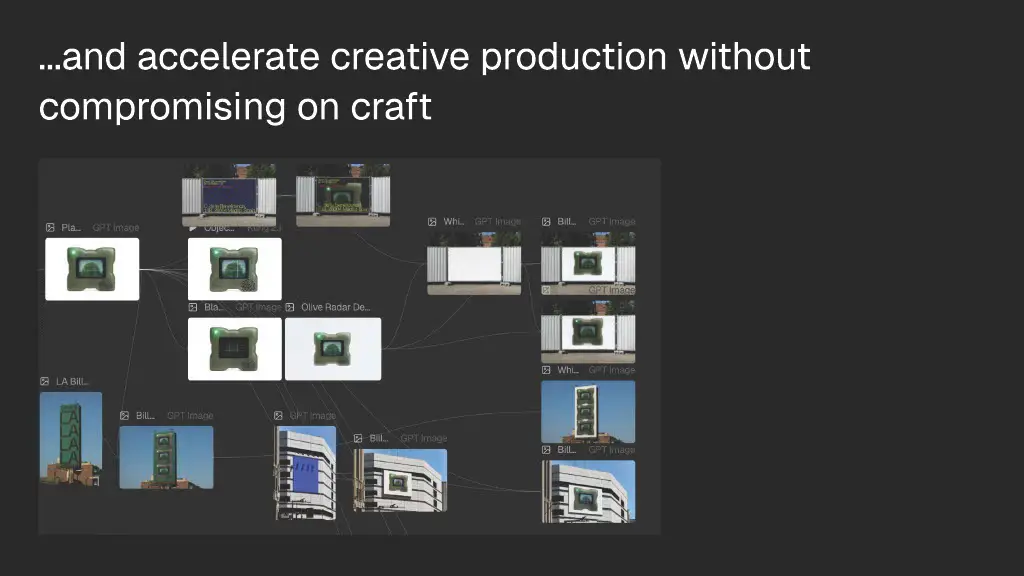
FLORA says it accelerates creative production without compromising on ‘craft.’
Its enterprise clients include Lionsgate, Levi’s, and Red Antler.
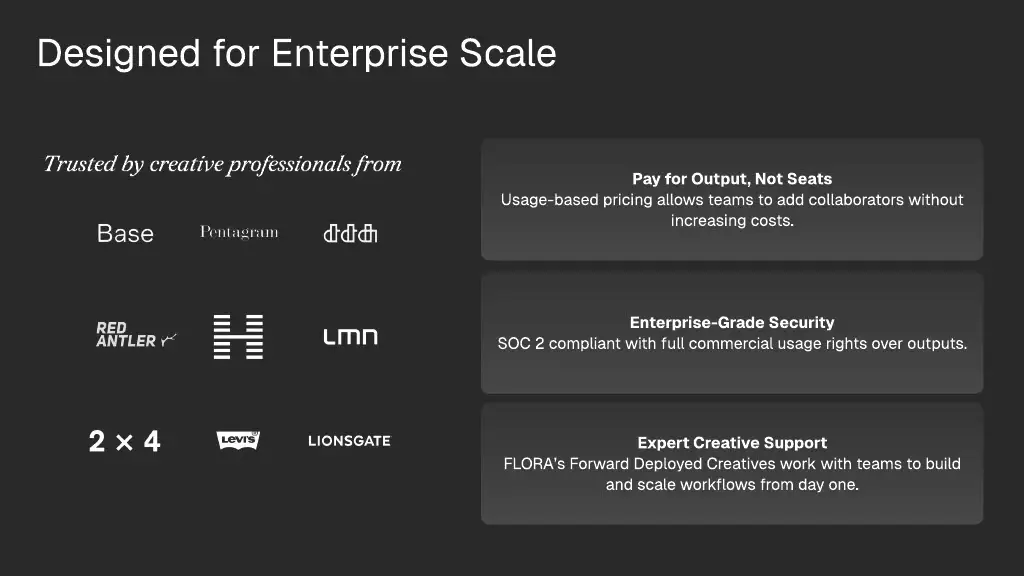
FLORA has a usage-based pricing model. It also has an in-house team that can provide expert support, including training on the features of new models as they are released.
FLORA’s CEO said the company is working on a suite of agentic AI features.
The deck ends with a thank-you slide.

Read the original article on Business Insider
The post FLORA raised $42 million for its creative platform that pulls together top AI tools. Read its pitch deck. appeared first on Business Insider.