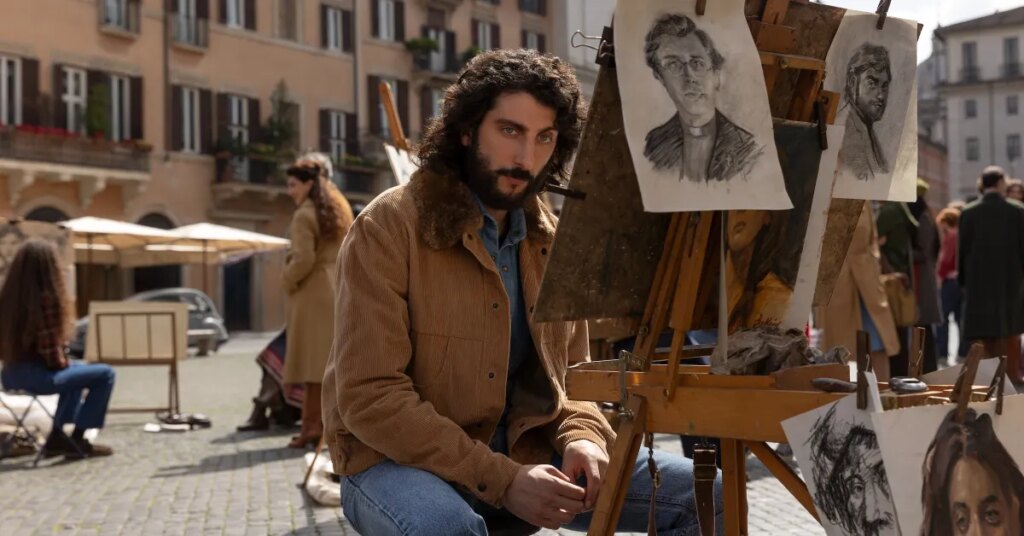
At the start of The Big Fake, a Netflix dramatization of one criminal’s involvement in the most tumultuous events in post-war Italy, Toni Chichiarelli (Pietro Castellitto) is a talented painter living hand-to-mouth as a portrait artist on the streets of Rome. It’s the 1970s, deep in Italy’s “Years of Lead,” an era of turmoil marked by political terrorism by neo-fascists and far-left militants like the “Red Brigades,” not to mention interference from the Italian state and profiteering from organized crime groups. As Toni tells us via voiceover, in a time when Rome was home to all sorts of people—bishops, artists, criminals, communists, and fascists—all he cared about was being the best out of them all.
[time-brightcove not-tgx=”true”]
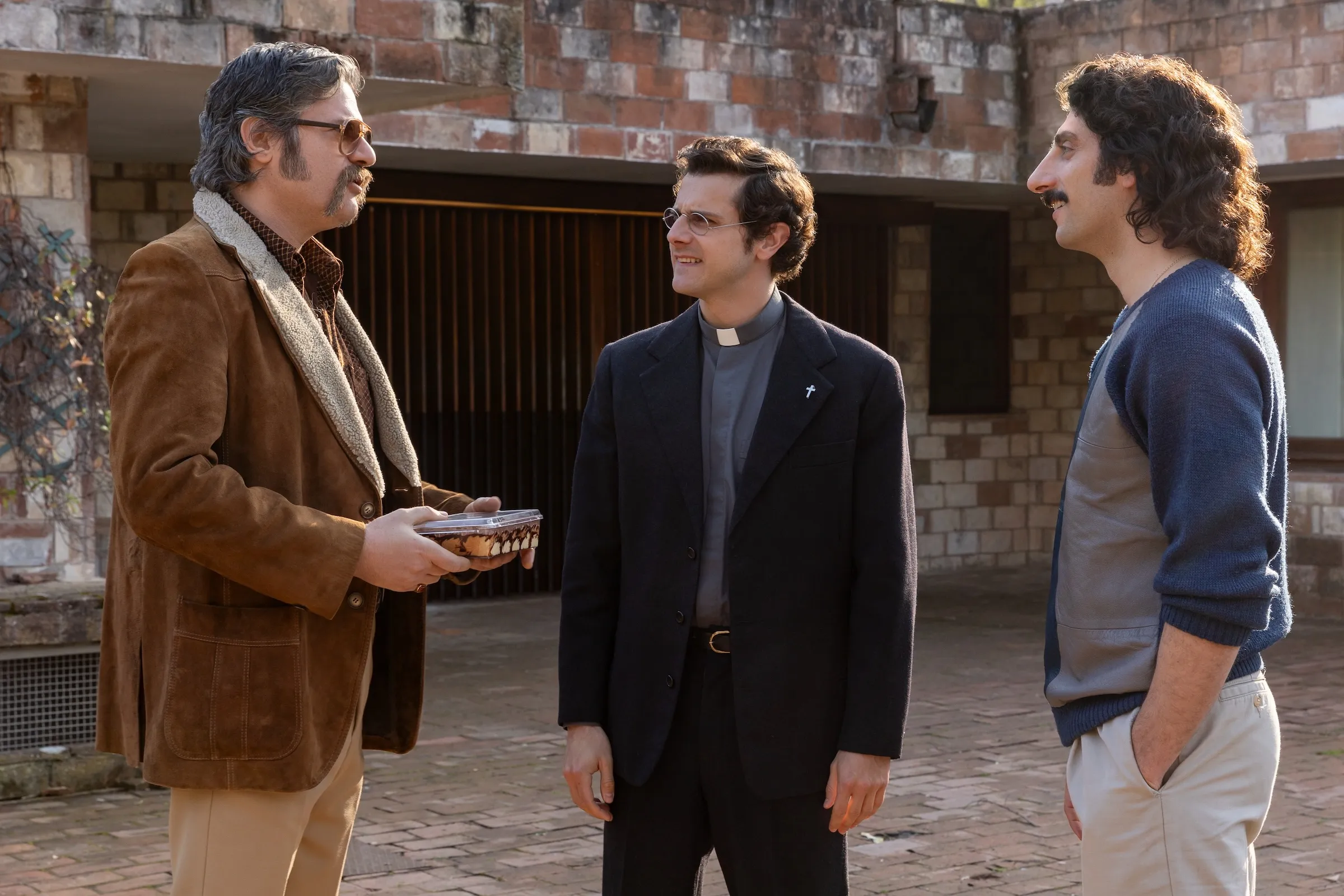
Toni’s blasé egotism is mostly consistent across a film filled with conspiracy, backstabbing, and political fallout. Lacking the robust convictions of his two childhood friends who come with him to Rome from their home in the Lake Duchessa area—the priest Vittorio (Andrea Arcangeli) and the future Red Brigade member Fabione (Pierluigi Gigante). Toni’s amoral ambition leads to a life of forgery, producing perfect replicas of paintings for his gallery owner girlfriend Donata (Giulia Michelini) and other lucrative jobs for the Banda della Magliana, a criminal organization stretching its wings in Rome, with the charismatic Balbo (Edoardo Pesce) taking the forger under his wing.
Soon, history comes a-knocking; in 1978, the Red Brigades kidnap former Prime Minister Aldo Moro, holding him captive and demanding the release of political prisoners as ransom. After a brief stint as an aloof, romantic crook, Toni has a head-on collision with the Years of Lead when a state policeman referred to only as “The Tailor” (Claudio Santamaria) enlists Toni’s meticulous forgery skills for “the common good.” He must forge a communiqué from the Red Brigade announcing that Aldo Moro has killed himself in their custody, even though he hasn’t. It’s a commission from the big leagues that Toni’s ego can’t resist, but it leads to a rude awakening about the cost of his self-serving ethos in a dangerous political moment.
Toni Chichiarelli, Italy’s forgotten master forger
This act of forgery, along with a major robbery that Toni commits to spit in the eye of his state puppet-masters at the end of the film, are the two big reasons why Antonio Chichiarelli has a place in the Italian history books. The heavily dramatized story of The Big Fake (titled Il Falsario in Italian) adds plenty of color to the scant information available about the real man who inspired Toni the forger. Sandro Petraglia’s script characterizes him as a dashing rogue out of his depth, an artistic genius in an illicit trade, a disco-loving womanizer, all of which Castellitto performs with confidence. Based on an obscure non-fiction book by Nicola Biondo and Massimo Veneziani, The Big Fake indulges in a fair share of both noir and Scorsesean motifs—shadowy hideouts, mafia violence, disco music, macho bromance and soccer banter—which director Stefano Lodovichi blends together to paint a portrait of Italian tradition and modernity clashing at a turning point for the country. But here, the stylized storytelling, which includes a tragic, melodramatic journey of three friends divided by principles, serves the film’s portrait of history.
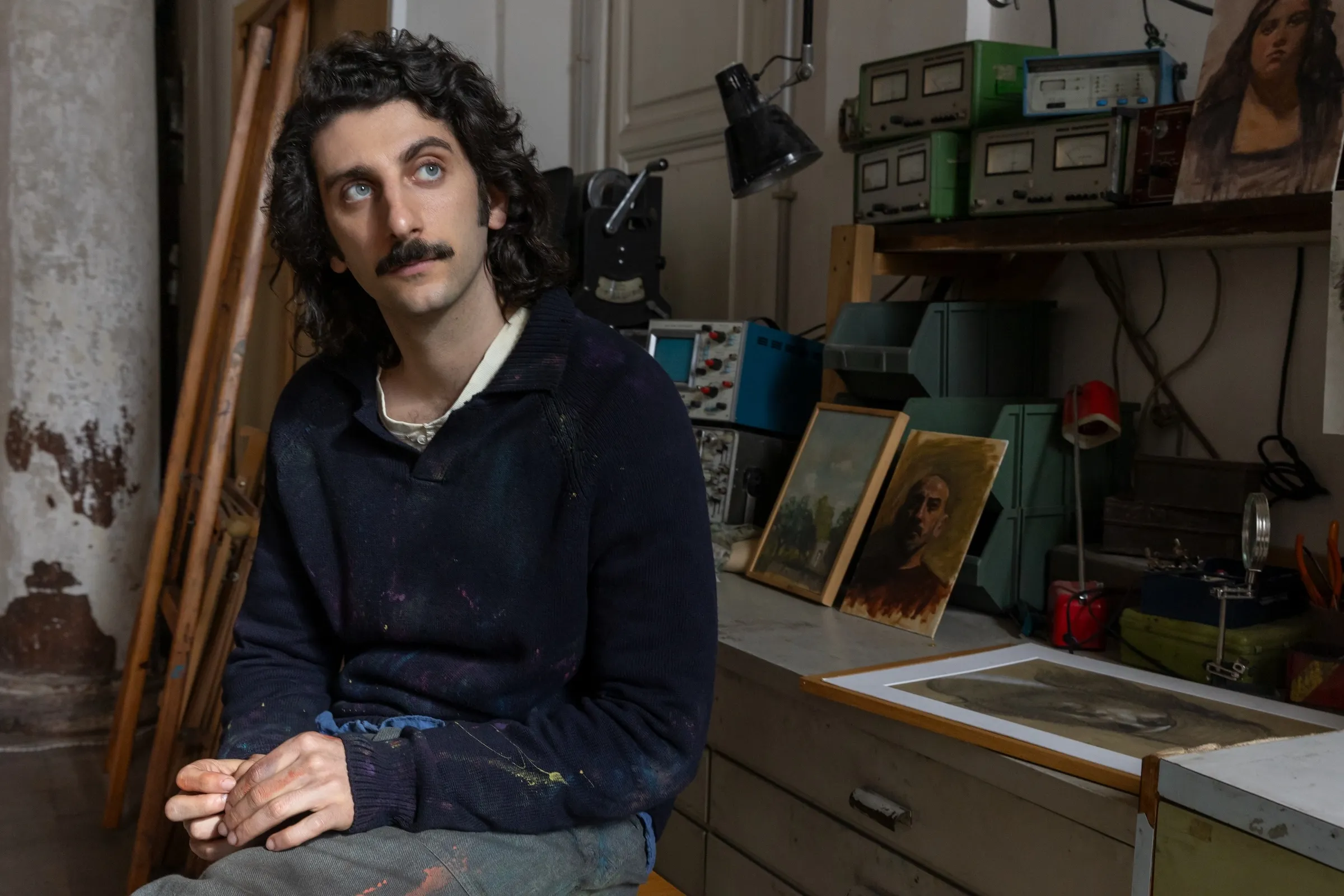
Even though he’s an artist, Toni is well suited for organized crime—he craves wealth and fame, he wants to prove his own greatness above loyalty to any political ideals, and he’ll side with anyone who helps him see himself as legitimate and talented. Toni’s stint as a master forger—including a self-portrait by Gian Lorenzo Bernini and Jacques-Louis David’s epic “Napoleon Crossing the Alps” —puts him in touch with plenty disreputable folk, but none of the mafia or state intelligence give him too much anxiety, so consumed is he by his own independent greatness. But Toni’s ambition makes him isolated, as he lacks the organized solidarity of his left-wing brother and the faceless authority of the Tailor’s state apparatus. After the kidnapping of Aldo Moro turns suddenly lethal, Toni realizes how his talents have been appropriated to further political agendas, and his isolation makes him a pretty easy target.
The imprisonment and death of Aldo Moro
There is a lot of ambiguity and speculation around the abduction and death of Aldo Moro, which lets The Big Fake turn conspiracy into suspenseful drama that keeps Toni close to the epicenter of the kidnapping. Moro belonged to the Christian Democracy party and was an influential figure in Italy’s centre-left movement, modernizing the country’s flagging economy with reforms across his impressive five terms. During Moro’s imprisonment, Chichiarelli forged a statement from the Red Brigades saying that the former Prime Minister had committed suicide, and his body was dumped in the waters of Lake Duchessa—a foggy, picturesque region that The Big Fake suggests was the forger’s childhood home.
On the surface, the forged communiqué—dated April 18, 1978—seems like a confusing and counterintuitive move, but it was intended to force the Red Brigade to announce their prisoner was alive and healthy, putting them on the back foot while also testing the waters to see who the Italian public would blame for Moro’s death. The communiqué’s mention of suicide was read as a mocking, perhaps threatening reference to the group suicide of the Baader—Meinhof Group leaders the previous year, the culmination of the “German Autumn”—as reported by, among others, TIME Magazine while the incident was still ongoing in 1978.
Moro was a personal friend of the sitting pope, Paul VI; The Big Fake includes a scene of an attempted ransom exchange between Toni and a representative of the Vatican who tells him, ultimately, the Holy Father has decided against paying Moro’s ransom. Although he doesn’t know it, the Pope has just saved Toni’s skin—the Tailor had a sniper trained on Toni, ready to shoot as soon as he was given the ransom money.
When Toni learns of Moro’s assassination, it is not because he’s an important agent close to the action. He hears the unconfirmed radio report in his studio and follows the crowds of Romans to the reported crime scene where the former statesman’s body sits lifeless in the back of a stolen car. Even though he was instrumental to the escalation of the historic case, in the end he is reduced to an ordinary bystander, craning his neck to catch a sight of a gruesome and senseless crime.
The heist that was Toni’s real masterpiece
The Big Fake skips a few years to get us to the other famous crime associated with Toni Chichiarelli, the 1984 Brink’s Securmark robbery. One night in March, 35 billion lira (valued at the time at around $21 million) was stolen from the security company’s vaults in Rome. Items left at the scene of the crime pointed towards Red Brigade terrorists being responsible, including a photograph of the kidnapped Aldo Moro, but as The Big Fake book and film suggest, this was just another of Toni’s masterful cons to taunt the authorities who used his artistry to bring down the Red Brigade in the Moro affair. In the opinion of journalist Roberto Bartali, “Chichiarelli made that robbery as a sort of “return” for his help during the kidnapping,” but here, The Big Fake makes the stakes even more personal.
After Moro’s death, Fabione is in hiding, and his ever-loyal friend Toni forges passport documents to aid his escape, in exchange for Moro’s complete, uncensored memoirs in the Red Brigade’s possession. After the exchange, Fabione is discovered by police and killed, just as Toni grasps the political gravity of the memoirs—so he keeps them hidden in Vittorio’s workshop as leverage in case the Tailor decides he is expendable.
With the robbery, Toni tries to simultaneously reclaim his independence, fund an escape from Rome with Donata, and give the Tailor the middle finger—confident that knowing where the memoirs are hidden will stop any harm coming to him. But although the robbery is a roaring success, the Tailor makes a fateful visit to Vittorio, who has been gradually slipping into corruption by misappropriating church funds. (It looks like neither Vittorio nor Fabione’s principles did them any favors, in the end.)
The priest gives up the location of the memoirs, and Toni retaliates by letting Vittorio be assassinated in his place. The real Chichiarelli was shot six times under mysterious circumstances a few months after his role in the Securmark robbery, similar enough to the climactic murder in The Big Fake for director Lodovichi to playfully suggest, like a good noir should, that facts can easily be fiction in disguise. Even if Toni did get away with one last con, a bleak mood lingers over the credits; even if he wasn’t killed, Toni has elected to live a new life as hollow and deceptive as one of his forgeries. The Big Fake spins history into noir-tinged spectacle, and when Toni encounters the darkness and violence of his country’s history, he may find it more appealing to be an obscure, anonymous footnote than for his painful failures and complicity to be remembered.
The post The Real Italian Crime Story Behind The Big Fake appeared first on TIME.