Photographs by Jack Califano
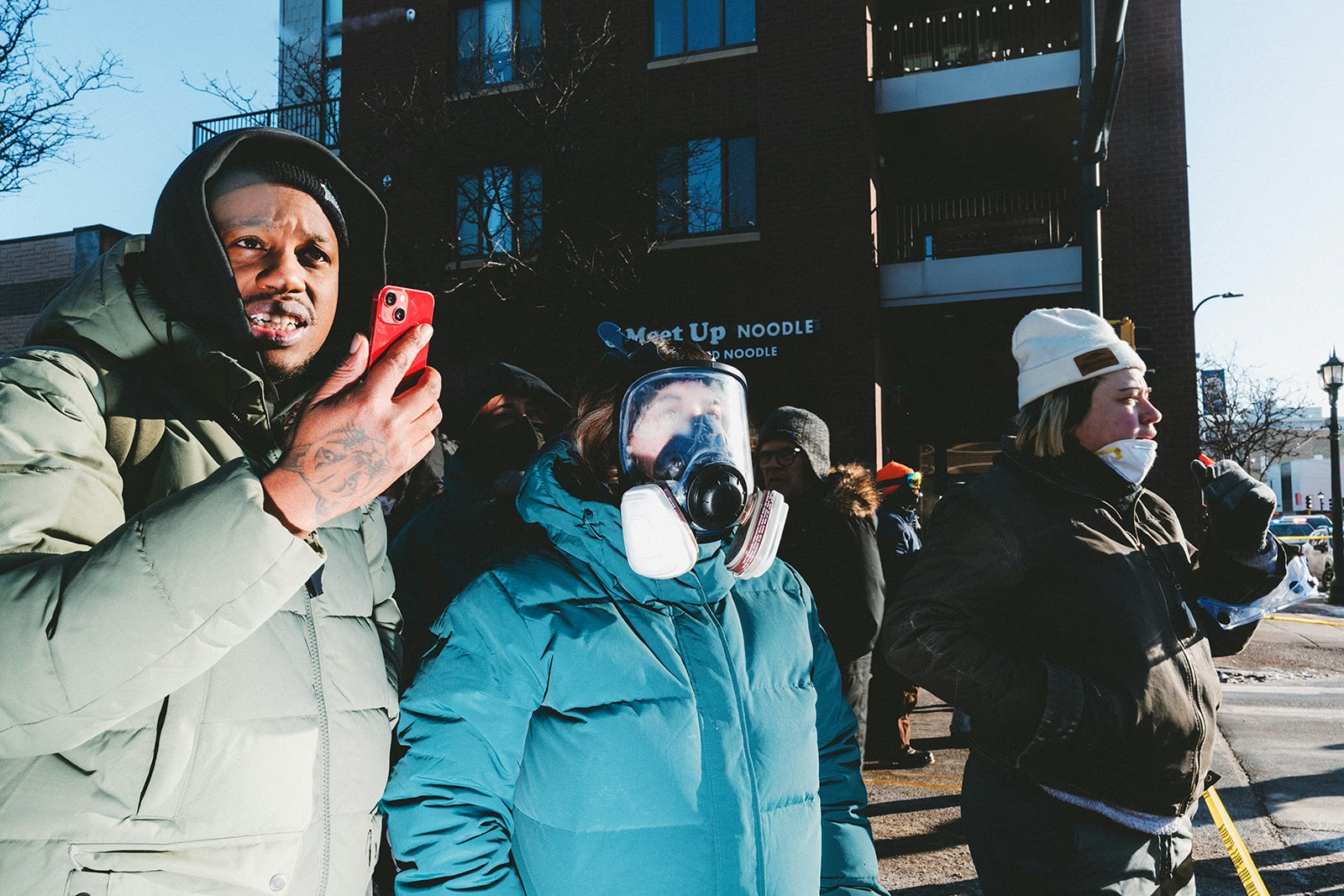
The six-car ICE convoy came to a stop and instantly dozens of people swarmed it, cellphones in hand, while others ran out of nearby houses—I saw a woman in gym shorts in the 20-degree weather—and began surrounding the masked and heavily armed agents who had spilled out of their black SUVs. The fury in the crowd felt almost like a physical force, as real as the cacophony of whistles and honking cars and angry chants: “ICE out! Fuck you! Go home!”
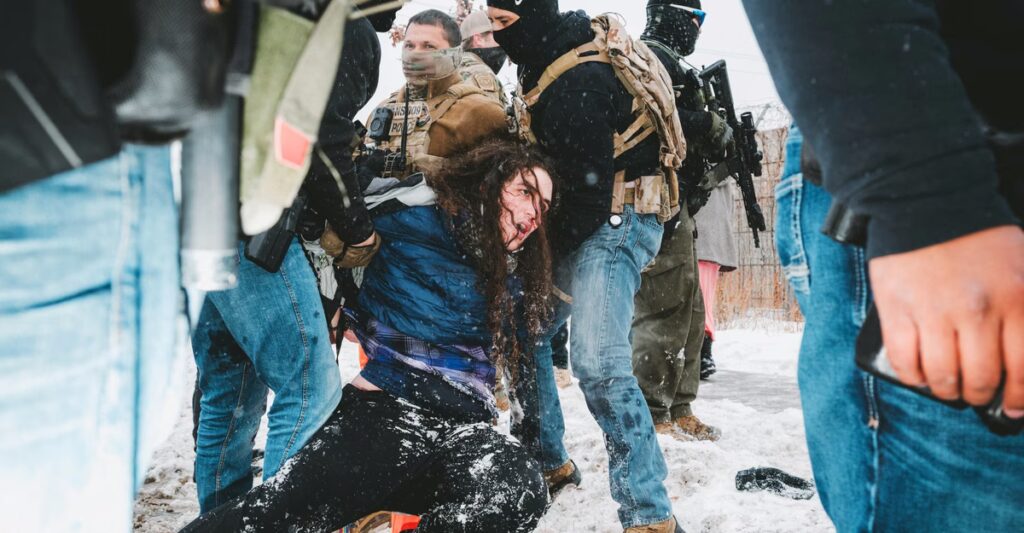
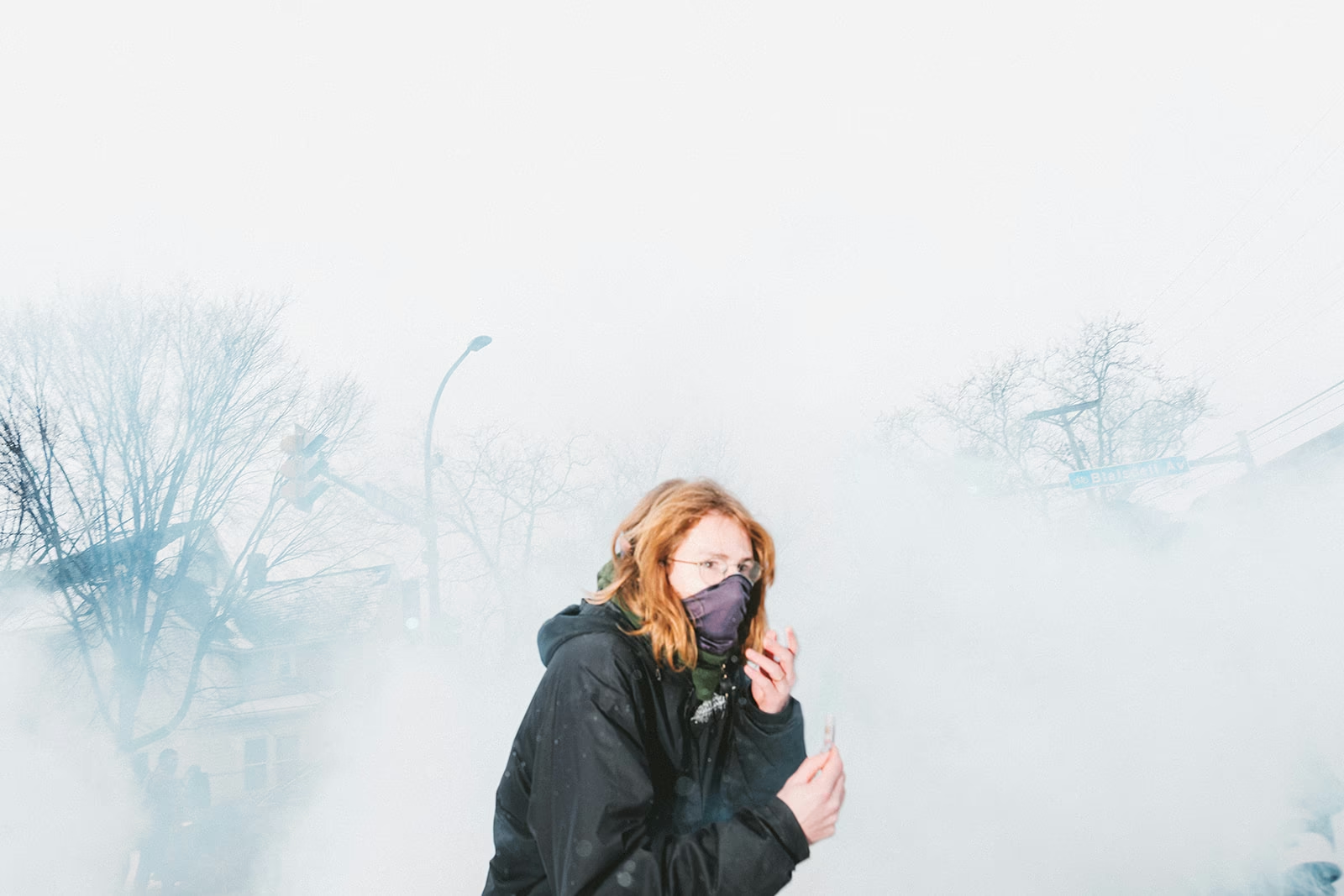
The officers threw a protester to the slushy asphalt and piled on top of him, then cuffed him and dragged him away. The screaming only got louder. With their escape route blocked by protesters and their cars, the agents tossed out tear-gas canisters, the white clouds billowing up into the winter air. An injured man stumbled past me and vomited repeatedly into the snow.
From where I stood, a few yards back from the scrum last Wednesday afternoon, it looked, at best, to be a savage caricature of our national divide: on one side, militarized men demanded respect at the butt of a gun; on the other, angry protesters screamed for justice.
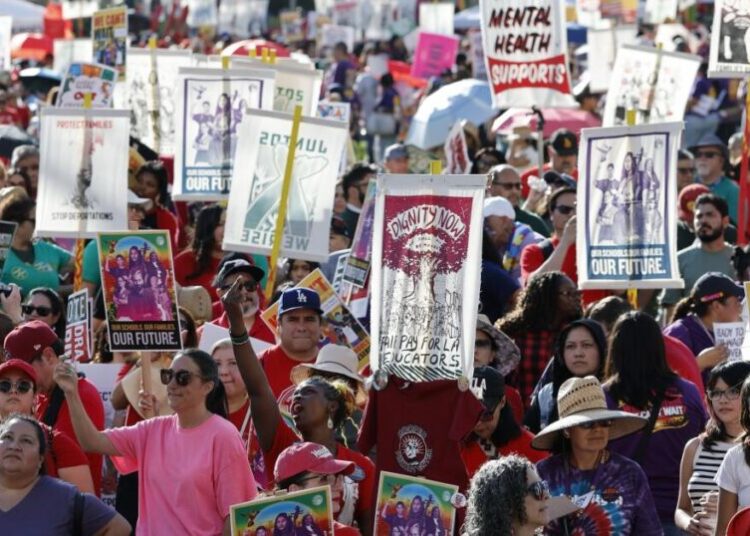
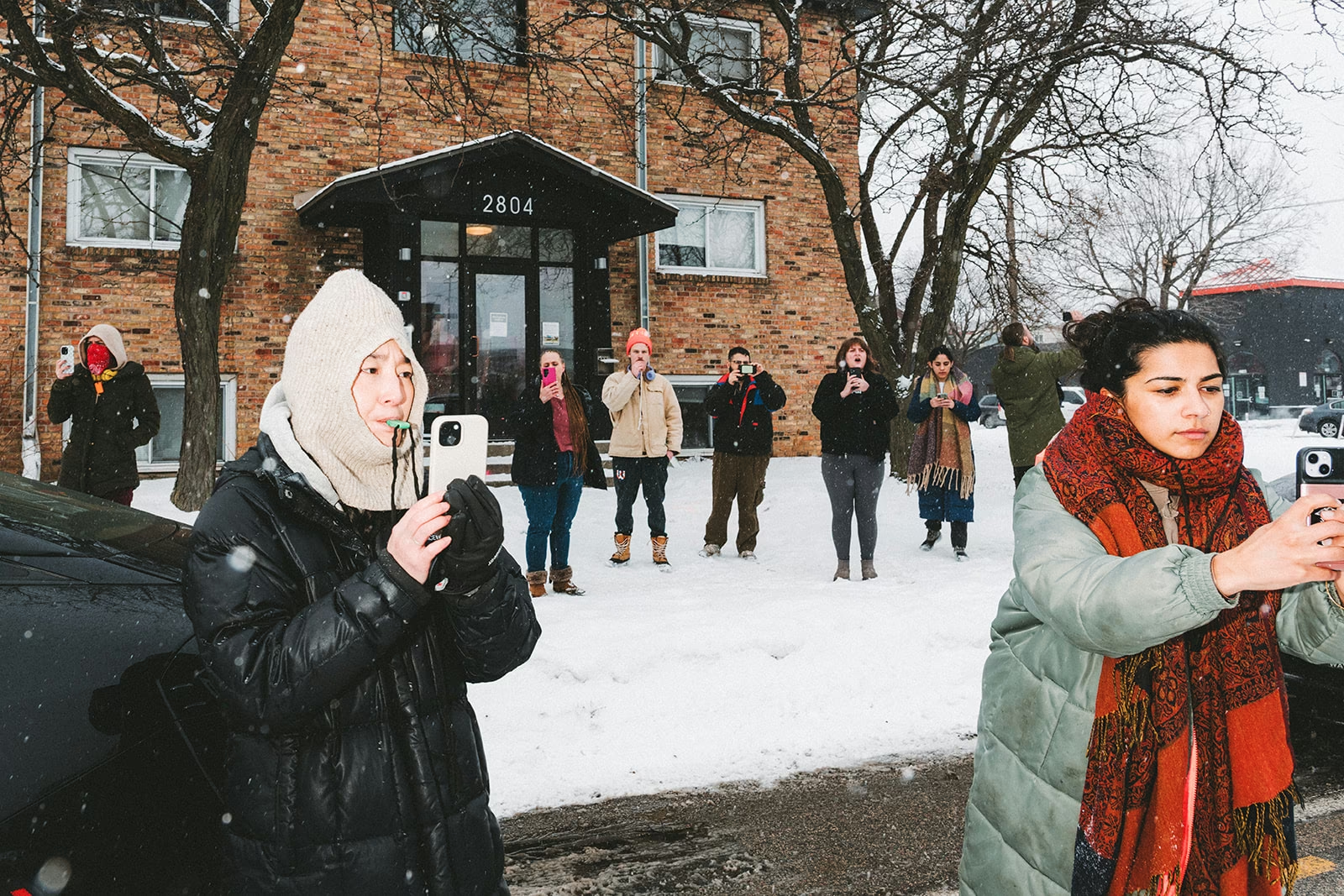
But behind the violence in Minneapolis—captured in so many chilling photographs in recent weeks—is a different reality: a meticulous urban choreography of civic protest. You could see traces of it in the identical whistles the protesters used, in their chants, in their tactics, in the way they followed ICE agents but never actually blocked them from detaining people. Thousands of Minnesotans have been trained over the past year as legal observers and have taken part in lengthy role-playing exercises where they rehearse scenes exactly like the one I witnessed. They patrol neighborhoods day and night on foot and stay connected on encrypted apps such as Signal, in networks that were first formed after the 2020 killing of George Floyd.
Again and again, I heard people say they were not protesters but protectors—of their communities, of their values, of the Constitution. Vice President Vance has decried the protests as “engineered chaos” produced by far-left activists working in tandem with local authorities. But the reality on the ground is both stranger and more interesting. The movement has grown much larger than the core of activists shown on TV newscasts, especially since the killing of Renee Good on January 7. And it lacks the sort of central direction that Vance and other administration officials seem to imagine.
At times, Minneapolis reminded me of what I saw during the Arab Spring in 2011, a series of street clashes between protesters and police that quickly swelled into a much larger struggle against autocracy. As in Cairo’s Tahrir Square, Minneapolis has seen a layered civic uprising where a vanguard of protesters has gained strength as many others who don’t share progressive convictions joined in feeling, if not always in person. I heard the same tones of outrage from parents, ministers, school teachers, and elderly residents of an affluent suburb. Some of the quarrels that divided Minneapolis city leaders only a few weeks ago, over policing or Gaza or the budget, have faded as people have come together to oppose ICE.
“Overall, this community has exercised enormous restraint,” Allison Sharkey, the executive director of the Lake Street Council, which represents many minority-owned businesses that have been hit hard by the ICE raids, told me. “But we have been pushed, probably intentionally, towards civil unrest.”
And as with the Arab uprisings, there is profound unease about where it is all leading—especially now that two people have been shot dead in scenes like the one I witnessed—alongside an undertow of hope that Minnesota can provide the rest of the country with a model of democratic resistance.
Over the past year, a three-story brick building in south Minneapolis has become a magnet for people who feel they—and their neighbors—need protection from their own government. The nonprofit that runs training sessions there asked me not to identify its location. When I visited, an ebullient labor organizer named Emilia Gonzalez Avalos was standing onstage in front of a packed auditorium, talking about the facial-recognition technology used by ICE agents, who routinely photograph protesters. “Everyone is at risk now,” she said. Behind her, a screen offered bullet points on how to legally observe ICE raids.
Avalos told me that 65,000 people have received the training, most of them since December. “We started in a very different tone; it was preventive,” she said. Now, after Good’s death, “people are understanding the stakes in a different way.”
I went upstairs to see breakout sessions where people were being trained for direct confrontations with ICE. Inside a classroom, several dozen people ranging in age from 14 to about 70 faced off against three trainers playing ICE agents, in a loud fracas that lasted several minutes. Afterward, the trainers offered the volunteers a critique. One gray-haired lady said she had found the exercise difficult, “not being a ‘Fuck you’ person.” Others got tips on how to brace themselves more effectively so that the agents could not easily knock them down.
Before I left, I watched the trainers put the group through two more simulations: an unexpected ICE raid on a neighbor’s home and a planned demonstration at an airport that ICE is using to deport people. The second scenario appeared to come to life a few days later, when about 100 clergy members were arrested for protesting at the Minneapolis–St. Paul International Airport.
The participants I spoke with did not seem like typical protest types. One of them, a driver’s ed teacher who asked me to identify him only as Dave, told me, “I do not like confrontation at all, and that’s another reason that it’s weird I went to the training.” But in light of what is happening around him, he felt he needed what the trainers had to offer. His 14-year-old daughter, who attended the training with him, told me, “It was kind of overwhelming. But I don’t think it could be too much, because they’re just being realistic.”
The nonprofit groups that run these training sessions are not organizing or directing the anti-ICE protests taking place in the Twin Cities. No one is. This is a leaderless movement—like the Arab Spring protests—that has emerged in a spontaneous and hyperlocal way. The people who follow ICE convoys (they call themselves “commuters,” a verbal gesture that is part joke and part effort to elude government surveillance) have organized on a neighborhood basis, using Signal groups. The man who drove me to the ICE raids I witnessed—a lawyer, activist, and social-media figure named Will Stancil—had a cellphone fixed above the windshield of his car, and I could hear people tracking the location of the ICE convoy as it passed through their neighborhoods on a Signal audio chat. It was like being inside a police car that is getting updates by radio from a dispatcher.
You do not have to get tear-gassed to observe all of this self-organization; it is visible to anyone walking through Minneapolis. One bitterly cold morning, I approached a man standing across the street from an elementary school, a blue whistle around his neck. He told me his name was Daniel (he asked not to be identified further, because his wife is an immigrant) and that he stood watch every morning for an hour to make sure the kids got into school safely. Other local volunteers come by regularly to bring him coffee and baked goods, or to exchange news. These community watches take place outside schools throughout the Twin Cities, outside restaurants and day-care centers, outside any place where there are immigrants or people who might be mistaken for them.
“It’s kind of unorganized-organized,” Daniel said, when I asked how the school monitoring worked. “George Floyd connected everybody.”
The local networks that formed after Floyd’s killing were not just about fighting racism. During those febrile weeks in May and June of 2020, there were looters and provocateurs of all kinds on the streets, and so much anger had been directed at the police that they pulled back from parts of the city. Many neighborhoods began organizing local watches simply to defend themselves.
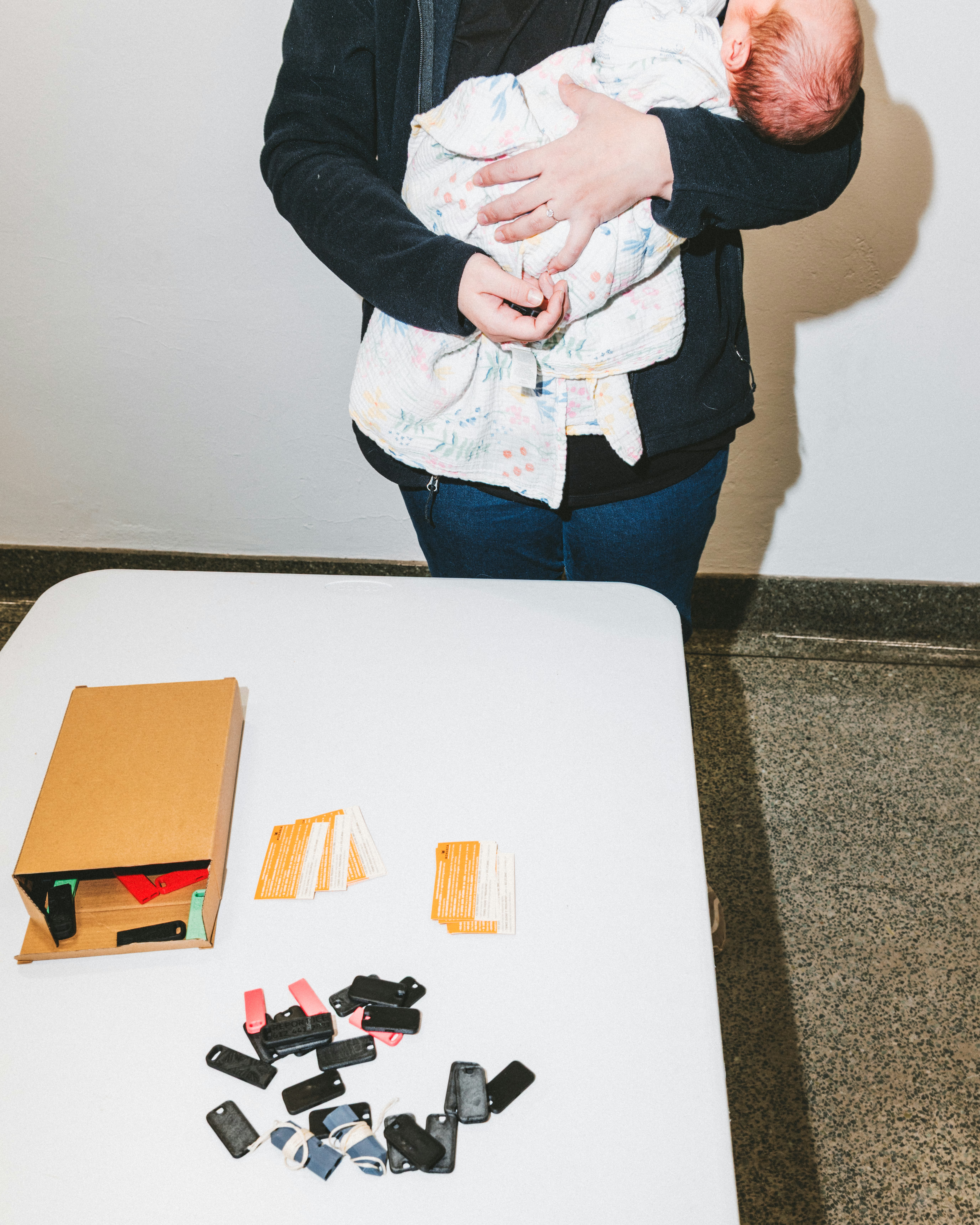
I had been talking with Daniel for only a few minutes when a tall man walked up, said he was a parent observer for the school we stood across from, and asked me to identify myself. When I showed him my press badge, he seemed friendlier, but still wary. He explained that he had heard reports of ICE agents impersonating journalists. I asked about the parent patrol, and he apologized, saying he couldn’t give out any information.
Inside the schools, many administrators have been making their own preparations over the past year. Amanda Bauer, a teacher at a Minneapolis elementary school that has a large portion of immigrant students, told me that administrators informed parents last fall about their emergency plans for ICE raids by phone or in person, because they were already concerned about leaving email chains that could be mined by a hostile government.
Bauer, who is 49, struggled to maintain her composure as she described the day early this month when ICE showed up in force outside her school. Agents had been circling the school since December, seemingly learning its routines, and they arrested some parents just before the winter break. But this time, agents leapt out in riot gear and began entering the apartments just across from the school, where many students live.
“We had to lock down and keep the kids inside, and parents linked arms to block the school entrance,” Bauer said. “We had a student who was looking out the window and saw them break into his apartment and just sobbed, ‘That’s my house. That’s my home.’ And we shut the blinds, but it was too late.”
Bauer has been a teacher for 25 years, a period that has included a rise of school shootings and the drills that have become common to protect against them. “But I never thought it would be our own government we had to protect the kids from,” she told me. “We kept them physically safe, but they saw what happened.”
As she spoke, Bauer’s hands were trembling. She held them up and smiled weakly. “I don’t think I’ve stopped shaking for two weeks,” she said.
Children were a moral fault line for many of the people I met in the Twin Cities—not just the children of immigrants, who are at risk of losing their parents or being deported themselves, but also their white peers in schools and day-care centers.
I met a couple in their 70s who told me they had never considered joining a political protest until ICE came to town, and they realized that their granddaughter was at risk of witnessing a violent immigration raid just by going to school. Dan and Jane (like many others, they asked that I shield their full names) live in a large house in a comfortable suburb, where they welcomed me with tea and cookies.
“When a child witnesses violence or crime, it’s profoundly different from adults,” Dan said. “It leaves scars.”
Dan and Jane resisted the idea that they had become political. A better word, Jane said, was humanist. Their anger was unmistakable as they told me that the Trump administration was violating basic Christian principles. “It became clear very quickly that ICE is the Proud Boys, the Boogaloo boys. They’ve given them uniforms and let them run wild,” Dan said. He attended a legal observer training—which happened to have been on the day Good was killed—and now the couple delivers groceries regularly to immigrant families in Minneapolis. This past Friday, Dan joined thousands of others at a protest in Minneapolis, where his fingers were frostbitten in the –9 degrees Fahrenheit weather.
I arrived in Minneapolis 11 days after an ICE agent shot Good in the face. Her picture was hanging like a religious icon on windows and walls all over the city. To many who had not already become involved, her death was a call to action.
One of those latecomers was a 46-year-old documentary filmmaker named Chad Knutson. On the morning after Good was killed, he was at home with his two hound dogs, watching a live feed from the Whipple Building, where ICE is based, a five-minute drive from his house. A protester had laid a rose on a makeshift memorial to Good. As Knutson watched, an ICE agent took the rose, put it in his lapel, and then mockingly gave it to a female ICE agent. They both laughed.
Knutson told me he had never been a protester. It seemed pointless, or just a way for people to expiate their sense of guilt. But when he saw those ICE agents laughing, something broke inside him.
“I grab my keys, I grab a coat, and drive over,” Knutson told me. “I barely park my car and I’m running out screaming and crying, ‘You stole a fucking flower from a dead woman. Like, are any of you human anymore?’”
His voice was so thick with emotion that it felt almost as if he were telling a story of religious conversion. It reminded me again of the Tahrir Square protests in 2011, when so many people seemed to have reached a moral and political turning point.
Knutson now goes to the Whipple Building almost daily, bringing thermoses of hot coffee for the people who hold up signs and bellow at the ICE agents and convoys as they drive in and out. He has been tear-gassed so many times, he said, his voice has gone hoarse. When I met him at his house in St. Paul, a row of megaphones was on the counter. He hands them out along with the coffee. He once brought an ice-fishing clam, a portable shelter, to the Whipple to help the protesters withstand the subzero temperatures.
Knutson mentioned in passing that his neighbor had “an adopted brown kid down there; they hid her in the basement yesterday.” This kind of thing no longer sounds weird in Minneapolis. Many people are hiding indoors—so many that, in a city with a substantial minority population, I hardly saw any Black or Latino faces on the street.
All this sheltering has created an economic crisis that has grown worse by the day. Many immigrant-owned businesses have seen their sales drop by as much as 80 percent, said Allison Sharkey, of the Lake Street Council. Large numbers have shut their doors entirely, fearing for themselves or their employees. Sharkey called it “an assault on our entire Main Street.”
The Karmel Mall, a maze-like shopping hub for tens of thousands of east African immigrants in the Twin Cities, is usually packed with people drawn to the aromas of stewed goat and coffee and sambuusa pastries, but when I visited, the place was silent, and most of the stalls were empty. At the far end I found some businesses still open, with a handful of customers. Several people looked frightened when I tried to ask questions, saying they didn’t speak English well or that the owner would be back in an hour.
One man willing to chat, a 42-year-old named Ziad who was sipping coffee by himself, quickly showed me his passport card, saying he had come to the United States from Somalia decades ago. He has a master’s degree in public health and was working in a community center, he said, but now it’s closed. “Nobody’s being paid,” he said. “Everybody is scared.” His children are attending school online, as they did during the coronavirus pandemic, and his wife almost never leaves home. The visits to the mosque and to family members and friends that sustained their emotional lives are on hold.
But Donald Trump “will go and we will stay,” he said. “We Somalis know how to survive. We’ve been through a lot—civil war, refugee camps.”
The Somali refugees who began coming to the Twin Cities in the early 1990s did so with the help of religious organizations and churches, especially Lutheran and Catholic parishes, that have a history of welcoming people fleeing war and famine. Those groups have been at the forefront of the resistance to ICE, and some of their leaders have been asking difficult questions: When does protest cross the line into violence? When is it morally acceptable to break the law? How do you retain the trust of people who are uncomfortable defying the authorities?
“We’re going to have to live with our discomfort in making other people uncomfortable,” Ingrid Rasmussen, the lead pastor at Holy Trinity Lutheran Church, who has been one of the most outspoken clergy members in the city, told me.
Last June, federal agents raided a taqueria near her church. She ran to the scene, she told me, and found a crowd of protesters facing off against heavily armed agents being protected by local police. Rasmussen was wearing her clerical robes and was thrown to the ground by a sheriff in plainclothes. Some in the crowd threw trash, bottles, and tires at the federal agents, according to a local news report. Video footage spread of Rasmussen shouting at the Minneapolis police chief: “You stand in my church … You promised me a better relationship.”
“It was like nothing I had ever seen before in Minneapolis,” Rasmussen told me.
That was a remarkable thing to hear, because Rasmussen’s church was near the center of the riots that took place after the killing of George Floyd in 2020. “Everything to the west of our building burned,” she told me. During that period, her church became a medical site for injured people. She and her congregation worked for years to help rebuild the neighborhood.
The new round of ICE raids has struck even closer to home for the church, whose congregation includes a large number of immigrants. Rasmussen, who has young children, has continued to put herself in harm’s way. She was among the 120 clergy members who took part in a sit-in at the corporate headquarters of Target on January 15, in an effort to get the company to take a stronger stand against the federal raids. And on January 23, she was among those arrested during the protest at the Minneapolis airport.
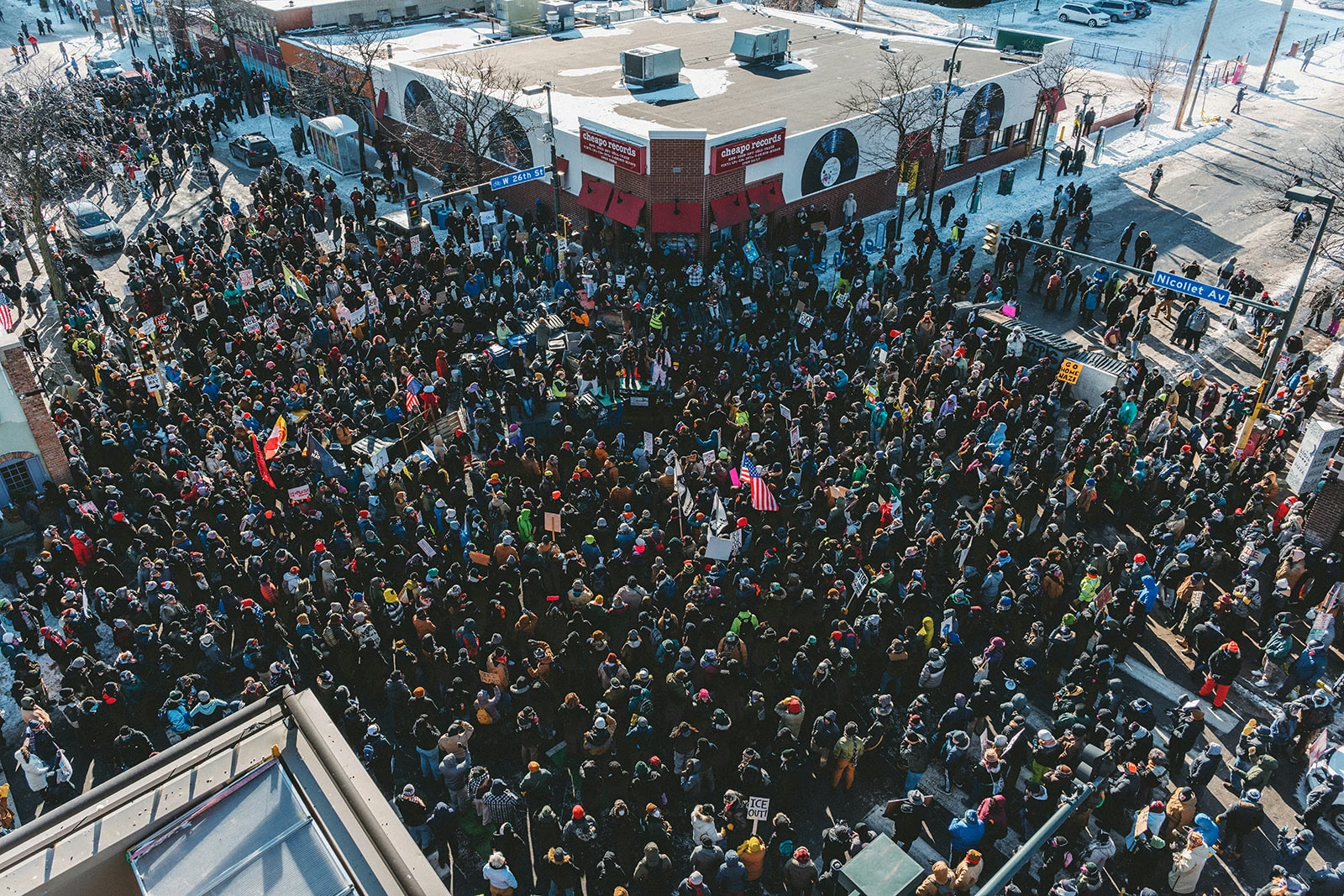
On the morning of January 24, Rasmussen got word that a man had been shot by ICE agents. She put on her warmest winter clothes and went to the scene, on Nicollet Avenue and West 26th Street, figuring she might be outside for hours.
By the time she got there, Alex Pretti, an ICU nurse, was dead. The federal agents who had wrestled him to the ground and then shot and killed him were throwing tear gas and flash-bangs at a crowd of furious protesters chanting “Shame!”
Rasmussen attended another protest that afternoon. When we spoke hours later, her voice sounded weary, as if she wasn’t sure what such gestures of defiance would accomplish. She found it “almost unbearable” to witness such brutality from her government day after day, she told me. And it was galling to hear people in power say that they were acting in defense of freedom. The streets still looked like a war zone, with flash-bangs detonating and clouds of tear gas in the air.
The post The Minneapolis Uprising appeared first on The Atlantic.