Suzanne P. Clark is president and chief executive of the U.S. Chamber of Commerce.
In America’s 250th year, the country is teetering between two economic futures. One path involves greater government intervention in the economy, the other a recommitment to free markets. Each path takes the nation to a very different place.
America has been here before.
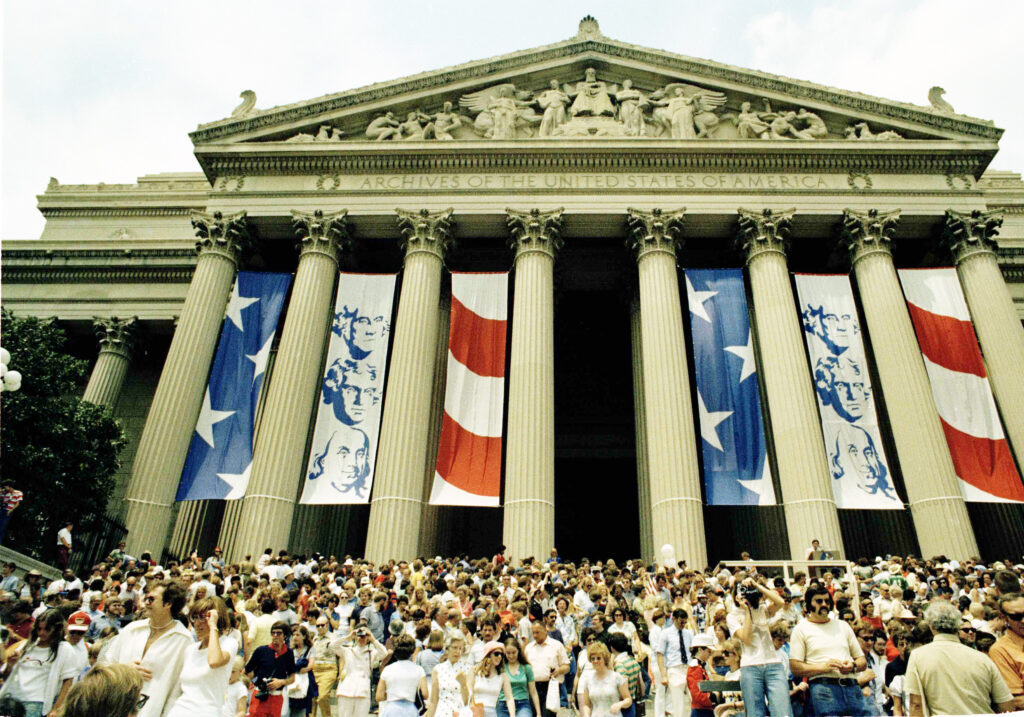
Fifty years ago, during the American bicentennial, the country was mired with 5.8 percent inflation and 7.7 percent unemployment. Energy shortages meant gas lines stretched for blocks during the oil crises of the 1970s. Fearful of what the free market might produce on its own, the Democratic and Republican parties had spent years expanding government power to dictate how the economy operated — including at times telling Americans what they could buy and how much they would pay. Each government intervention created new problems, requiring even more government intervention. Businesses were depressed. There was a rising sense that American dynamism might have peaked.
Then, like now, the country faced a choice between continuing to double down on a bigger government or returning to America’s free market roots. Both parties moved away from government and toward trusting markets. Economic deregulation that began under President Jimmy Carter accelerated under President Ronald Reagan.
As a result, children born in 1976 have witnessed in their 50 years a nearly fourfold increase in America’s gross domestic product and a 40 percent rise in U.S. median household income.
They have seen a U.S. energy revolution that made America the world’s top energy producer — no more gas lines. And they have lived through the most transformative stretch of innovation in human history: personal computers, the internet, AI and unprecedented medical breakthroughs.
Yet this growth and change have also caused disruption, leading to a moment of decision today. The polarized political environment tends to reduce everything to a choice between the two political parties. But this is an even bigger decision — one that will influence the direction of U.S. politics, the sense of what America is as a nation and the vision of its future. It is partly a decision between an economy shaped by the markets and one shaped by the state. But more simply, it is a decision between confidence and fear. Now is the time to be fearless.
Artificial intelligence offers a prime example. It is easier to imagine what could go wrong than what could go right, which leads some toward fear-based policymaking — slowing AI development and tightly regulating it, hoping to avoid job disruption or loss of control. In reality, this would cede AI leadership to China. We would lose our ability to shape the ways in which it transforms society. The alternative is to take a confident approach — trusting our markets by embracing AI, leading the world in smartly regulating it, and rethinking education and training to prepare for the future of work.
More broadly, fear that the private U.S. economy won’t produce the right outcomes leads to putting trust in politicians to direct those outcomes, such as through redistribution of wealth, excessive regulation and protectionism. The better bet is the harder choice: trust America’s innovators to solve problems and trust consumers to vote with their dollars on the best ideas.
Choosing trust in markets demands deliberate policy choices. Policymakers must provide a stable regulatory environment that supports innovation, investment and competition. Policies such as the 2025 tax bill, deregulation and permitting reform empower the market, which in turn fosters greater economic growth.
It’s easy to underestimate what small increases in annual growth rates can accomplish. According to an analysis by the organization I lead, the U.S. Chamber of Commerce, if sustained over the next 50 years, 3 percent annual growth would triple living standards, increase per capita GDP from $69,000 today to nearly $250,000 and boost average household income from $150,000 to more than $528,000 annually.
America faces many challenges, from the cost of living to the rapidly changing nature of work, but the greatest risk is this: in trying to fix what is broken, breaking what already works.
And there is much that works in the U.S. economy. The nation’s capital markets are the strongest in the world. Global talent continues to choose America. It leads the world in cutting-edge innovation, and many of the most complicated products are domestically made. Household net worth is at a record high. Consumers have more choices, more conveniences and more leisure than ever before. Diseases have life-changing treatments and lifesaving cures, thanks in large part to American innovation.
Free enterprise is not flawless, but it remains the most effective system for generating opportunity, innovation and prosperity — and for improving itself over time. If America in 1976 had chosen state control over free markets, the decline of the preceding years would have accelerated. There’s no telling what the country, and the world, would look like today, but it would almost certainly be poorer, less dynamic and less free.
The post The choice at 250: America should return to free market roots appeared first on Washington Post.