BAGHDAD — Over the past year, Iraqi spy chief Hamid al-Shatri says, he has been warily tracking the growing numbers of Islamic State militants over the border in Syria.
From an estimated 2,000 fighters, the ranks of the Islamic State in Syria have swelled in little more than a year to 10,000, according to Shatri, the head of Iraqi intelligence, speaking in a rare interview in Baghdad this month. His figure could not be confirmed elsewhere, for instance with the U.S. military, and the latest U.N. Security Council report pointed to a far less precipitous rise, with an estimated 3,000 Islamic State members in Syria and Iraq combined as of August.
“This certainly does pose a danger to Iraq, because ISIS — whether it’s in Syria or Iraq or anywhere in the world — is one organization, and it will certainly try and find ground once more in order to launch attacks,” he said. As Iraq’s point person for Syrian security issues, Shatri has traveled to Damascus three times over the past year for discussions with Syrian President Ahmed al-Sharaa.
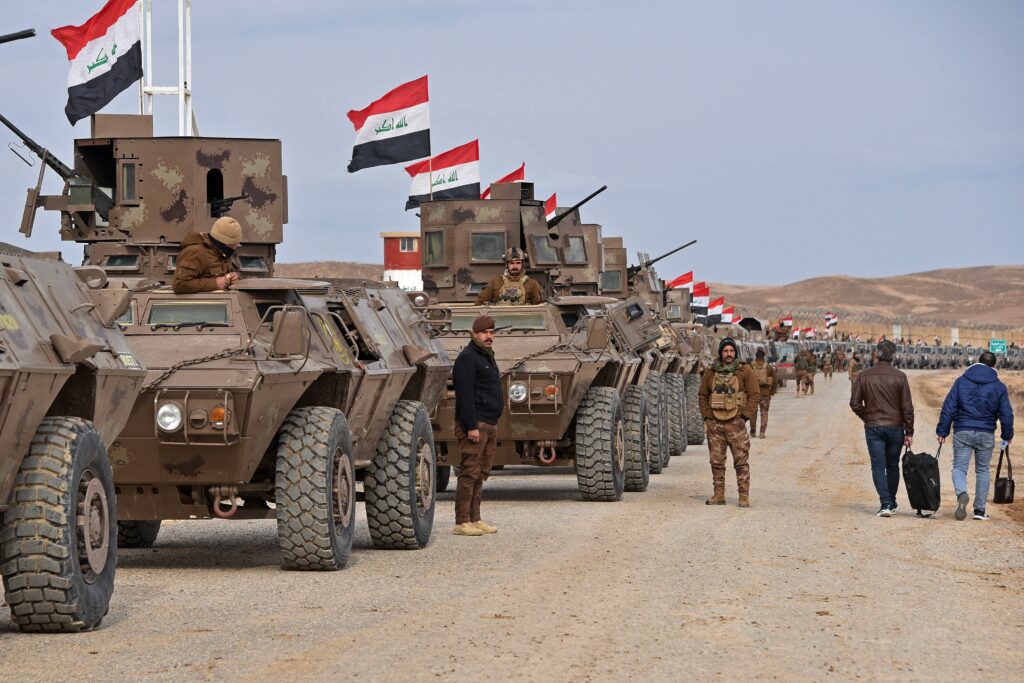
Dramatic developments in northeastern Syria, where Syrian government troops pushed last week to retake territory long held by Kurdish-led forces, have sharpened concerns over a renewed Islamic State threat. During the fighting, chaos broke out at prisons in the region, where thousands of the group’s members had been held, and sent escaped militants fleeing into the desert. Many were rearrested. But the Iraqi government quickly deployed thousands of troops and militia members to reinforce its border with Syria.
In Iraq, a country still traumatized by its years of fighting to dislodge Islamic State militants and their self-declared caliphate a decade ago, the new scenes have brought back painful memories. They have also given a rallying cry to powerful Iranian-backed Shiite militias that once fought the group, amid U.S. pressure to disarm them.
Shatri said the militants who joined the Islamic State in Syria over the past year include men once aligned with Sharaa, previously the head an al-Qaeda affiliate, who have grown disaffected by the political direction the president has taken. Tensions between foreign fighters once among Sharaa’s ranks, who used to number in the thousands, have increased as government forces have made arrests, he said.
Shatri said his figure also includes defectors to the Islamic State from other militant factions such as Jabhat al-Nusra and Ansar al-Sunna but does not count extremists still loyal to those groups. The group has also succeeded in recruiting large numbers of Arab tribesmen, he added, especially in Sunni Muslim areas that were until recently controlled by Kurdish forces.
In 2024, U.S. Central Command estimated that some 2,500 Islamic State fighters remained at large in Syria and Iraq but has not given an update since. A Centcom spokesman declined to comment for this article or provide figures. A Syrian Foreign Ministry official declined to comment on the figures provided by Shatri.
“ISIS has definitely taken advantage of the security collapse of the Syrian regime,” said Orwa Ajjoub, a doctoral candidate at Malmo University in Sweden who studies the group. But there seems to be no major shift in its capacities or the scale of its attacks, with the militants mostly carrying out small hit-and-run operations that take advantage of security blind spots, he said.
The rising concerns come just as the last U.S. troops remaining at the Ain al-Asad base in Iraq’s western Anbar province departed this month, ending a deployment focused on helping Iraqi forces fight the Islamic State. Since the formal handover of the Ain al-Asad base, U.S. forces are now confined to another base in Irbil in the semiautonomous Kurdish region in Iraq’s north. They are due to end their mission there at the end of the year, in line with Iraqi demands.
It’s too early to judge the impact the U.S. withdrawal from Ain al-Asad, said Shatri, but he acknowledged it could affect joint U.S.-Iraq security operations, particularly in remote areas like the rugged Hamrin mountains, where some of the estimated 500 Islamic State fighters left in Iraq are believed to remain.
The most recent joint operation against the Islamic State in Iraq took place in March, targeting and killing the militant group’s second-in-command, Abdallah Makki Muslih al-Rifai, also known as Abu Khadijah, Centcom reported. Members of Iraq’s elite Falcons Cell also carried out an airborne raid inside Syria late last year, Iraqi authorities said at the time. It came as U.S. forces were stepping up strikes against Islamic State militants following an attack that killed two U.S. soldiers and a Syrian policeman.
Even after the pullback from Ain al-Asad, intelligence sharing between the United States and Iraq is expected to continue, and Iraqi units have gained extensive experience fighting the militants on the ground and have improved their own airpower, Iraqi officials say.
A different Iraq
Few Iraqi officials believe that the Islamic State — which at its height controlled more than a third of Iraq — will be able to gain a significant foothold again.
“The concern, for sure, exists,” said Saeed al-Jayashi, an Iraqi official with the National Security Advisory. He said Syrian Foreign Minister Asaad Hassan al-Shaibani informed Iraqi officials that the number of Islamic State militants in Syria had grown to around 5,000, during a visit to Baghdad in March of last year, just months after the new Syrian government led by Sharaa took power after the ouster of Bashar al-Assad’s regime.
For Iraqis, Islamic State efforts to regroup hark back to “a long tragedy of the past,” Jayashi said. “But Iraq 2025 and 2026 is so different to Iraq in 2014.”
Baghdad has been transformed since the days when Islamic State forces pushed down the highway to within less than 10 miles from the city center and car bombs tore through the streets. Blast walls have been removed, and roads in the fortified Green Zone, where the national government is located, have opened to traffic. High-rise buildings have sprung up, and the city bustles with new restaurants, shops and malls.
After two decades of conflict following the U.S.-led invasion in 2003 and the subsequent war with the Islamic State, many Iraqis feel that they have finally turned the corner after the two decades of conflict.
“People have seen what it is like to live under them,” said Lt. Gen. Abdelwahab al-Saeedi, who commanded Iraqi’s elite counterterrorism forces during much of the ground campaign against Islamic State. He said the group’s command structure has been obliterated and that today it is a shadow of the group that was once awash with cash, controlled oil resources and was armed with drones, tanks and heavy weaponry.
The Iraqi government, meanwhile, has built up its defenses. Along the 370-mile desert border where Islamic State convoys once zipped between the Syrian city of Raqqa and Iraq’s Mosul — the twin population centers of the group’s self-declared caliphate — the boundary has been fortified with concrete barriers, trenches, barbed wire and hundreds of thermal cameras. Drones patrol overhead.
A sense of unease
But developments in Syria are unnerving to some Iraqis. The Iraqi government is currently backed by Shiite Muslim militias aligned with Iran, and many of those Iraqi militias had previously supported the Assad regime in Syria before its fall. The rise of Sharaa, a former Sunni Muslim militant who spent years in Iraq’s prisons on terrorism charges, has been viewed by many in Iraq with trepidation.
Shatri, who is currently a candidate for Iraq’s premiership following national elections late last year, said Iraq has forged a “good partnership” with Syrian security forces in fighting the Islamic State. Other Iraqi security officials voice deeper reservations. “It’s hard to built trust,” Jayashi said.
Jayashi said he sees the rollback of Kurdish forces in northeastern Syria by government troops as a “disaster” — both for Iraqi security and the message it sends to U.S. partners. The Kurdish-led Syrian Democratic Forces had worked closely with the U.S. military in defeating the Islamic State caliphate, but the Trump administration has made clear that, after this long partnership, the U.S. no longer backs the SDF in its confrontation with the Syrian government. On Tuesday, Iraqi Kurdish protesters swarmed the U.S. Consulate in Irbil, accusing the U.S. of abandoning the Syrian Kurds.
As the security of Kurdish-controlled prisons in Syria came into question, Iraq last week agreed to accept 7,000 Islamic State fighters who had been held there and can now be tried under Iraq’s anti-terrorism laws. Iraq said it has already repatriated more than 20,000 of its nationals who had been detained in Syria, including family members of Islamic State fighters who were arrested as the caliphate lost its last territory there in 2019 and who have been held for years in dire conditions.
Shatri said the Iraqi program to rehabilitate them has been largely successful, though like other Iraqi officials he raised concerns that funding for reintegration had dried up after the Trump administration made sweeping cuts in aid. “We fear of the return of some of these individuals to terrorist activity again,” he said.
The turmoil in Syria and concerns over the Islamic State, meantime, also complicate efforts by the Iraqi government to rein in armed groups inside Iraq, like the powerful pro-Iran militias, as the Trump administration has demanded. Those Shiite militias help make up Iraq’s 200,000-strong Popular Mobilization Forces, which first emerged in 2014 to counter the advance of the Islamic State, a Sunni group. Some of the militias, such as Kataib Hezbollah, operate partly outside of state control.
Shatri, who was previously the deputy head of national security and had helped organize militiamen to battle the Islamic State, said that disarming groups that are outside state control will be the “top priority” of the new prime minister. While some of the militias have expressed a willingness to disarm their independent forces, others more closely aligned with Iran have vehemently refused.
As Iraq has reinforced its border in recent days, militia fighters have also raced there. The events across the border in Syria have muted calls for militia forces to disarm, said Wissam al-Kaabi, a spokesman for Kataib Sayyid al-Shuhada, a Shiite militia close to Iran. “The need for the readiness of the resistance and its weapons is more urgent than ever,” he said.
The post Iraqi spy chief warns of reemerging threat from ISIS as its ranks swell appeared first on Washington Post.