In late 2024, shortly after her husband, Donald Trump, was reelected as the 47th president of the United States, Melania Trump saw an opportunity: a documentary centered on her life.
The film, a follow-up to her eponymous memoir, would offer a window into the first lady’s private, sphinx-like world, in contrast to that of her bombastic, spotlight-seeking husband.
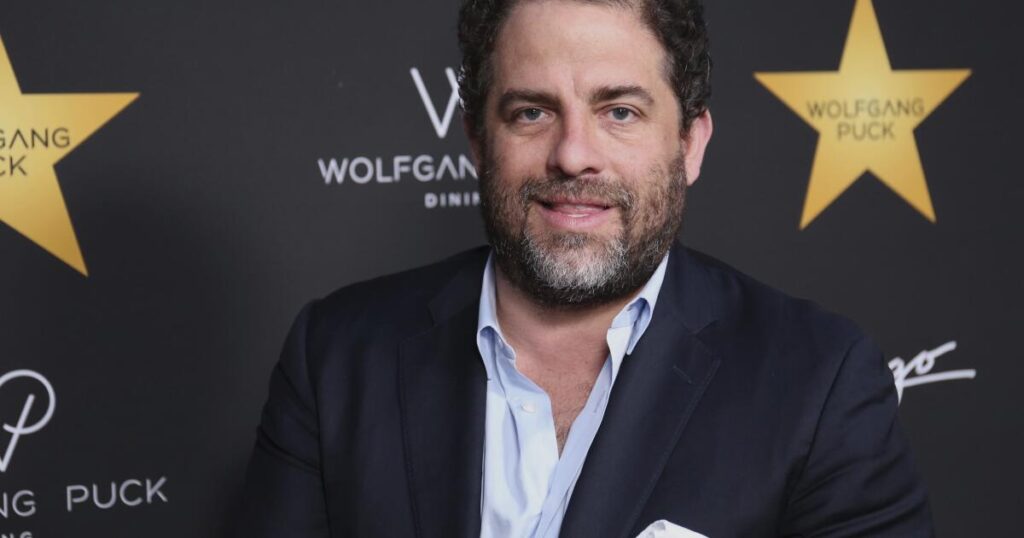
To direct the film, a fly-on-the-wall chronicle of the 20 days leading up to the inauguration, Melania turned to an unlikely choice: Brett Ratner, who only a few years earlier had been all but banished from Hollywood.
The controversial filmmaker had been recommended by her agent and “senior advisor” Marc Beckman, who had a long-standing relationship with Ratner.
“He’s one of the most talented directors of our lifetime,” said Beckman, who negotiated the unusually lucrative $40-million deal with Amazon MGM Studios to distribute the film.
“He actually accounts for like $2 billion in box-office receipts,” Beckman told The Times. “He really understands not just how to create something that’s gorgeous, but also how to reach the passions and emotions of his audience.”
The timing was fortuitous. Ratner was looking for a comeback vehicle from his heady days as one of the industry’s most successful filmmakers. And Beckman was among several prominent figures in Trump’s orbit who could help make that happen.
Brash, rich and successful, Ratner, 56, was the director and producer of a string of blockbuster films, the “Rush Hour” franchise and “X-Men: The Last Stand” among them. He was a consummate Hollywood dealmaker and habitué of red carpets who held court at the legendary basement disco inside of his equally storied Beverly Hills estate.
Then, in the fall of 2017, The Times reported on sexual misconduct allegations against Ratner made by multiple women. At the time, Ratner strenuously denied the claims.
It was the height of the #MeToo movement and a range of sexual misconduct allegations toppled the careers of powerful men, from disgraced producer Harvey Weinstein to “Today Show” host Matt Lauer and CBS Chairman Les Moonves. Weinstein was later convicted of rape in Los Angeles and sentenced to 16 years in prison.
Almost immediately, Ratner’s reign as blockbuster king was over.
Beckman, however, viewed Ratner first and foremost as a director. They had a relationship that stretched back to 2007. Beckman’s agency hired Ratner to direct a sultry Jordache jeans campaign, inspired by the iconic photographer Helmut Newton, whose work was edgy, provocative and erotically charged. The campaign, shot at the Chateau Marmont, featured a mostly topless Heidi Klum — in one ad she is brandishing a riding whip.
Beckman declined to say whether he had talked to other potential directors, nor would he address any of the claims made against Ratner. He stressed that it was Ratner’s “massive talent” that put him in the director’s chair. “We focused on Ratner’s capabilities as being a superior director,” he said.
The documentary, “Melania,” is set to premiere at the Kennedy Center for the Performing Arts in Washington — which the president is trying to rename the Trump Kennedy Center — on Thursday, followed the next day by a global theatrical release.
In addition to the “Melania” documentary, a three-part docuseries also filmed during the inauguration run-up about the first lady that Ratner directed and is part of the same Amazon deal, is set to air on the streamer later this year, according to Beckman.
Then there is the much-buzzed-about fourth installment of “Rush Hour.” It has been widely reported that Ratner will direct the $100-million movie to be distributed by Paramount.
The long-stalled project came about after President Trump was said to have urged his friend Larry Ellison, who bankrolled his son David’s acquisition of Paramount, to revive the franchise.
Not everyone is happy about Ratner’s return.
“It speaks to the larger issue that these men who didn’t take responsibility for their actions are coming back into society as if nothing happened,” said Nancy Erika Smith, a partner at Smith Mullin in Montclair, N.J., who has litigated numerous harassment cases, including that of former Fox anchor Gretchen Carlson.
Reached by phone, Ratner declined to respond to questions, saying, “I don’t talk to or cooperate with the Los Angeles Times.”
He referred questions to his London-based publicist, who did not respond to a detailed list of questions.
An early love of movies
Growing up in Miami, Ratner once said that “I eat, sleep, breathe the movies.” He was raised by a single mother, Marsha, who had him at 16, and his grandparents Mario and Fanita Presman, Jewish Cubans who immigrated to Florida during the 1960s. (His paternal grandfather, Lee Ratner, founded d-Con, the rat poison company.) At 12, he was an extra, appearing as a boy on a raft, during a pool scene at the Fontainebleau Hotel in the 1983 Brian De Palma film “Scarface.”
Early on, Ratner garnered a reputation for his ambition, relentless drive and a preternatural ability to surround himself with famous friends and mentors.
While a student at New York University in the late 1980s, he befriended Def Jam co-founder Russell Simmons, who made him his protégé, tapping Ratner to direct music videos.
At 28, he directed his first film, the 1997 buddy comedy “Money Talks,” starring Charlie Sheen and Chris Tucker. The movie grossed $48 million on a $25-million budget, cementing Ratner’s reputation as a highly bankable director.
In 2012, Ratner and Australian billionaire investor James Packer co-founded RatPac Entertainment. A year later, they merged with the film financing company Dune Entertainment, founded by Steven Mnuchin (Trump’s future Treasury secretary), that had bankrolled massive hits like “Avatar.”
The rebranded RatPac-Dune quickly entered into a $450-million slate financing deal with Warner Bros. to fund up to 75 movies, including Oscar winner “Gravity” and box-office hit “Wonder Woman.”
Ratner himself served as an executive producer on such acclaimed films as the epic western drama “The Revenant.”
“I was not the best student, but I was the hardest-working kid that I know, and it paid off,” said Ratner when the Friar’s Club honored him with a comedy achievement award in 2011.
A self-styled jet-setting playboy, Ratner dated actor Rebecca Gayheart and tennis star Serena Williams. He cocooned himself inside a circle of much older, famous cinema legends that he considered his mentors such as Robert Evans, Roman Polanski and Robert Towne.
Ratner’s Beverly Hills mansion, Hilhaven Lodge, the estate once owned by “Casablanca” actor Ingrid Bergman, was the scene of numerous raucous parties filled with celebrities and models.
After he made a series of vulgar and inappropriate comments while promoting his film “Tower Heist” in 2011, including saying that “rehearsal is for f—,” using an anti-gay slur, he dropped out of producing the Academy Awards broadcast.
Still, Ratner frequently groused that he was misunderstood.
“I don’t drink; I don’t do drugs. Do I like to have fun? Yeah. Do I like to enjoy myself, enjoy my life? Yeah. But I’m not a decadent person. … I’m just a nice Jewish kid from Miami Beach who loves movies and pretty girls,” he said in an interview with the Jewish Journal.
Over the years, Ratner sat on the boards of several charities such as Chrysalis, a group that helps homeless people; and the Ghetto Film School. In 2013, he donated $1 million to the Academy Museum of Motion Pictures and he actively supported the Simon Wiesenthal Center, where he was a trustee, and the Museum of Tolerance.
When Patty Jenkins presented him with the Tree of Life humanitarian award at a Jewish National Fund dinner in 2017, the director of “Wonder Woman” and “Monster” shared that he financed her thesis film.
That year, RatPac-Dune’s co-financing deal with Warner Bros. delivered a series of hits, including “It,” “Wonder Woman” and “Dunkirk.” He received a star on the Hollywood Walk of Fame.
Fallout over allegations of misconduct
Then, in November, The Times published detailed allegations against Ratner made by six women who accused him of harassment, groping and forced oral sex. Actor Olivia Munn claimed that Ratner masturbated in front of her when she delivered a meal to his trailer on the set of the 2004 film “After the Sunset.”
At the time, Ratner’s attorney Martin Singer rejected the women’s claims, saying that his client “vehemently denies the outrageous derogatory allegations that have been reported about him.”
The Times published another report weeks later that included additional sexual misconduct allegations from several other women. The report also named Simmons, the Def Jam co-founder, as a witness and alleged perpetrator in several of the episodes.
Both Ratner and Simmons disputed the women’s accounts and denied their allegations. Simmons subsequently faced several rape accusations, which he has denied.
The professional repercussions were swift. Ratner’s agents at WME dropped him, as did his publicist, and projects were put on hold. Ratner parted ways with Warner Bros.
“I don’t want to have any possible negative impact to the studio until these personal issues are resolved,” he said in a statement.
In April 2018, Warner Bros. officially cut ties with Ratner, declining to renew its massive $450-million co-financing deal with RatPac-Dune.
Two years later, Ratner’s name surfacedamid the tangled Hollywood sex scandals involving British actor Charlotte Kirk, whose allegations brought down two studio chiefs: Warner Bros. CEO Kevin Tsujihara and NBCUniversal Vice Chairman Ron Meyer, with whom she claimed to have had sexual affairs.
In a sworn court declaration, Kirk said she was victimized by Tsujihara, Ratner, Packer and Millennium Films CEO Avi Lerner, stating that the men “coerced me into engaging in ‘commercial sex’ for them and their business associates.”
She further accused Packer, whom she had dated for a period, and Ratner of having “sexually exploited me,” with Ratner sending her “crude sexual text messages, and offering me as an inducement to his business partners,” according to her declaration.
Attorney Singer, who represented the men, “categorically and vehemently” denied any wrongdoing on the part of his clients.
Cast out of Hollywood, Ratner appeared to escape the piercing scrutiny by living large. He was spotted variously at the five-star Faena Hotel in Miami and sunning on a yacht off Saint-Barthélemy in the Caribbean.
Ratner’s initial attempts to get back behind the camera went nowhere. In 2021, he announced plans to direct a long-stalled Milli Vanilli biopic with Millennium Media, but soon after, Millennium Media stated that it was no longer involved with the film.
In Trump’s orbit
Despite the setbacks, the seeds for Ratner’s eventual comeback had been sown. Known as a world-class schmoozer, Ratner cultivated numerous ties to people affiliated with Trump.
For several years, he was partners with Mnuchin, who served as Treasury secretary during Trump’s first term, through their production and financing company RatPac-Dune.
Billionaire Len Blavatnik, owner of Warner Music Group, bought Packer’s stake in RatPac-Dune through his Access Entertainment in 2017, making him Ratner’s partner for a time. Blavatnik, through his company, contributed $1 million to Trump’s first inauguration.
Then there’s Arthur Sarkissian, the producer of the original “Rush Hour” movie. He also produced the 2024 Trump-friendly documentary, “The Man You Don’t Know.”
Ratner also developed a friendship with Israeli Prime Minister Benjamin Netanyahu, who has a long-standing relationship with Trump. Ratner was the prime minister’s guest at the United Nations General Assembly in September 2023. He posted a picture on his Instagramstanding behind a seated Netanyahu and his wife, and next to attorney Alan Dershowitz, himself a longtime advisor and friend of Trump’s.
That year, several Israeli media outlets reported that Ratner had obtained Israeli citizenship after he posted the passbook Israel issues to new immigrants on his Instagram story with his name “Brett Shai Ratner” captioned in Hebrew.
“There’s a strong community in south Florida that is close to Trump,” said someone who worked with the family but was not authorized to speak publicly. “Brett has relationships with a bunch of them; it was just a matter of connecting the dots.”
Ratner no longer appears to live at his Hillhaven estate (which is currently listed for lease at $82,500 a month), while there have been sightings of him at Mar-a-Lago.
Not long after the presidential election, Ratner was given unprecedented entrée to Melania Trump and became a part of her trusted inner circle.
Beckman said Ratner was given “remarkable” access to her life. “There were behind-the-scenes meetings,” he said. “She’s a very private person and for the first time she was allowing the cameras to cover her, her family, her philanthropy and of course her business endeavors.”
Many of the women who came forward in 2017 to level their accusations against Ratner declined to speak about him now or to comment on his return to directing.
In the 2017 Times article, actor Jaime Ray Newman alleged that during a flight Ratner made sexually inappropriate comments and showed her nude photos of his then-girlfriend.
“I said my piece a couple of years ago and have moved on,” Newman, who stars in the Netflix hit “The Hunting Wives,” told The Times. “I feel really good and brave in what I did.”
The “Melania” trailer is in heavy rotation online and was shown during the NFL playoffs. Billboards loom over cities and on buses.
Talking to reporters on Air Force One earlier this month, the president praised the upcoming film.
“I’ve seen pieces of it, it’s incredible,” Trump said. “Everybody wants tickets to the premiere. I think it’s going to be great.”
The post How once-exiled filmmaker Brett Ratner staged a Hollywood comeback with ‘Melania’ appeared first on Los Angeles Times.