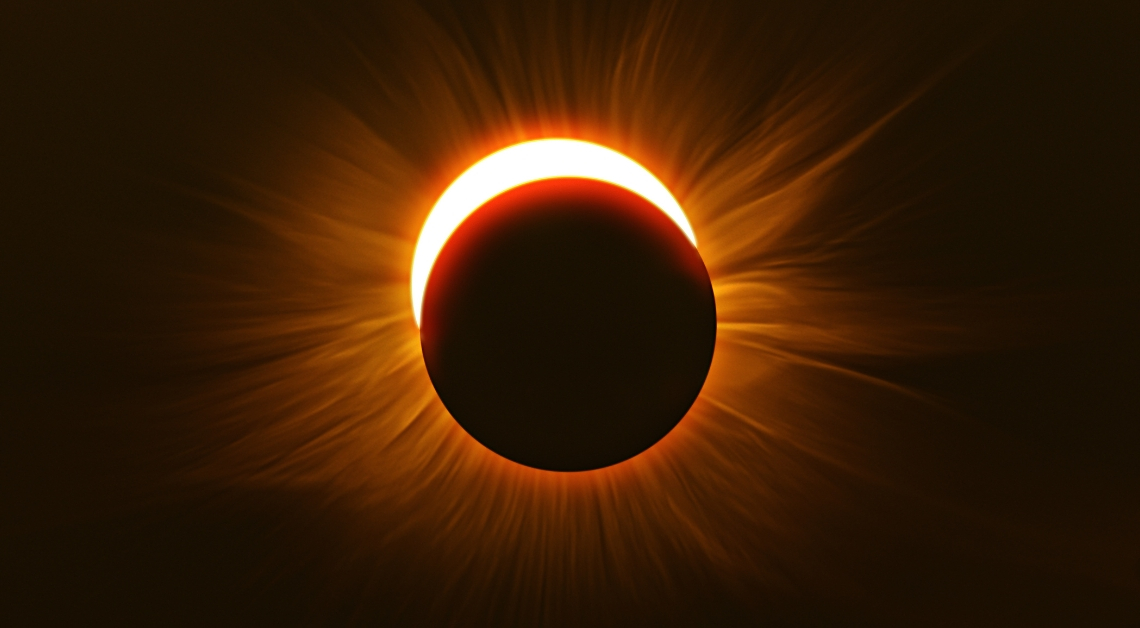
If you still feel a little emotionally scrambled from the April 8, 2024, Great American Eclipse, you’re not alone. That one rewired people. Strangers hugged. Traffic collapsed. Grown adults cried. Since then, the sky’s been doing its normal thing. That’s about to change.
According to Live Science, two total solar eclipses are coming up in the next two years, both visible from land, both requiring travel, and one widely labeled the “eclipse of the century”. If you’ve ever wanted an excuse to plan a trip around something genuinely, cosmically amazing, this is it.
Here’s how to see them.
2 Solar Eclipses Are Coming, Including the ‘Eclipse of the Century’: Everything to Know
The first total solar eclipse arrives on August 12, 2026. The Moon’s shadow will start over northern Siberia, sweep across eastern Greenland, skim Iceland’s west coast, then cross northern Spain before setting over the Mediterranean.
For mainland Europe, this is exciting. It’s the first total solar eclipse visible there since 1999. In Spain, cities like León, Burgos, and Valladolid sit directly in the path of totality. Observers there will see the Sun drop to totality just before sunset, about 10 degrees above the horizon. That’s roughly the width of a clenched fist held at arm’s length.
Totality in Spain will last under two minutes, which sounds brief until you’re living it. Clear skies are likely, and the timing overlaps with the annual Perseid meteor shower. Live Science notes there’s even a chance of spotting a meteor during the eerie twilight of totality.
If duration matters more than convenience, Iceland’s Snæfellsnes Peninsula or eastern Greenland offer just over two minutes of totality. At those latitudes, August nights barely exist, but auroras occasionally make appearances during the short darkness or even during totality itself.
August 2, 2027: The Eclipse of the Century
The second eclipse, on August 2, 2027, is the one astronomers keep circling. Totality will last up to 6 minutes and 22 seconds, an almost absurd amount of time for the Sun to disappear. The path crosses parts of Spain, then sweeps through North Africa and the Middle East, including Morocco, Algeria, Tunisia, Libya, Egypt, Saudi Arabia, Yemen, and Somalia.
Observers near Luxor, Egypt, will experience the longest land-based totality of the 21st century. The region’s climate also stacks the odds in your favor. Clear skies are common in August, so the drastic darkness is going to feel ultra creepy.
One More, Just Beyond
There’s a third total solar eclipse on July 22, 2028, crossing Australia and New Zealand. Sydney will see its first totality since 1857. For eclipse chasers, the next few years qualify as a golden window.
You don’t need to be an astronomy obsessive to feel why this is so cool. Total eclipses pull time apart. And for a few minutes, the sky reminds you who’s actually in charge here. Not you.
The post Everything You Need to Know About the ‘Solar Eclipse of the Century,’ Including How to See It appeared first on VICE.