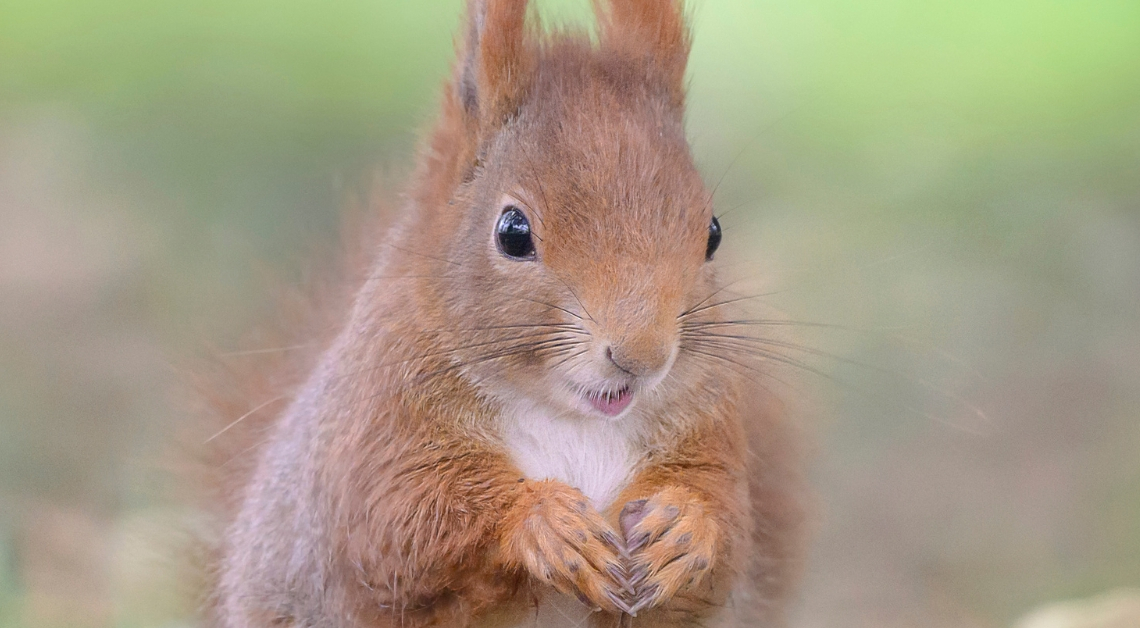
Scientists have known for a while now that animals feel pain. When it comes to other emotions, like joy and happiness, they weren’t so sure. Pain makes sense. Everything feels like it would wince when you pinch it. But to say an animal is experiencing joy felt a bit too close to anthropomorphism, as if we were projecting human qualities onto an inhuman creature. So, the scientific community largely ignored animal joy.
That’s starting to change, according to a lengthy and fascinating feature in Science News. A growing group of researchers is now trying to scientifically measure joy in animals by measuring actual, observable, testable positive emotion, or what researchers call “positive affect.”
You’d think it would be as easy as waving something pleasant in their face and writing a note on your clipboard if they smile. Unfortunately, it’s not so easy. There are plenty of observable physiological markers of pain (hormonal spikes) and fear (body tenses up).
Joy is often a subtler, more nuanced, and deeply personal. Not just from human to human, but from species to species. And it might even shift between individuals within a species.
Scientists Are Finally Learning How Animals Feel Joy
A team of scientists from universities across the United States has created the “joy-o-meter” project. It’s a silly name for a serious attempt to create a loose set of animal-happiness behaviors that can be expressed as metrics. Some of those include behavioral cues, vocalizations, optimism tests, and biological markers that might indicate brief but intense bursts of pleasure.
They started with great apes, since chimpanzees laugh, embrace, and pant during playful moments and reunions. Bonobos, meanwhile, respond to surprise jackpots of grapes with excited calls or head nods.
In 2024, an organization called the Templeton Foundation began studying parrots, specifically New Zealand’s kea, since they appear to play just for the sake of it. Researchers now track their body temperature, hormones, and vocalizations to separate genuine joy from stress. If they’re going to find measurable evidence of joy in keas, peanut butter might be the, uh, key. When given foods like carrots, the kea’s reaction is the parrot equivalent of a human shoulder shrug. Give them peanut butter, and they start warbling like crazy.
None of this means animals feel happiness the way humans do. But the evidence increasingly suggests they feel something meaningful. Developing a textured understanding of animal happiness could revolutionize so many fields of animal research and observation. It could reshape conservation efforts. It might even give us humans a fuller understanding of what a good life looks like, not just for them but for us.
For the entirety of human existence, we been so concerned with answering big philosophical questions like what makes life worth living. But for so long, we’ve only been concerned about answering it in the context of our own experience. Maybe we’ll finally start taking animals’ experiences into account, too.
The post Scientists Finally Understand How Animals Experience Joy appeared first on VICE.