NEW DELHI — Tens of millions of people in India’s capital city are breathing in polluted air that is equivalent to smoking roughly nine cigarettes a day, or about half of a standard pack, according to a Washington Post analysis of 2½ months of government data.
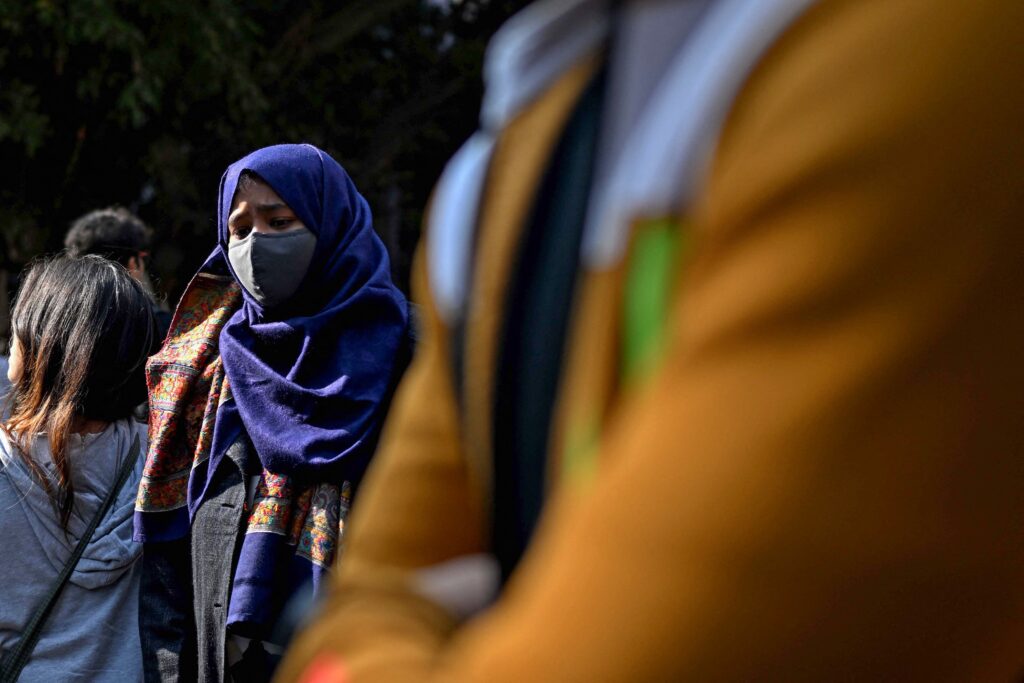
Every winter, for months at a time, Delhi is blanketed by toxic smog, and this year has been no different. Though people try to limit the time they spend outside, children need to go to school, parents need to go to the office, and most days the roadways are still choked with motorcycles and scooters and rickshaws, navigating through a sepia haze. Delivery drivers, bricklayers and others who spend their days outdoors are especially vulnerable.
To quantify the toxicity of the air and its impact on human health, The Post analyzed 75 days of Indian government pollution data — spanning Oct. 18 to Dec. 31 — from 40 air monitoring stations spread across the capital region. Each station collects hourly data on chemicals in the atmosphere, such as particulate matter 2.5 (PM 2.5) and particulate matter 10 (PM 10), which are known to cause lung and heart issues when inhaled in large amounts.
Reporters calculated the daily average of PM 2.5, the most harmful measure of India’s poisonous air, then converted those figures into daily cigarette intake using a formula developed by scientists at the University of California at Berkeley. The Post verified its calculations with researchers at the University of Chicago and the Center for Research on Energy and Clean Air (CREA), an independent climate think tank that provided the government pollution data.
While the data averaged out to nine cigarettes a day per person across Delhi, some days were much worse — and some neighborhoods were more adversely affected. On Dec. 14, for example, Delhiites inhaled air that was as toxic as smoking almost 18 cigarettes a day. And in Wazirpur, an industrial area in the city’s northwest, residents breathed in a daily average of 12 cigarettes.
Despite numerous government initiatives over the years to purify the winter air in Delhi, it remains as toxic as ever. After analyzing and converting data from roughly the same period a decade ago — covering November 2015 to January 2016 — reporters arrived at the same figure: nine cigarettes a day, on average.
Tanushree Ganguly, director of the Air Quality Life Index at the University of Chicago’s Energy Policy Institute in New Delhi, said India’s sustained pollution crisis is due in large part to the government’s “reactive” approach — favoring temporary emergency measures, like the use of water sprinklers to reduce dust, instead of proactive efforts, such as limiting vehicular and industrial emissions.
“We are not going to see any significant decline in pollution levels going forward,” Ganguly said. “People are losing years from their life.”
India’s Ministry of Environment, Delhi’s Office of the Chief Minister and Delhi’s Department of Environment did not respond to requests for comment.
No solutions in sight
Air pollution in Delhi intensified in the mid-1990s as the Indian economy opened up and the nation’s capital underwent rapid industrialization and urban growth. More vehicles clogged the roads and more factories spewed out chemical clouds. Cities struggled with sanitation and waste management issues.
Alarmed in part by rising air contamination, India’s Supreme Court in 1996 ordered the highest-emitting factories in Delhi to relocate or shut down. But the crisis far outpaced efforts to track it: an automated air-quality monitoring network wasn’t set up until 2015. By then, pollution levels were already extreme. Data from the World Health Organization (WHO) showed that in 2010, the city’s annual average concentration of PM 2.5 stood at 153 micrograms per cubic meter, more than 30 times the WHO’s recommended limit.
Not much has changed in the years since. During the 2015 pollution season, Delhi’s average PM 2.5 level stood at 207, roughly equal to nine cigarettes per day. The only noticeable dip occurred in 2020, which scientists largely attributed to India’s pandemic lockdown measures.
On average, Delhi residents are losing eight years of their lives, according to the University of Chicago’s Air Quality Life Index, which calculates the effect of exposure to PM 2.5 on life expectancy.
Soutrik Goswami, an independent climate policy researcher in India, said the pollution crisis is mostly driven by emissions from public transportation — such as buses, cabs and auto rickshaws — and personal vehicles. Another leading contributor is coal-burning power plants, he added, built to meet the capital’s rising energy demands. The air quality is particularly dire in winter due to a weather phenomenon known as temperature inversion, in which cold air traps pollutants and keeps them from dispersing.
In 2019, the government of Prime Minister Narendra Modi set up the National Clean Air Program, outlining measures aimed at bringing down pollution levels in major cities. These included the widespread adoption of electric vehicles, government assistance in crop residue management to prevent stubble burning and new emission standards for thermal power plants.
But the program has done little to make the air here more breathable, and politicians have traded blame for the crisis. New Delhi was governed by the opposition Aam Aadmi Party (AAP) for the last decade before Modi’s ruling Bharatiya Janata Party (BJP) took over in February.
Its first winter in charge has been a disaster, according to activists. A government attempt at cloud seeding, a technique use to induce artificial rain to clear the air, ended in failure. The city dispatched water sprinkler trucks across the region, which has minimal effects on pollution levels, according to Ganguly, and was widely mocked by environmentalists.
“We’re dealing with a massive public health crisis,” Goswami said, “and we are not seeing any long-term solutions.”
Public comments from leading BJP officials have raised concerns over whether the government understands the gravity and complexity of the problem. New Delhi’s chief minister, Rekha Gupta, said on Dec. 6 that the Air Quality Index, or AQI, a measure of air cleanliness, “is like temperature” and can be measured using “any device.” In fact, AQI is derived from a complex math formula using several pollutant measurements and requires specific monitoring technology.
In India’s Parliament, Kirti Vardhan Singh, a BJP minister of state for environment and climate change, wrongly claimed last month that there was no data that showed a linkbetween high pollution levels and lung diseases.
Neither Gupta nor Singh responded to a request for comment.
‘I don’t have a choice’
Neetu Kumari wishes she and her three young children didn’t have to spend so much time outside during the winter months, but her 70-year-old mother, a frail and ailing widow, lives in a street-side shack and needs help with almost everything.
Kumari’s 16-month-old boy is coughing constantly, she said. And her mother is having intense breathing difficulties, but can’t leave the city without sacrificing her monthly pension.
“I’m scared for my kids,” said Kumari, 28. “I’m scared for my family.”
There is growing public awareness about the severity of the crisis. Manoj Kumar, an analyst at CREA, said many residents have been unsettled by discrepancies between government data and the readings on their personal air-quality monitors, which often show higher pollution levels. While the differences are largely legitimate, he said — stemming from variations in measurement models and methods — the unease points to a deeper erosion of trust.
India caps AQI readings at 500, arguing that levels beyond that are equally dangerous and that higher numbers could fuel public panic. “This does not mean PM 2.5 concentrations aren’t increasing, but the AQI will not reflect that,” Kumar said. And higher PM 2.5 levels, he added, translate directly into more severe health risks.
Civil society and climate activists, joined by students and anxious parents, have organized several protests in recent months, demanding urgent government action. Online campaigns have called for greater data transparency, and more funding for research and interventions.
Bhavreen Kandhari, who in September 2020 co-founded Warrior Moms, a collective of parents fighting for the right to clean air, has seen her own children suffer. Her 22-year-old twin daughters were born three months premature, and are more prone to cardiac and respiratory issues. They’ve had a “continuous cough” during this pollution season, she said, and recover as soon as they leave the city.
“That’s why we protested,” Kandhari said, describing the government response as “disheartening.”
Frontline doctors and medical experts are also sounding the alarm. Exposure to highly polluted air doesn’t just lead to lung issues, it can also cause serious heart problems, said Nityanand Tripathi, the head of the cardiology department at Fortis Hospital in the city’s northwest. “We’re seeing an increase in heart attack rates,” he said. “We should all be worried.”
Impoverished Indians bear the brunt of the crisis. Most air purifiers cost more than a laborer’s monthly paycheck. Escaping to the coast or the mountains is impossible for millions of low-wage workers, and few can afford protective gear.
Vijay Kumar, 31, works at a steel factory in the Wazirpur neighborhood. When the air is bad, he said, he suffers from frequent headaches, chest congestion and bouts of coughing. He moved his family from Bihar, in India’s northeast, to the capital in search of work, and now feels trapped.
“If there were jobs back in my village, I would go back,” he said. “I’m here because I don’t have a choice.”
Crowe reported from San Juan, Puerto Rico.
The post How bad is Delhi’s air? Like smoking half a pack of cigarettes. appeared first on Washington Post.