A federal judge in Richmond ruled this week that Virginia violated a post-Civil War law by automatically stripping the right to vote from everyone convicted of a felony, a decision that could restore voting rights to thousands of Virginians.
Senior U.S. District Judge John A. Gibney Jr. ruled that a felon disenfranchisement provision in the state’s constitution violates the federal Virginia Readmission Act of 1870 — the law that allowed the commonwealth to again be represented in Congress after the Civil War. That law prohibited Virginia from disenfranchising citizens except as a punishment for crimes that were then felonies under common law. Those crimes did not include drug offenses and other convictions that are considered felonies today.
“For well over a century, the Commonwealth of Virginia has disobeyed a federal law designed to protect the right of former enslaved people to vote,” Gibney, who was appointed by President Barack Obama, wrote in a 44-page opinion. “When the United States started to readmit the rebellious slave states after the Civil War, Congress feared that the former Confederate powers would invent new crimes with which they could disenfranchise Black Americans.”
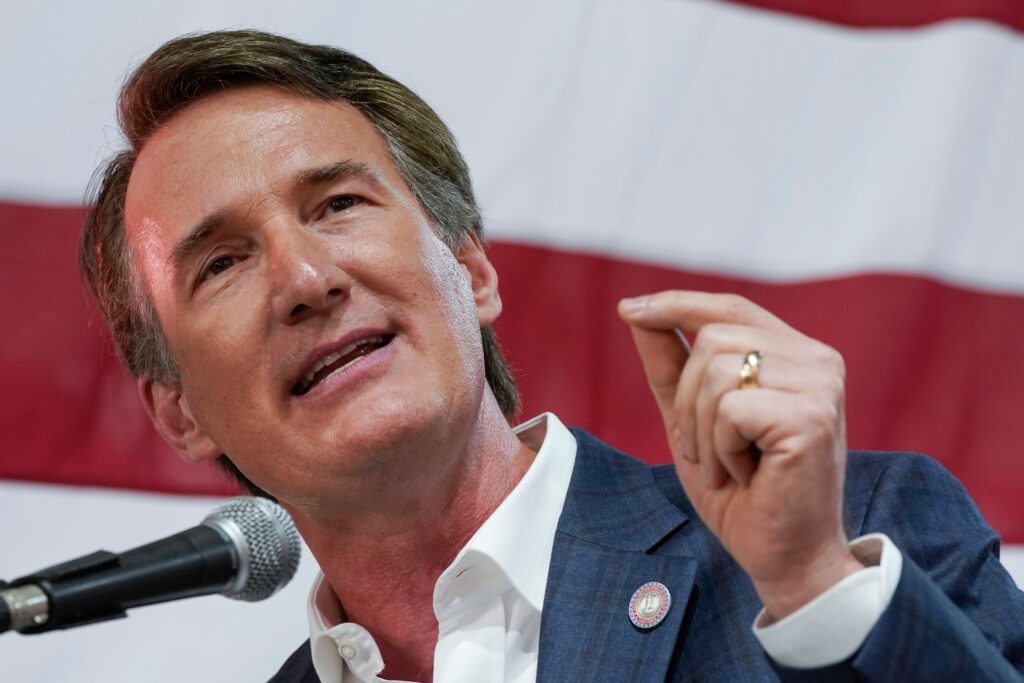
The ruling caps a legal battle that began in 2023, when the American Civil Liberties Union of Virginia, the voting rights group Protect Democracy and the law firm WilmerHale sued then-Virginia Gov. Glenn Youngkin (R)and other state officials on behalf of disenfranchised felons, asserting that the state constitution violates the terms of Virginia’s readmission into the union after the Civil War.
“Our clients — and thousands of Virginians like them, past and present — served what amounted to a second sentence by permanently losing their voting rights even after they had served their sentences,” Jared Davidson, counsel at Protect Democracy, said in a statement Thursday. “Today’s decision means they can finally participate in the political process and that, going forward, untold numbers of Virginians will not be stripped of their fundamental rights in the future.”
A spokesperson for Virginia Attorney General Jay Jones, a Democrat who beat Republican incumbent Jason Miyares in November’s election, said his office is reviewing the ruling. Spokeswoman Rae Pickett said the office expects to “make a public announcement” regarding the ruling next week, but she declined to comment further.
Gibney’s ruling permanently blocks state election officials from disenfranchising anyone unless they have been convicted of one of 11 crimes considered common law felonies when the Virginia Readmission Act reestablished the state’s representation in Congress in 1870: arson, burglary, escape from prison, larceny, manslaughter, mayhem, murder, rape, robbery, sodomy and suicide.
The ruling detailed Virginia’s fraught history of reducing its Black population’s ability to vote. After the act, Virginia repeatedly amended its constitution to expand who could be stripped of voting rights. Amendments in 1876 diluted the vote of former enslaved people by adding a poll tax and disenfranchising those convicted of petit larceny, Gibney wrote.
The 1902 constitutional convention made these intentions explicit. One leading supporter, then Virginia state senator and soon-to-be U.S. lawmaker Carter Glass, said the new constitution aimed to eliminate “every negro voter who can be gotten rid of.”
“This plan of popular suffrage will eliminate the darkey as a political factor in this state in less than five years, so that in no single county of the Commonwealth will there be the least concern felt for the complete supremacy of the white race in the affairs of government,” Glass said to applause during the convention, according to a report on the proceedings.
Gibney noted Glass’s stance in his ruling: “Nearly one hundred and twenty-five years after Senator Glass pleaded to ‘emancipate Virginia’ from Black voters, a class of would-be voters appears before this Court asking for true emancipation at the Commonwealth’s ballot boxes.”
Virginia is one of three states with constitutions that automatically disenfranchise all people with felony convictions, unless the governor restores the person’s right to vote, according to the lawsuit. Under Youngkin, Virginia was the only state requiring felons to individually petition the governor to restore that right.
Gibney’s opinion notes an estimate from the Sentencing Project, a criminal justice reform research and advocacy group, that 46 percent of Virginia’s 264,292 disenfranchised voters are Black. That means the state disenfranchises nearly 10 percent of voting-age Black Virginians, according to the group.
The lawsuit was filed partly in response to moves by Youngkin, who made changes in 2023 that greatly reduced the number of former inmates who had regained the right to vote. Youngkin ended the policy of former governor Robert F. McDonnell, also a Republican, of automatically restoring the right to vote for many felons. Under Youngkin, each felon was required to file an application for restoration of voting rights, which state officials decided on a case-by-case basis.
The state tried repeatedly to have the case thrown out as it moved through the courts. The U.S. Court of Appeals for the 4th Circuit affirmed that the lawsuit could proceed, though it dismissed Youngkin from the case. The U.S. Supreme Court in June declined to hear the state’s appeal.
The injunction will take effect in May, giving Virginia time to adjust its election procedures.
“I am overjoyed at today’s ruling and what it means for thousands of Virginians,” Tati King, one of the plaintiffs who was convicted of a drug offense, said in a statement. “After so many years of fighting for my rights, I will finally be able to participate in our democracy and exercise my vote as an American citizen.”
The post Federal judge bars Virginia from keeping thousands of felons from voting appeared first on Washington Post.