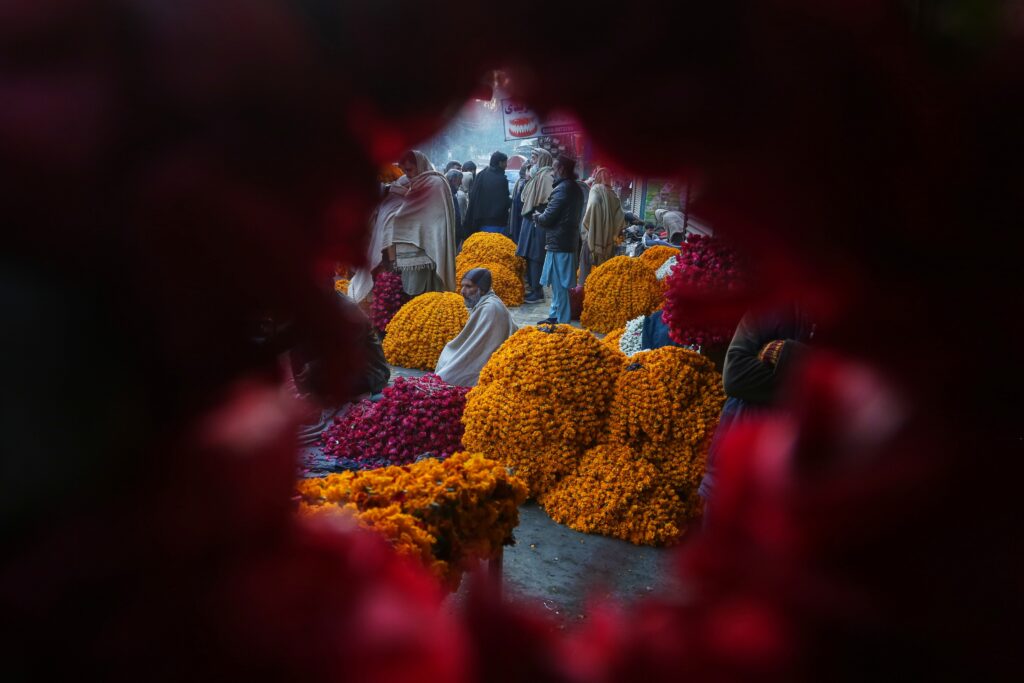
PESHAWAR, Pakistan — In the sprawling fruit market in this northwestern Pakistani city, Imran has spent the past several months waiting for shipments that aren’t arriving.
The crates of Afghan walnuts, apricots and pomegranates he once hauled through the stalls have disappeared, casualties of Pakistan’s decision to close its border with neighboring Afghanistan.
Pakistan shut all major crossings along its roughly 1,600-mile border with Afghanistan in mid-October amid clashes with the Taliban-run government in Kabul. The sides eventually agreed to a ceasefire, but crossings remain closed to trade. It amounts to the longest border shutdown in living memory, locals say.
Imran, a 40-year-old loader who has worked at the market for more than two decades, said he cannot recall a more desperate stretch.
“It’s not enough to feed my family,” said Imran, who does not have a surname. He keeps coming to the empty market every day because he can’t bear the thought of staying home and explaining to his children why he’s not at work.
For decades, markets like this one in northwestern Pakistan, little more than an hour’s drive from the Afghan border, have served as a barometer of relations between the two countries. Previous border shutdowns typically lasted only days or weeks before they were resolved by local elders.
But the current standoff has turned one of Asia’s most sensitive borders into a source of mounting economic pain and political frustration for communities on both sides, while Islamabad and Kabul publicly downplay the costs.
Pakistani officials say the primary reason they closed the border — the Afghan government’s alleged support for a militant group in Pakistan — remains unaddressed by the Afghans. The Pakistanis accuse the Afghan Taliban of harboring the Tehrik-e-Taliban Pakistan, a group that has intensified attacks in northwestern Pakistan since the United States withdrew from Afghanistan in 2021.
Pakistan’s military chief has claimed that around two thirds of the attackers are Afghan. “Isn’t Afghanistan shedding the blood of our Pakistani children?” Chief of Defense Forces Asim Munir asked during a conference last month, the Pakistan’s state broadcaster reported.
The TTP has pledged allegiance to Afghan Taliban leader Haibatullah Akhundzada, but operates independently of Kabul. The Afghan Taliban have repeatedly denied harboring members of the group.
The Pakistani and Afghan governments both insist they can absorb the economic impact. Zabihullah Mujahid, the Taliban’s chief spokesman, said the borders would reopen only if Pakistan provided “strong assurances that this unlawful blockade will not happen again for political purposes.”
Taliban officials want Afghan traders to disentangle themselves from dependence on Pakistani business, an effort that could mean a long-term geopolitical shift in the region.
Pakistani military spokesman Lt. Gen. Ahmad Sharif Chaudhry says the closures have caused “no losses” to Pakistan but have instead curbed “smuggling and terrorism.”
Here in Peshawar, those claims ring hollow. When crossings were open, Afghan produce flowed east into Pakistan in steady convoys of trucks, feeding wholesale markets and sustaining thousands of laborers. An estimated 700 to 900 trucks passed daily through the Torkham crossing alone.
The prices of some fruits and vegetables in Pakistan have risen by as much as 400 percent since the border was closed, traders say, as supplies from Afghanistan have dwindled. Before the shutdown, Pakistan was Afghanistan’s largest trading partner, accounting for over half of Afghan exports in 2023, much of it fresh fruit and agricultural produce, and about one-fifth of its imports.
The disruption has rippled beyond agriculture. Pakistani exports of cement and pharmaceuticals to Afghanistan and fruits to other parts of Central Asia have also been hit, compounding losses for industries that rely heavily on overland trade routes.
Pakistan, with deep-sea ports in the south and access to global supply chains, is far less dependent on Afghan trade, but the economic strain in Khyber Pakhtunkhwa province is fueling long-standing grievances about Islamabad’s alleged neglect of the region. Many Pakistani traders here now echo the Taliban’s rhetoric.
“Trade and politics should be separated,” said Mujeeb ur Rehman, president of the association of customs clearing agents at the Torkham border.
For much of the 20th century, residents of the border region crossed freely between the two countries. During the 1980s, Pakistani officials encouraged the flow, shepherding weapons and fighters to support the Afghan mujahideen against the Soviet invasion and occupation.
When militant violence later spilled back into Pakistan, Islamabad built a fence along most of the frontier, dividing communities and deepening resentment.
At Torkham, Rehman, the customs agents’ representative, estimated that the current closure has left up to 3,000 local workers and more than 1,000 customs agents unemployed. The revenue collected from transit fees was shared with surrounding communities. “Pakistan was making billions of rupees from its exports,” he said.
The consequences in Afghanistan could be more severe. Fruits and vegetables are among the country’s main exports, and when the border was closed in October, many shipments were left to rot. Routing goods through Iran or Central Asia is far costlier and slower, said Haji Farooq, a fruit trader in Kabul. He estimated that up to 80 percent of Afghan produce has been caught in limbo.
Though the border is closed to trade, Pakistan has continued to deport Afghans. More than 1.6 million Afghans have been pressured to leave Pakistan since 2023 in one of the largest deportation drives in decades.
The Taliban have accepted the returnees, but the influx has driven up rents and worsened unemployment. At the same time, the Taliban have struggled to compensate for the loss of international aid since the Trump administration cut funding last year. The number of Afghans facing acute food insecurity this winter has risen by around 3 million year over year, the World Food Program has said, while hospitals report shortages of basic medicines.
The large share of Afghanistan’s medicines that was previously supplied by Pakistan is now also caught in the trade impasse. Taliban officials say they are seeking alternative sources, including India, which has moved to capitalize on the tensions. New Delhi, Islamabad’s archrival, launched airfreight corridors with Afghanistan in December to ship pharmaceuticals and other essential goods.
A permanent shift would be costly for Pakistan, said Junaid Altaf, a representative of Pakistan’s trade industry: “Millions of dollars were invested.”
“But ultimately, this is about politics and ego,” said Muhammad Ishaq, another Pakistani trade representative. While Pakistan may have less to lose than Afghanistan, he said, a lasting rupture in trade “could still be a serious blow.”
Noack reported from Bangkok.
The post At Pakistan’s Afghan border, a trade shutdown empties markets appeared first on Washington Post.