There’s true horror in the moment you realize a laugh is coming, and you absolutely cannot let it happen. You’re surrounded by people who are grieving, furious, or being painfully sincere, and your body decides this is the perfect time to test your moral character. You lock your jaw, seal your lips together, and pray to god that you can contain your giggle. The harder you fight it, the worse it gets.
There’s an actual term for this move. Expressive suppression. It’s what happens when you freeze your face and hope the feeling dies on its own. According to a study in Communications Psychology, that hope is misplaced. In reality, when you try to forcefully lock down your facial expressions, it doesn’t make the funny thing go away. It traps it, which only makes it worse.
The study, led by researchers at the University of Göttingen, followed 121 participants across three experiments. Volunteers listened to jokes while trying different strategies to control their reactions. Sensors measured tiny facial muscle movements while participants rated how funny the jokes felt.
This Is Why Some People Can’t Stop Giggling at Funerals
Most people instinctively used expressive suppression. So they clamped down on facial muscles and forced a neutral expression. It worked in one narrow sense. Faces did stay mostly still. But internally, nothing calmed down. The jokes felt just as funny, and in many cases, funnier.
What made things worse wasn’t laughing outright. It was almost laughing. Participants who kept their faces perfectly neutral reported lower amusement than those who slipped even slightly. Once control wavered, the reaction was pretty much uncontainable.
The only approaches that reliably softened the reaction were the ones that made the joke stop working. Analyzing it stripped away the timing and surprise. Looking elsewhere broke the spell entirely. No force required, you just need to disengage.
Then the researchers introduced the real villain. Other people laughing.
When participants heard laughter after a punchline, suppression wasn’t even possible. Facial muscles were activated more often and more intensely, even when participants tried their damndest to keep it together. The second someone else laughs, all bets are off. You didn’t plan to join in. You didn’t want to. Your face just does it anyway.
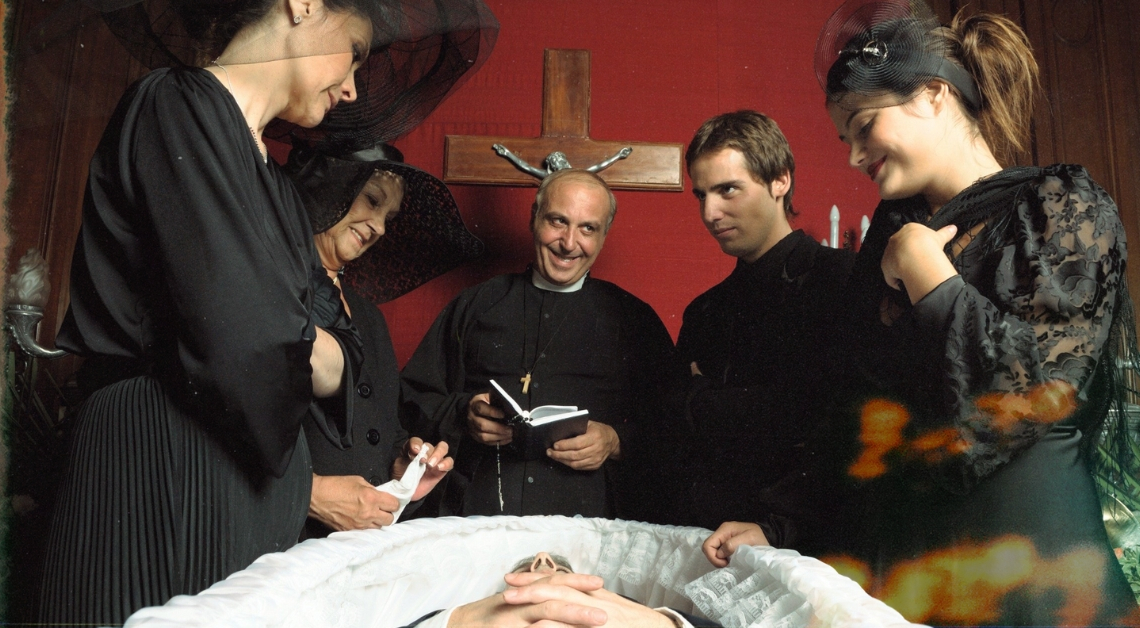
This is why funeral giggles feel brutal. You’re already holding too much emotion inside. Someone nearby cracks a smile or coughs weirdly. Your face reacts before you can stop it. Once that happens, you’re now doing everything in your power to contain it.
The study doesn’t offer a magic fix, and that’s almost the point. Laughter is involuntary, social, and stubborn. Trying to muscle it into submission fuels the reaction instead of stopping it.
It also explains why these moments are so common. Almost everyone can recall a time when they burst out laughing at a very inappropriate time. Not because they wanted it to, but because our brains simply couldn’t help it.
The post Why Some People Laugh at Funerals, According to Science appeared first on VICE.