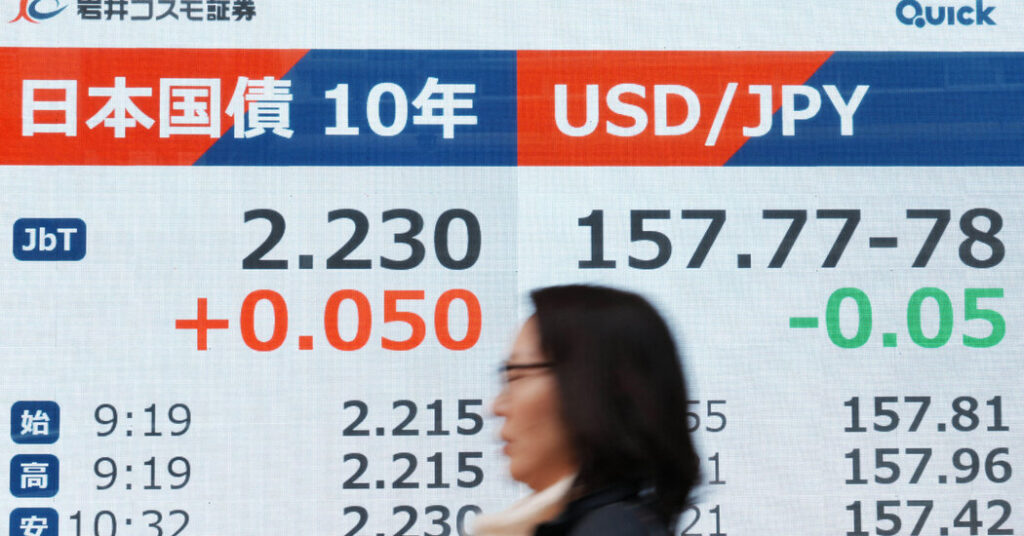
The U.S. Treasury took preliminary steps on Friday toward intervening in the currency market after Scott Bessent, the Treasury secretary, expressed concern this week that Japanese market ructions could spill over to the United States.
The Federal Reserve Bank of New York asked banks, on behalf of the Treasury Department, about the cost of exchanging yen for dollars, an unusual move that prompted a sharp recovery in the value of the Japanese currency, two people familiar with the matter said.
Currency values help determine bond yields, and Mr. Bessent this week blamed a rise in Japanese bond yields for driving up U.S. government borrowing costs.
The Trump administration has been focused on lowering yields on U.S. Treasuries, which underpin borrowing costs across consumer and corporate debt. Lowering borrowing costs is part of the administration’s recent push to improve affordability for Americans.
The New York Fed’s inquiries about the exchange rates on Friday were signals to traders that the Treasury may make a large-scale purchase of yen. Though the Treasury did not ultimately intervene, the possibility that it may at some point buy large amounts of yen drove up the currency’s value 1.6 percent against the dollar, its sharpest gain in almost six months.
Since April, the yen had steadily weakened 13 percent, with a similarly timed rise in Japan’s borrowing costs accelerating this week as investors called into question the country’s fiscal discipline.
Investors and analysts have questioned Prime Minister Sanae Takaichi’s call for a snap election and costly pledge to cut sales taxes. At its most recent meeting, the Bank of Japan flagged the weakening yen as a risk to the economy.
But some analysts were still left slightly puzzled by the Treasury Department’s move, as recent interventions to stabilize the yen have come from the Bank of Japan. The U.S. Treasury rarely intervenes in currency markets.
“It’s highly unusual for the U.S. Treasury to intervene,” said Ed Al-Hussainy, an interest rate strategist at Columbia Threadneedle Investments, adding that it was “odd at this stage.”
The Treasury Department and the White House did not respond to requests for comment.
Mr. Al-Hussainy said it was not obvious that Japan’s much smaller government bond market was affecting the United States at the moment. “The fear that Japanese interest rate movements are going to spill over into Treasuries is pretty unfounded,” he said.
While such interventions by the U.S. government are rare, Mr. Bessent has taken a more interventionist approach to currency policy as Treasury secretary.
When Argentina’s economy was teetering last year, Mr. Bessent orchestrated a central bank currency swap and used a bucket of money that the Treasury Department controls, known as the Exchange Stabilization Fund, to buy pesos. He said this month that the United States had been repaid and that taxpayers had profited from the maneuver.
A former hedge fund manager, Mr. Bessent made his name in finance by making big currency bets. As a top investor for the philanthropist George Soros in the 1990s, Mr. Bessent made a splash with a $10 billion bet that the British pound was overvalued. That wager helped “break” the Bank of England with devastating trades against the pound. In 2013, Mr. Bessent netted $1 billion for Mr. Soros’s fund with a giant bet against the yen.
Joe Rennison writes about financial markets, a beat that ranges from chronicling the vagaries of the stock market to explaining the often-inscrutable trading decisions of Wall Street insiders.
The post Tremors in Japan Prompt Treasury to Weigh Currency Intervention appeared first on New York Times.