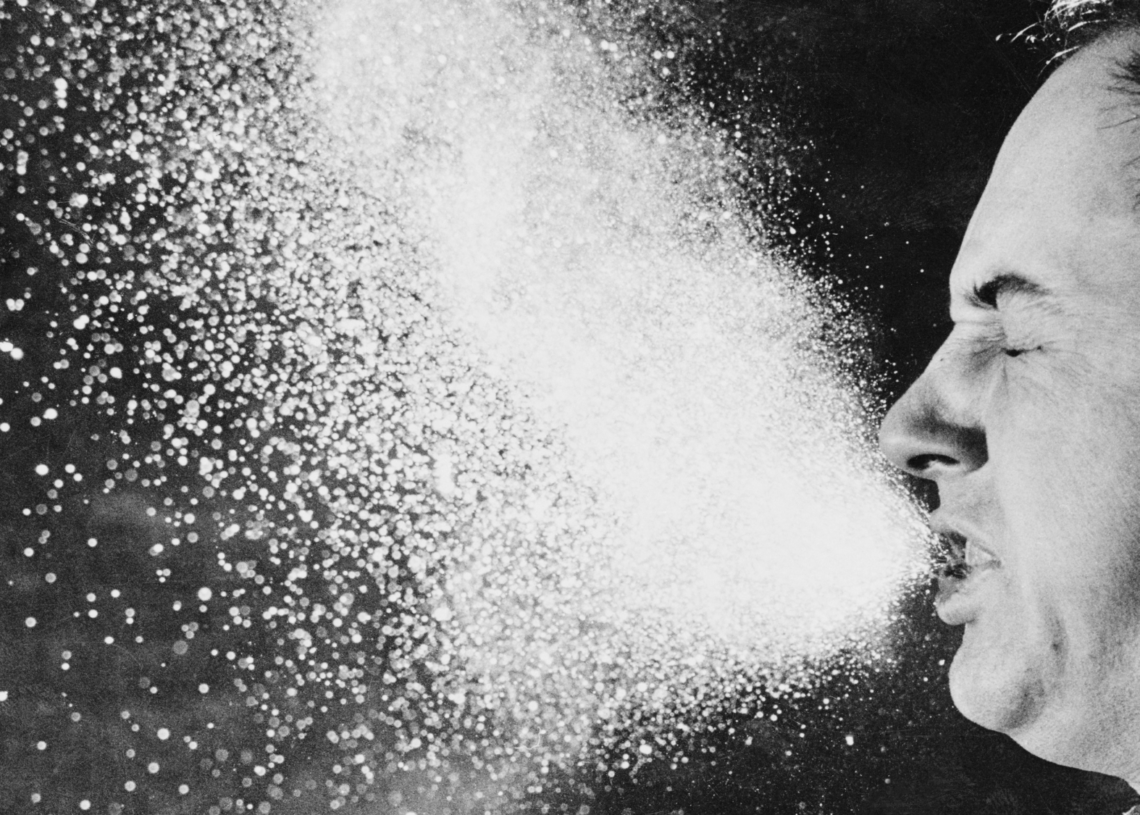
The flu has always been framed as a master opportunist. Crowded rooms. Shared air. Someone coughing into their sleeve on public transportation. Public health advice has leaned on the idea that proximity alone puts you at risk. If you share space long enough, the virus will find a way.
A team of researchers decided to test that exact assumption. Not with models or simulations, but with people who already had the flu, people who didn’t, and a hotel room designed to give influenza every possible advantage.
The experiment was led by scientists at the University of Maryland and later published in PLOS Pathogens. Volunteers who naturally acquired the flu, referred to as “donors,” were placed in close quarters with healthy recipients for several days. They played card games, exercised together, passed around shared objects, and breathed recirculated air in a sealed environment with reduced ventilation. Temperature and humidity were set within ranges thought to support the spread of viruses.
The goal was simple. See what happens when real people interact under conditions that should, on paper, allow flu to move easily from one body to another.
Nothing happened.
Despite hours of close contact across multiple days, not a single recipient tested positive for influenza. Donors were actively infected, and viral material showed up in saliva and breath samples. Shared surfaces and air were monitored. Some recipients reported mild symptoms like headaches, but there was zero evidence of infection.
As reported by ScienceAlert, the findings challenged long-held assumptions about how influenza spreads outside controlled lab settings. Earlier studies relied on deliberately infecting healthy volunteers. This one used people who caught the flu naturally, a closer scenario to everyday life.
The researchers point to several explanations. Adult donors in the study shed relatively small amounts of virus and showed few overt symptoms. They weren’t really coughing or sneezing, which is important because forceful respiratory events appear to drive most transmission. Breathing alone didn’t seem sufficient.
Recipient immunity, of course, factored in. Most participants had lived through many flu seasons, and several had prior vaccinations. That background exposure likely reduced vulnerability, even in a high-contact environment.
Airflow might have finished the job. Fans and recirculated air likely dispersed viral particles before they could concentrate near another person’s breathing zone. The virus never had time to make its move.
The study doesn’t really change what we know about influenza. Flu still spreads widely each year, and aerosol transmission remains central, especially when people cough or sneeze frequently. What this research really highlights is how specific the conditions need to be. Not everyone sheds the virus the same way. Not every body responds the same way. Air movement matters more than many of us realized. And, of course, the health of immune systems.
So, keep washing your hands, stay home if you’re feeling sick, and take care of your body and immune system. It could be the difference between taking on that guy’s gross sickness on the subway and fighting it off.
The post Scientists Tried to Spread the Flu—and Figured Out How to Stop It Instead appeared first on VICE.