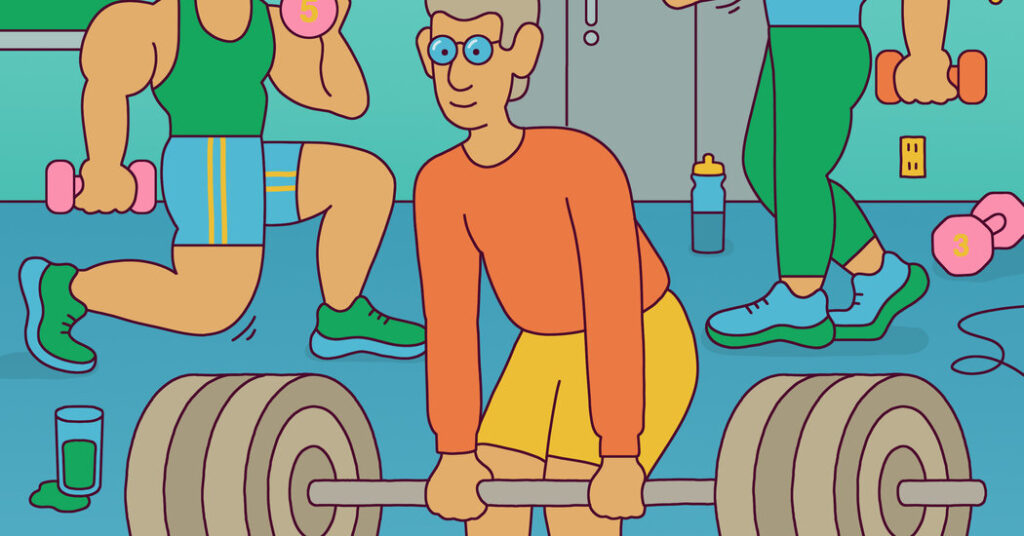
These days, you might think you have to become a power lifter to age well.
Dr. Gabrielle Lyon, a celebrity physician, calls muscles “the organ of longevity.” For Dr. Peter Attia, they’re “the most important retirement accounts you can have.”
We’re often reminded that muscle mass starts to decline as early as 30, and that it becomes harder to build muscle as we get older. But what are you supposed to do about it? And does the size of your biceps and quads really matter for longevity? Probably not, it turns out.
Experts say the secret to feeling strong in the long term is to focus less on the size of a muscle and more on what it can lift and how quickly, which helps you avoid chronic disease, falls and even admission into a nursing home.
In other words, we want our muscles to be functional so we can move heavy things, said Michael Ormsbee, a professor of exercise physiology at Florida State University. “That’s strength. That’s power,” he said.
How to Know if You Should Strength Train
Everyone’s strength demands are different — some people need to tote a 10-pound laundry basket upstairs, others need to move household furniture, bags of cement or obstinate pets.
Therefore, the clearest sign you need to incorporate strength training into your routine is if you begin to adapt your daily life around the loss of strength, said Donald Dengel, a professor of exercise physiology at the University of Minnesota.
For example, many older people he’s worked with begin putting cans on lower shelves when it becomes too difficult to lift things from higher ones. While this might make it easier to prepare dinner, it also means they are not exercising those muscles as much.
“When I’m not working that muscle group anymore, it’s just going to continue to decline,” Dr. Dengel said.
There are also multiple strength tests you can do with little or no equipment. The sit-to-stand test is a good proxy for power. A push-up test can measure upper body strength and simply carrying dumbbells can test your grip.
How to Train for Functional Strength
Many weight lifting programs prioritize building bigger muscles. But the goal of lifting as we age, Dr. Dengel said, should be building or maintaining strength, not muscle mass.
Those new to strength training, he added, will tend to gain both strength and muscle, no matter what approach they use. But there are a few things that can help you focus on functional strength, which means training to improve the way you move in daily life.
Lift Heavier
While research shows you can build both muscle and strength with light weight, it’s more efficient to lift progressively heavier.
Dr. Ormsbee recommended doing three to six repetitions of a weight that takes about 75 percent of your max effort. This means a weight that’s heavy enough so the last few repetitions feel difficult, but not so heavy that you reach failure, where you can’t possibly do another rep, or use poor form.
About 20 minutes is all you need to get through an effective strength training session.
Train for Speed and Power
As we age, we lose more fast-twitch muscle fibers (key for explosive movements) than slow-twitch ones, which are important for endurance efforts.
Power training, which can include plyometrics, medicine ball slams and other quick movements, can help you maintain these fast-twitch fibers longer, said Abbie Smith-Ryan, a professor of exercise physiology at the University of North Carolina at Chapel Hill.
Having quick reaction times isn’t just important for athletes, it’s useful for everyday challenges, like recovering from a stumble or avoiding tripping over a pet.
“That’s not just lifting heavy weight, but lifting weight quickly so you have the reaction time and the speed to get your foot underneath you as you fall off a curb,” Dr. Ormsbee said.
Single-leg movements, like lunges or step-ups, are another important way to build power and functional strength, Dr. Ormsbee said.
“If you had to run and jump over a small obstacle, you wouldn’t jump off two legs. You’re jumping off one leg,” he said.
Focus on Daily Movements
As we age, Dr. Dengel said, we should focus on preserving our strength for functional, daily movements, like carrying groceries or picking up a child.
For example, many people lose strength in their shoulders as they get older, Dr. Dengel said. To build your shoulder strength, he recommended a shoulder press, using either dumbbells, a barbell, resistance bands or even a milk jug.
“A milk jug weighs about eight pounds when you fill it up with water,” Dr. Dengel said. If you’re starting out, fill it up halfway and start off by lifting onto a high shelf eight times. As you get stronger, add more water or more repetitions. You can also pick milk jugs off the ground, performing a deadlift.
The post Forget About Muscle Mass as You Age, Focus on Strength appeared first on New York Times.