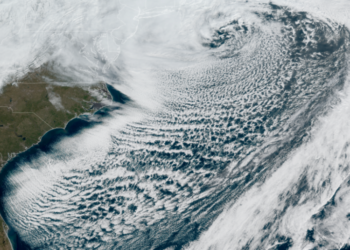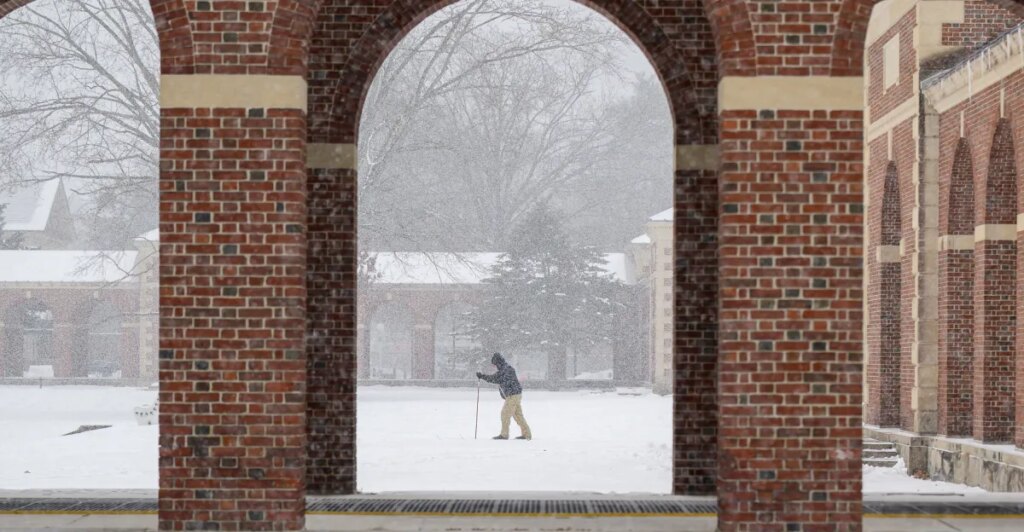
Already, a bitter burst of cold is gripping much of the country, and in the next few days, it will reach at least 45 states and extend across two-thirds of the country. It is one of the most extreme winter storms in years.
The National Weather Service on Thursday warned that “dangerously cold and very dry Arctic air” will spill into the continental United States and lead to “life-threatening risk of hypothermia and frostbite” as temperatures drop well into negative territory, creating some of the coldest weather on Earth.
For millions of Americans, this is not just a forecast anymore.
Schools were already announcing closures around the country Thursday morning. Lines were forming at grocery stores. The Texas power grid operator issued a winter warning as it braces for higher electricity demand and disruptions from freezing rain.
Wintertime cold is normal. But what is unusual is how this kind of cold tends to arrive: These icy spells sneak up on us, posing a greater challenge to forecasters and leaving little time to prepare compared to slower-moving extremes like heat waves.
“Oftentimes, longer duration signals, such as heatwaves, can be more predictable, whereas short bursts of cold are more difficult to predict,” Matthew Rosencrans, meteorologist at the National Weather Service’s Climate Prediction Center, told Vox in an email.
Cold snaps are especially jarring when they’re interspersed with milder weather. And even though the planet just came out of one of the hottest years on record and is poised to heat up more, shocks of extreme cold are not going away, nor are their disruptions and dangers. Winter Storm Uri in 2021 cost the US economy more than $200 billion as it triggered deadly blackouts and fuel disruptions in Texas.
New forecasting methods are helping meteorologists close the gap on predicting future winter storms. But they are racing against rapid planetary changes, and the US is deliberately hampering its own weather forecasting capabilities with major personnel and budget cuts to science agencies like the National Oceanic and Atmospheric Administration.
That could leave more Americans less prepared for dangerous weather, which can quickly turn deadly.
Maybe forecasting should be a sport in the Winter Olympics?
A cold wave is a distinct meteorological event where temperatures plummet below the average for a region for several days. But conventional forecasting tools often struggle to track all the factors at work and can underestimate the full extent of the chill. That makes it more difficult to prepare for the severity of a storm, often until it’s already set in.
“It always ends up colder than the models initially predict, and the models are always playing catchup,” said Judah Cohen, a research scientist at MIT studying weather forecasting.
Bouts of cold like the one this week have their origins at the North Pole. Icy air tends to remain corralled at the Arctic by a spinning band of strong, cold wind that is normally confined to 10 to 30 miles above the North Pole, known as the polar vortex. It tends to get stronger in the winter. The polar jet, which flows at a lower altitude some three to six miles above the ground, also plays a role.
Waves of air can start to form in the atmosphere. Those waves can collide with the polar air currents, with some of their energy bouncing off and some of their energy getting absorbed. The collisions deform the wind rings holding chilly Arctic air in place, breaking the neat circles into oblong lobes that drape over lower latitudes.
“If that energy gets absorbed, it kind of energizes or amplifies the wave over North America, and you get these more extreme weather events,” Cohen said. “This [weather this week] is a very nice example of that.”
So meteorologists have a pretty good grasp on how the process works. The challenge is figuring out what signs can tell us what’s coming.
There are interactions between the Arctic Ocean, the ice above it, and the sky that influence weather patterns around the world. There are also other sources of variability, like the periodic warming and cooling pattern in the central Pacific Ocean known as the El Niño-Southern Oscillation. It adds up to a knotty problem that scientists have slowly unraveled over decades.
To speed up progress and to encourage new approaches, the European Center for Medium-Range Weather Forecasts held a contest to see who could build the best new AI-powered model for subseasonal forecasts, looking two to six weeks ahead.
This remains one of the toughest windows to hit for weather forecasters because both long-term and short-term variables are at play. But good predictions in this timeframe could be very useful in planning for extreme weather, helping communities issue alerts, shore up power, and stockpile supplies. A good forecast is a lifesaving tool, one that has helped drive disaster-related deaths downward over the years.
Cohen’s team won the latest contest for the 2025-’26 winter season. There’s even a certificate. (“I’m excited, of course. I shared it on social media,” Cohen said.) He started raising the alarm as early as November that a blast of extreme cold was heading toward the United States in the coming months.
Our best in world subseasonal AI model is predicting something old/familiar and something new for mid January. Regions of elevated risk of extreme #cold are Alaska, Western Canada (really familiar by now), Great Lakes into Northeastern US and now for a big change much of #Europe. pic.twitter.com/VgeMa200sW
— Judah Cohen (@judah47) December 28, 2025
His team trained their model on decades of observations across the Northern Hemisphere. They found that there were really far-flung variables at work, like weather in Eurasia in October and ocean temperatures in parts of the Arctic like the Kara Sea.
How does climate change play into all this?
That is, as scientists say, an area of active research. In general, the planet is heating up, and winter temperatures are rising faster than in the summer months. But in certain areas and at specific times, there are still periods of intense cold, and some evidence suggests that warming in the Arctic is contributing to these cold weather spillovers. The Arctic is currently warming up to four times faster than the rest of the planet.
The extent to which human activity is altering cold snaps isn’t known, and there are other scientists who think that Arctic warming doesn’t play a big role in cold weather in lower latitudes and found that global warming has led to fewer extremely cold temperatures.
A complication on top of all this is that while teams around the world are in a heated competition for better forecasts, the US is cutting back on a lot of its scientific research, especially around climate change. In particular, the Trump administration has its crosshairs on the National Center for Atmospheric Research, one of the best places in the world for conducting weather and climate predictions. Job cuts across the government have already led to less collection of raw data that informs weather models. So at a time when the country needs a better sight of the world ahead, the current administration is obscuring the view.
The post Why forecasters struggled to see this extreme winter storm coming appeared first on Vox.