As countless Iranians bravely protested their rancid government this month, President Donald Trump warned the regime not to harm its own people. Security forces responded to that threat with mass killings. The president has done an admirable job of enforcing red lines against the Islamic Republic in the past, but maintaining deterrence is a never-ending mission.
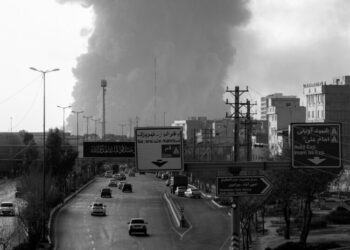
Tehran is carrying out its most repressive crackdown in decades. Reports have emerged of beatings, sexual assaults, raids on hospitals, rounding up children and the seizure of property owned by those who backed the protests. The breadth of the brutality is hard to know because of an internet blackout, but even state media has acknowledged widespread violence.
The regime is now mocking Trump for backing down, even with an American armada due to arrive this weekend in the Persian Gulf. The reinforcements will test just what the president means when he says his end game in Iran is “to win.”
Trump was riding high after capturing Nicolás Maduro in Venezuela without any U.S. deaths, but he backed off this week on Greenland in the face of backlash from bond markets and European allies. Urged to deescalate by other Middle Eastern countries who fear a regional war, Trump has ratcheted back his earlier rhetoric on Iran by repeatedly claiming that the Iranian government promised to halt over 800 executions of protesters.
Yet Iran’s top prosecutor, Mohammad Movahedi, said Friday that this was “completely false,” adding: “We do not, under any circumstances, take instructions from foreign powers.” (And refugees say the regime is executing protesters.) Meanwhile, the man leading Friday prayers in Tehran, caried live on state radio, called Trump a “yellow-faced, yellow-haired and disgraced man” who is “like a dog that only barks.”
Airstrikes alone won’t bring down the regime — or make it behave like a normal country. But Israel and the U.S. have shown in recent years that bombing can cause significant tactical setbacks. And there is always more room for sanctions pressure. The Treasury Department announced Friday that it will target nine vessels in Iran’s shadow fleet, which transports oil to foreign markets in violation of U.S. sanctions.
The president cannot maintain effective deterrence by turning the other cheek. How he responds is just as important as how quickly he does it.
The post Sending Iran another deterrence message appeared first on Washington Post.