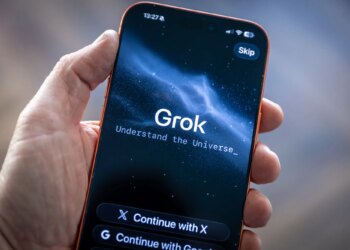
I first encountered the Freecash app after clicking on a sponsored TikTok video with dubious claims. The advertisement didn’t promote this app by name, rather it showed a young woman expressing her excitement about seemingly getting hired by TikTok at $35 an hour to watch videos on her “For You” page.
When I tapped the link to “order now,” it sent me to a website with TikTok and Freecash logos, featuring a download link for the Freecash app. “Get paid to scroll,” read the site. “Join thousands earning daily by watching TikTok videos and cashing out instantly.”
In the first month of 2026, Freecash has rocketed to popularity among US users. This week it reached the number two position on Apple’s free iOS download charts, nestled between ChatGPT and Gemini. The bump in downloads coincides with a spree of ads promoting the Freecash app.
The app appears to utilize the familiar strategy of offering rewards to users who share their information or complete online tasks. As a child, I remember entering my dad’s email and address into some pop-ups for a free iTunes giftcard, which never shipped us the promised $20 in downloads and likely just clogged his inbox with spam. (Please forgive me.)
While Freecash does actually pay out money to users, it’s not for scrolling social media. The app’s business model is centered around getting new users to play mobile games and then providing the players with monetary rewards. Those promises of direct payments to scroll aimlessly on TikTok sound too good to be true, because they are.
Ben Rathe, a spokesperson for TikTok, says the Freecash ads violate TikTok’s rules barring financial misrepresentation. Rathe says the ads in question were removed, after WIRED reached out, for what the company deemed as deceptive marketing. The social media platform forbids ads designed “to scam individuals out of money or personal data,” according to TikTok’s advertising policies.
The company behind Freecash claims that it did not directly produce the ads that I encountered on TikTok. Rather, the marketing was “generated by third-party affiliate partners,” says Elizaveta Shulyndina, a spokesperson for Freecash’s parent company. “We’re reviewing activity with relevant partners and tightening monitoring.”
Back on my TikTok feed, after I tapped on that first sponsored post, the barrage of boosted videos promoting Freecash grew incessant. A post with over 150,000 likes showed a mom and her young son traveling to the store together, because she could buy her “son whatever he wants now that I’m paid to watch TikTok.” Other sponsored videos showed more people enthusiastic about the amount of cash they are getting paid to scroll TikTok.
It’s not clear if the women and children appearing in the TikTok ads are actually the people promoting Freecash. Many of the ads originated from TikTok accounts with minuscule followings or accounts with zero other publicly viewable videos.
When I finally downloaded the app, rather than immediately finding ways to receive some kind of kickback for scrolling on TikTok, I was directed to download multiple mobile games, like Monopoly Go and Disney Solitaire.
Then, I was finally given the option to complete challenges in a limited amount of time to earn money. The Monopoly Go challenges included cash rewards ranging from $0.01, for playing the game for two minutes each day, to $123, for reaching level 300 in less than three months.
The company behind Freecash, called Almedia, is based in Berlin. Almedia operates the Freecash app as an advertising platform that matches mobile game developers with new users who not only install the apps but will also spend money.
CEO Moritz Holländer told PocketGamer.biz in 2024 that if the app had data about how “you spent money in a certain genre,” Freecash wouldn’t match you with games that stray from your preferred picks. Why? “Because we know that your expected value that you would generate for this type isn’t so high, and we would disappoint the advertiser,” he told the publication.
Freecash seems to nudge users to start spending money in the mobile games it promotes. The sole tip for users included on the Monopoly Go challenges page is the suggestion to “make purchases to reach these faster!” The second time I opened the Freecash app, a pop-up offered me 33 percent more in rewards money if I would just make that first in-game purchase.
Beyond the contents of Freecash’s marketing, Lena Cohen, a staff technologist at the Electronic Frontier Foundation, is concerned about how users may be targeted by apps like this one in manipulative ways that hinge on exploiting personal data. “Some of the data brokers sell lists of people who might be susceptible to scams or who might be addicted to online gaming,” says Cohen. In Freecash’s privacy policy, the information it automatically collects about you may include facts about your race, religion, sex life, sexual orientation, health, and biometric data.
In addition to Freecash, each additional new mobile game you download on your path to earn the rewards comes with its own set of privacy policies and collected user data. “If you’re being paid to use an app,” she says. “Chances are high that the app is harvesting and monetizing your personal data.”
Even after TikTok said it was removing the offending ad for Freecash, I still encountered similar posts promoting it in my feed. It’s notable that Freecash does offer an affiliate payout program to people who promote the app online.
In the official Discord server for Freecash, the key moderator with a “FC Staff” badge recently sent encouragement to a #hustler who was worried their network was too limited to be a successful affiliate marketer.
“You don’t even need a huge network tbh,” the moderator wrote on January 15 in the Discord channel for affiliates. “You can buy TikTok/YouTube accounts, use Al, etc. Nowadays, anything is possible.”
Consumer advocates have reservations about Freecash’s claims about not being involved with the misleading marketing on TikTok. Eden Iscil, a senior public policy manager with the National Consumers League, has seen similar moves in the past from sports betting apps that appear to attempt to dodge rules through third-party affiliate partnerships. “Ultimately the responsibility is on the advertiser,” says Iscil.
The post No, the Freecash App Won’t Pay You to Scroll TikTok appeared first on Wired.