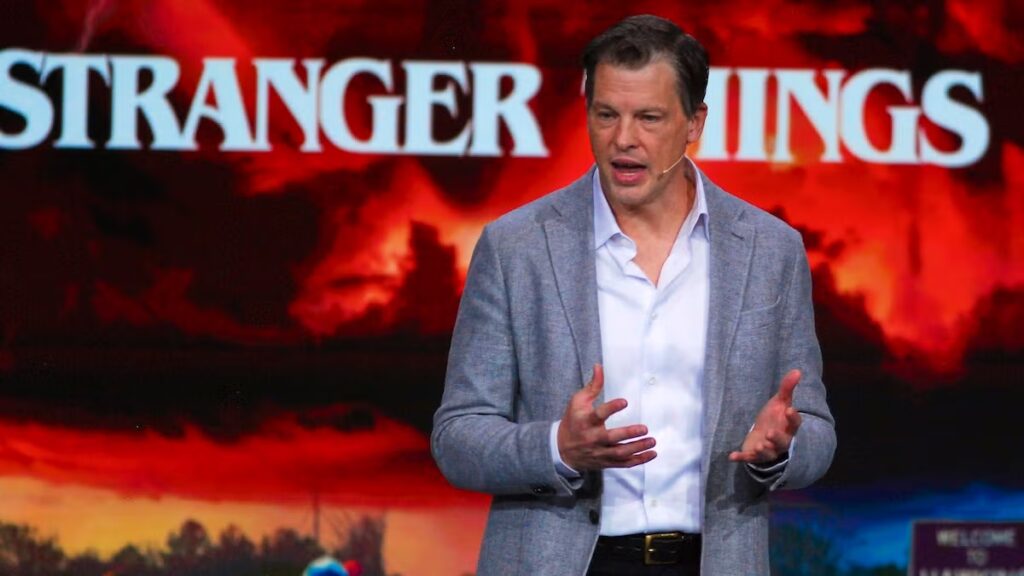
Netflix co-CEO Greg Peters has taken aim at Paramount’s hostile takeover bid for Warner Bros. Discovery, arguing that the $30 per share offer “doesn’t pass the sniff test.”
“That’s what the Warner Brothers board determined,” the executive told the Financial Times. “And I think that’s where the Warner shareholders are at too.”
The $108.4 billion bid is backed by Oracle co-founder Larry Ellison’s irrevocable personal guarantee towards $40.4 billion of the equity financing, and $55 billion in debt financing from Bank of America, Citigroup and Apollo Global Management. Its other equity partners include RedBird Capital Partners and three Middle Eastern sovereign wealth funds.
“Without Larry Ellison independently financing this thing, there’s no chance in hell Paramount would ever be able to pull this off,” Peters said.
He noted that Paramount is already “saddled with quite a lot of debt” and that the additional leverage needed to finance a deal is “pretty crazy.”
“If they were to move [higher], what kind of leverage would they have to have?” Peters added. “It’s hard to imagine how that works out well.”
RedBird Capital Partners founder and managing partner Gerry Cardinale pushed back, telling FT: ““Our leverage is nowhere near what they’re talking about. The Netflix deal is the Harry Houdini of deals.”
Paramount has extended the deadline on its tender offer to Feb. 20. Around 168.5 million shares have been tendered as of Wednesday, representing just 7% of WBD’s 2.48 billion outstanding shares.
Ellison has also launched a proxy fight seeking to block Netflix’s $83 billion deal and the spinoff of Warner’s cable networks into Discovery Global. Shareholders are expected to vote on the Netflix deal by April.
The Department of Justice’s Antitrust Division is currently reviewing the Netflix deal and has issued a request for more information. Netflix is also engaging with overseas regulators, including the European Commission.
Netflix has said the Warner Bros. deal would close in the next 12 to 18 months and the Discovery Global spinoff is expected to be completed in the next six to nine months.
Peters’ comments come as the Netflix deal has faced concerns from consumers, Hollywood creatives and lawmakers on Capitol Hill alike for $83 billion deal’s potential impact on consumer prices, competition and the future of the theatrical business.
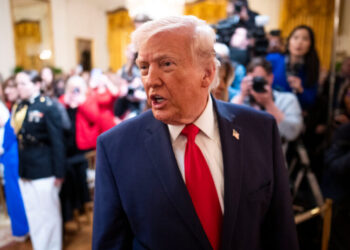
President Donald Trump has warned that Netflix’s “very big market share” could pose a potential problem. The DOJ and Federal Trade Commission could determine that competition would be substantially diminished if Netflix exceeds a 30% market share through a combination with HBO Max, a threshold it is likely to pass.
Netflix has 325 million paid subscribers and accounts for 9% of U.S. TV viewership as of December, per Nielsen. Warner Bros. Discovery reported a total of 128 million subscribers globally, though that figure includes both HBO Max and Discovery+, the latter of which will be spun off with Warner’s cable networks.
During Netflix’s fourth quarter earnings call, Peters said the company is still under 10% of TV time in all major markets where it competes, a core argument as it tries to convince regulators that it’s not a TV giant.
“We’ve got hundreds of millions of households around the world still to sign up,” Peters said. “We’re just about 7% of the addressable market in terms of consumer and ad spend. So tons of room ahead of us.”
Co-CEO Ted Sarandos added that the deal will allow the company to significantly expand production capacity in the U.S., keep investing in original content long-term and offer more jobs and opportunities to creative talent. He also pointed to growing competition in the market, from YouTube bidding on the Oscars and the NFL to Amazon owning MGM, Apple competing for the Emmys and Oscars and Instagram “coming next” with plans to bring its Reels offering to TVs.
But Paramount has argued that Netflix’s argument that the streaming market includes YouTube, TikTok, Instagram and Facebook is a “non-credible” definition that “no regulator has ever accepted.”
Sarandos and Warner Bros. chief strategy officer Bruce Campbell will field questions from Senate lawmakers on the deal’s potential impact during an antitrust hearing in February.
Shares of Netflix have also fallen 8% in the past month and hit a new 52-week low earlier this week, as analysts have warned that the WBD bidding war would be an overhang on the stock for the forseeable future. Also weighing down the stock was the company’s mixed outlook for 2026 and news that Netflix would pause share buybacks to help fund the deal.
Netflix has said it would finance the Warner Bros. acquisition with $20 billion in cash on hand and $52 billion in acquisition debt. It also said it would assume $10.7 billion in net debt for Warner Bros. studios & streaming business.
On Monday, the company entered a $5 billion senior unsecured revolving credit facility and a $20 billion senior unsecured delayed draw term loan facility, and reduced its outstanding bridge facility commitments to $34 billion. It also obtained a $8.2 billion increase to its bridge facility commitments to support the change to an all-cash transaction, increasing the total commitments to $42.2 billion.
“We anticipate reductions to these bridge facility commitments between now and closing through a combination of future bond offerings and cash we expect to accumulate on our balance sheet,” the company said.
Though Peters admitted that the deal has created uncertainty for investors, he told the Financial Times that he remains focused on making sure Netflix continues to perform.
“I just sort of try and tune out some of the noise and just focus on what we can control,” he said. “Let’s keep moving things forward.”
The post Netflix Co-CEO Greg Peters Says Paramount’s WBD Bid ‘Doesn’t Pass the Sniff Test’ appeared first on TheWrap.