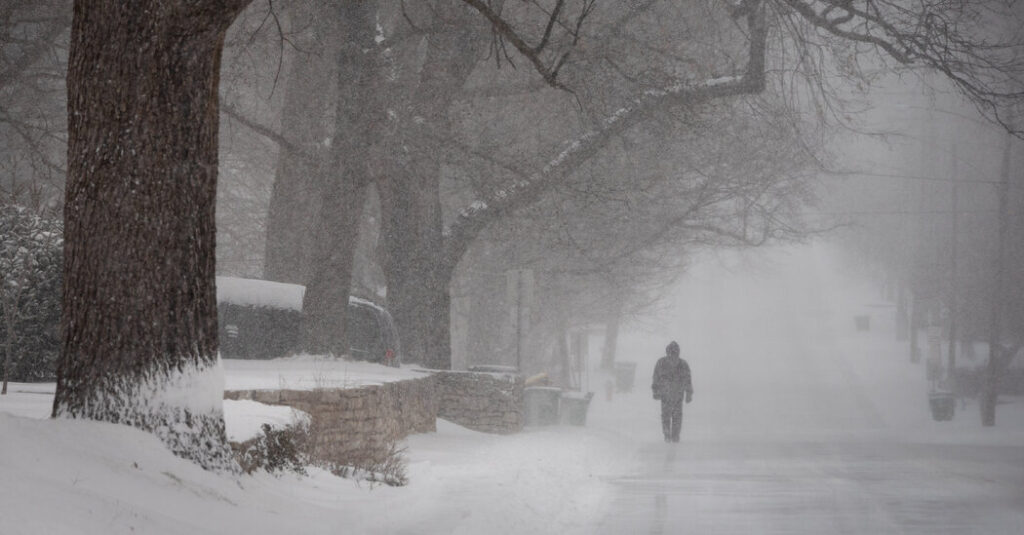
A major winter storm is expected to hit large swaths of the central, Eastern and Southern United States this weekend, bringing a mix of freezing temperatures, heavy snow and ice.
These conditions can quickly get uncomfortable, and sometimes even dicey.
“Take weather warnings seriously,” said Stephen Cheung, a professor of kinesiology at Brock University in Ontario. “You can still do most things safely — just plan ahead, be prepared, know the risks.”
Dress properly before venturing outdoors.
Try to limit the time you spend in the cold. In low temperatures, ordinary activities like waiting for the bus can become dangerous if you’re not appropriately dressed, said Dr. Judah Sueker, an emergency medicine physician at Mount Sinai Hospital.
Focus on your core: Start with a base layer, add an insulating sweater or fleece, and top it off with a wind- and water-resistant outer shell, Dr. Cheung said. Sweat can break down insulation, collapsing the tiny air pockets that trap heat. So, avoid cotton for your base layer, since it holds onto moisture, and if you start to overheat, unzip or remove a layer before you soak through, he added.
Cover up any exposed skin with thick socks, gloves, earmuffs, a scarf, a hat and perhaps even a balaclava, said Dr. Jay Bhatt, an Illinois-based geriatrician.
Know the signs of frostbite and hypothermia.
When you get cold, your body redirects warm blood toward your vital organs. To reduce heat loss, it narrows the small blood vessels in your hands, feet, ears and nose, making those areas prone to frostbite, a freezing injury that can damage skin and underlying tissue.
At 0 degrees Fahrenheit or lower, frostbite can develop on exposed skin in as little as five to 10 minutes. If any area starts to sting, tingle or turn red, get out of the cold and warm up right away, Dr. Sueker said. If your skin becomes numb, feels hard or waxy, or turns white or gray, seek medical care.
With prolonged cold exposure, your core body temperature can also drop — a condition known as hypothermia — and organ function starts to become compromised.
Shivering is often the first sign and a reminder to get inside and warm up. But if body temperature continues to fall, the shivering can fade, and confusion can set in, said Dr. Robert Schwaner, medical director of emergency medicine at Stony Brook University Hospital, making it harder to think clearly and get to warmth.
If you notice any of these symptoms and have access to a thermometer, do a temperature check. A reading below 95 degrees Fahrenheit is an emergency and requires immediate medical attention. In severe cases of hypothermia, a person can slip into a coma, Dr. Schwaner said.
Tend to your heart and lungs.
“Cold affects every organ system,” said Dr. Isabel Algaze Gonzalez, an emergency medicine physician at the University of California, Irvine.
For example, cold, dry air can irritate people’s airways, exacerbating asthma and chronic obstructive pulmonary disease.
Low temperatures can also raise people’s blood pressure within just 20 minutes of exposure.
“Cold doesn’t just make you shiver; it makes your heart work harder,” Dr. Algaze said.
For someone with preexisting cardiovascular disease, this added stress can be particularly dangerous. Research has linked cold spells to a higher risk of heart attacks, strokes and kidney injuries, and experts say the tipping point is often strenuous activity, like shoveling snow off a driveway.
So, if you need to shovel or do any intense work outdoors, approach it like a workout. Drink enough water, stretch beforehand and pace yourself. Call 911 immediately if you notice chest pain, dizziness or shortness of breath.
Know who is at the most risk.
Older adults and children are at higher risk of cold-related harm, Dr. Bhatt said, because they are often less able to regulate their body temperature.
Conditions like hypothyroidism, diabetes, Parkinson’s and peripheral vascular disease can increase the risk of hypothermia or frostbite, as can drugs like sedatives, antipsychotics and beta blockers. But experts never recommend stopping a prescribed medication without first talking to your doctor.
Cold snaps also bring a more mundane danger: slips and falls, especially on slushy steps and icy sidewalks. So, check in with older family members and neighbors to make sure that their heat is working and that they have enough supplies to avoid unnecessary trips outdoors, Dr. Bhatt said.
And remember that people without stable housing or heating are also at higher risk of cold-related illness and injuries.
Get inside and get warm.
When you come in from the cold, change into dry clothes and warm yourself up gradually. Avoid heating pads, hot water or sitting right in front of a space heater, Dr. Schwaner said. After some time in the cold, skin can be numb, and direct heat can cause burns or further tissue damage.
Keep space heaters at least three feet away from drapes, furniture and bedding, and place them on a stable, level surface where they can’t easily be knocked over. (In general, don’t set them on rugs and carpets.) Electric heaters don’t carry the risk of carbon monoxide poisoning, but if you have fuel-burning devices (i.e., those that take propane, wood or coal), only use them with proper ventilation and never in enclosed spaces, Dr. Schwaner said.
People can become mildly dehydrated in the cold without realizing it, partially because low temperatures blunt thirst and make you urinate more, Dr. Cheung said. A warm drink (nonalcoholic, since booze can be dehydrating and accelerate heat loss) will help you replace fluids and get comfortable.
Simar Bajaj covers health and wellness for The Times.
The post How to Protect Yourself in Extreme Cold appeared first on New York Times.