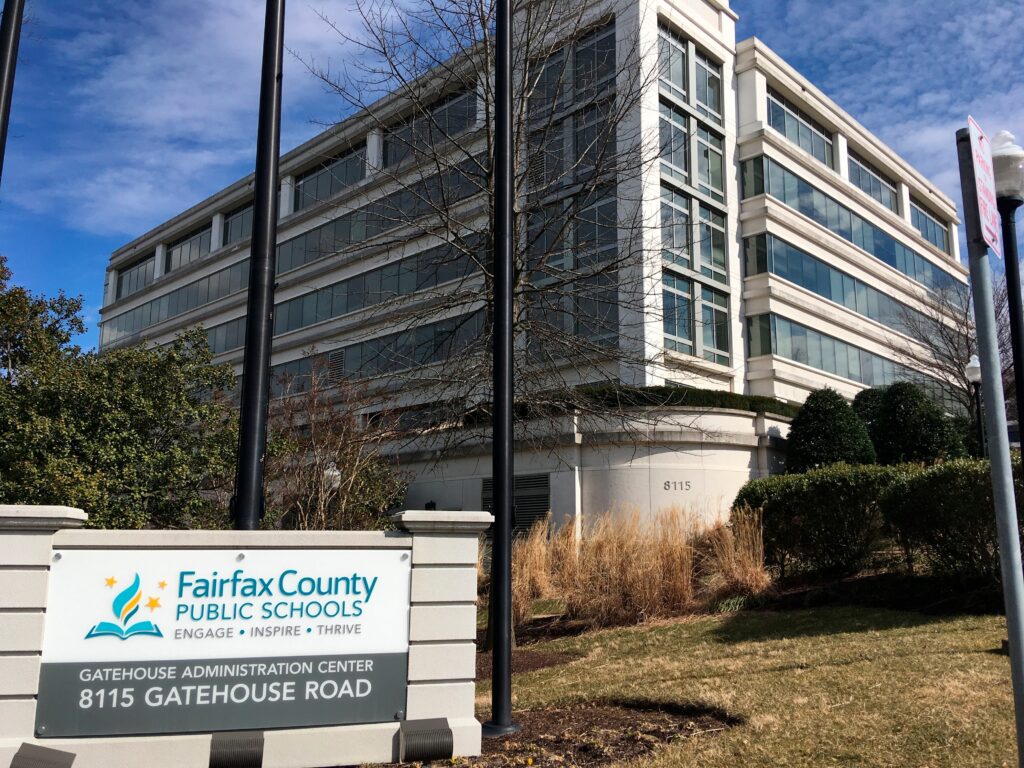
Virginia’s largest school district approved a plan that will change attendance boundaries across the county for the first time in more than 40 years.
The vote Thursday capped an 18-month-long process by Fairfax County Public Schools to review its maps that determine what schools families can attend based on their address. The conversation drew thousands of comments from residents who had issues with their school boundaries; were worried that the schools their children were zoned for might change; or simply had ideas about the best way for the district to handle the massive undertaking.
After hours of public comment periods, dozens of meetings and multiple drafts of changes, Fairfax Superintendent Michelle Reidrecommended changes that would cause about 1,700 students to move schools, which is less than 1 percent of students in the district.
After a final public forum Thursday, the school board approved the proposal 8-3.
The changes can be found on the district’s website.
School leaders voted in 2024 to begin reviewing the district’s boundaries every five years, a shift they hoped would help better address challenges caused by changing enrollment, growth and renovations. They started examining the boundaries shortly after the change.
Fairfax County serves more than 180,000 students in nearly 200 public schools. It is home to some of the state’s — and the country’s — most prestigious public schools. The district’s demographics have also changed since the last countywide review in 1984, with a more diverse population and its students speaking more than 200 languages.
The district’s review set out to study how to address systemic issues such as overcrowding and long commute times. It also tried to reduce the number of “attendance islands,” in which a pocket of homes within a neighborhood is zoned for a different school, and “split feeders,” where students within one elementary or middle school are zoned to progress to different schools at the next level.
The aim, school leaders said, was to prioritize those issues while disrupting as few students as possible.
A perfect solution to all of the district’s issues doesn’t exist, leaders emphasized. Decisions to keep students in one school may neglect to resolve outstanding issues at another. An option to solve capacity issues at one school might remove students from their tight-knit neighborhood community in another. Also to consider are the safety of walking paths and the distances that buses have to travel.
In an interview, Reid called the review a “Goldilocks” scenario, especially when trying to find the right level of capacity for each school. She said the process was not easy and not perfect, but the district learned from the undertaking and will continue to refine it moving forward.
“Our expectation would be that each five-year review will generate better and better results for our boundaries and ultimately for the best use of our facilities and program placement,” Reid said at Thursday’s school board meeting.
Board members who opposed the changes said they were concerned the district did not have a finalized plan for transporting students who opt to stay in the schools they are currently zoned in while the changes are phased in. Others expressed concern that the review, while robust, did not go far enough to address existing issues.
“Whatever we intended, the results far fall short, far, far short of transformation,” at-large board member Ryan McElveen said. “It is incremental change at extraordinary cost.”
The boundary review drew vast feedback from communities across the district.
In public comment sessions, parents urged leaders not to bend to the loudest groups. Others voiced concerns about the proposals not going far enough to resolve all the challenges identified. Some felt overlooked and left out. Others felt targeted. School officials have identified certain schools and problems for monitoring and later review, saying that this will be an ongoing effort. The district is also slated to open a new high school next school year, which will lead to further boundary changes.
Kris Griffin, 52, has two children who were among the affected students in Reid’s first set of proposed changes presented earlier this month. Under that proposal, her children’s zoned school would have moved from Justice High School to Falls Church High School.
When she and her neighbors found out in December that they might be affected by changes, she said they were confused and frustrated. The community, Griffin said, had received little opportunities for feedback until that point.
Griffin’s husband spoke out against the changes earlier this month, during a Jan. 10 hearing that lasted more than three hours.
After the hearing, Reid updated her proposal — including pausing the changes affecting Griffin’s neighborhood and adding them to a list that needed more time for community engagement. The board will revisit the proposal next year, according to the most recent update.
Griffin said she was elated by the decision, but cautioned that it was important for parents to pay attention to the boundary review. Even if a school is not affected today, she said, it could be down the line, like hers might be next year. “At the end of the day, these are our kids,” Griffin said. “Not lines on a map.”
Thursday’s school board vote came after more speakers had another chance to weigh in on the new boundaries.
Mark Barr’s children are among the nearly 1,700 students affected by the approved changes. He urged the school board to approve the changes, saying he believed they were done in good faith to improve the school district. The changes removed his neighborhood’s split-feeder elementary school.
Moreover, Barr said, the district just needed to make a decision so families know where their children will be going to school. His daughter, a middle-schooler, wasn’t sure where she would be going to high school.
“She hasn’t been able to be excited because she didn’t know which friends she had now were going to be in school with her next year,” Barr, 46, said in an interview.
Thursday’s vote made that decision for her: She’ll be headed to Madison High School next year.
“The big thing was, just get an answer, whatever the answer is,” Barr said. “Everybody advocated as much as they could for their kids. At the end of the day, what happened was what should have happened.”
The post Fairfax County approves new school boundaries for the first time in decades appeared first on Washington Post.