The men, one Black and the other white, had never met, but this week they leaned in for a pained embrace, their lives intertwined for seven decades by loss, bigotry and injustice.
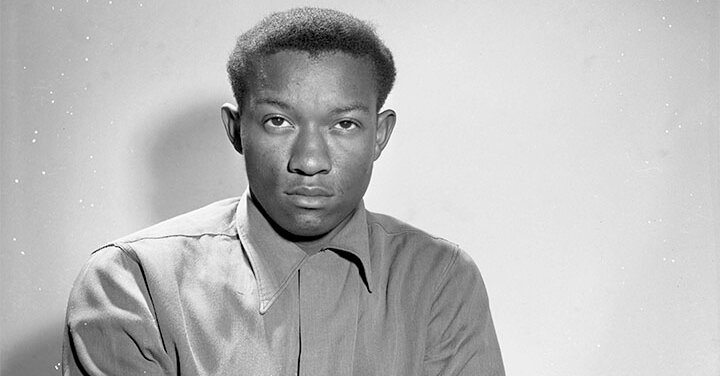
Ted Smith, 72, was 2 years old when his father, Tommy Lee Walker, a Black man with no prior criminal record, was sent to the electric chair in 1956 for the rape and murder of Venice Lorraine Parker, a White woman, in Dallas.
On Wednesday, the Dallas County Commissioners Court exonerated Mr. Walker, determining that the prosecutor in the case and the police had steered his conviction by an all-white jury, during the Jim Crow era, and violated his constitutional rights.
As the panel reached its unanimous decision, the man consoling Mr. Walker’s only son was Joseph Parker, the son of the murder victim.
“I’m so sorry for what happened,” Mr. Parker said, putting his hand on Mr. Smith’s shoulder.
He was 4 when his mother was killed, the crime setting off a manhunt by the police that zeroed in on young Black men.
“And I’m so sorry for your loss,” Mr. Smith replied.
John Creuzot, the Dallas County district attorney, told the commissioners that Mr. Walker should not have been prosecuted, but was arrested because of the color of his skin and coerced into giving a confession that he immediately recanted. He was 19 at the time of his arrest and 21 when he was executed.
“It is my duty to make every effort to right the wrongs of the past,” Mr. Creuzot said. “Tommy Lee Walker’s constitutional rights were violated at every turn, from his warrantless arrest to his interrogation, right down to his prosecution. The criminal justice system failed him.”
The case, he said, was “riddled with racial injustice.”
Ms. Parker, who was 31, was walking to a bus stop near Dallas Love Field on the night of Sept. 30, 1953, after leaving work at a dime store. She was dragged into a ravine, beaten and raped by an attacker, who cut her throat, the authorities said.
Two airport workers drove her to get medical attention, but she died from her injuries. A police officer claimed at the time that Ms. Parker told him that she had been attacked by a Black man, but the officer’s account was disputed by several witnesses who said that Ms. Parker was convulsing and could not speak.
At the time of the attack, Dallas was already on edge, with residents consumed by reports of a prowler in the city, described in newspaper headlines as a Black man peeping inside windows.
“That moment changed everything in Dallas,” Mary Mapes, an investigative journalist and a former CBS News producer, told the commissioners on Wednesday, referring to Ms. Parker’s murder.
Ms. Mapes spent more than a decade examining Mr. Walker’s conviction, which officials described as a catalyst in their efforts to exonerate him.
A four-month manhunt for Ms. Parker’s killer resulted in Mr. Walker’s arrest, despite the fact that he had offered an alibi. On the night of Ms. Parker’s murder, he was with his girlfriend, who had gone into labor.
On Wednesday, legal advocates said that the captain in charge of the Dallas Police Department’s homicide bureau at the time, Will Fritz, had once been a member of the Ku Klux Klan, and that the county’s longtime district attorney, Henry Wade, had overseen 20 wrongful convictions. Both have since died.
The advocates described both of them as complicit in carrying out an intimidation campaign and corrupt prosecution to win a conviction in the case, one that drew widespread condemnation from the Black community in Dallas.
M. Chris Fabricant, director of strategic litigation for the Innocence Project, which works to overturn wrongful convictions, told the commissioners that the organization has worked with the Dallas County district attorney’s office on 11 exonerations since 2008.
“They are an everyday fact of our flawed justice system,” Mr. Fabricant said.
But this was the first time, he said, that the group had sought one for someone who had died.
Speaking moments before the vote on Wednesday, John Wiley Price, the ranking member of the Dallas County Commissioners Court, said that the actions of the police and prosecutors were criminal.
“Tommy Lee Walker was not killed,” he said. “He was murdered.”
Mr. Smith, Mr. Walker’s only child, told the commissioners that growing up without a father pained him.
“One friend asked me one time, and it really broke my heart,” Mr. Smith said, “‘Where’s your daddy?’”
Mr. Smith said that it was difficult for him to comprehend, and that his mother tried to explain it to him.
“She said, ‘Baby, they gave your father the electric chair,’” Mr. Smith recalled, sobbing and burying his head in his hand, “for something he didn’t do.”
Neil Vigdor covers breaking news for The Times, with a focus on politics.
The post Dallas County Exonerates Black Man Who Was Executed in 1956 appeared first on New York Times.