It was a Cro Magnon opus.
Europe might not be the birthplace of human symbolic culture as previously thought. International scientists have discovered a stencil of a hand in Indonesia that dates back nearly 68,000 years, making it the oldest known cave artwork ever discovered, per a study published Wednesday in the journal Nature.
“People living in what is now eastern Indonesia were producing rock art significantly earlier than previously demonstrated,” the authors wrote while describing the subterranean masterpiece in an article in The Conversation.
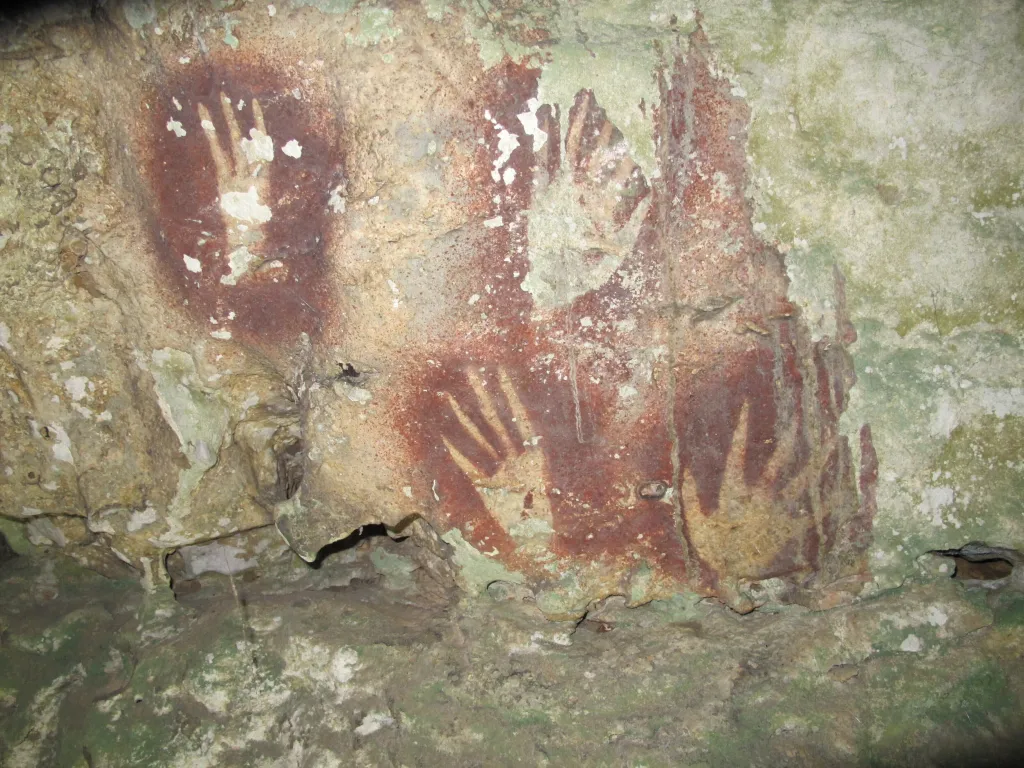
Discovered in limestone caves on the island of Sulawesi, the ancient stencil depicts a red outline of a hand. It was created by blowing pigment over a hand pressed against the rock — like a prehistoric finger painting.
By analyzing traces of uranium in the mineral deposits covering the work, researchers were able to determine that it was created at least 67,800 years ago, making other cave art look positively modern.
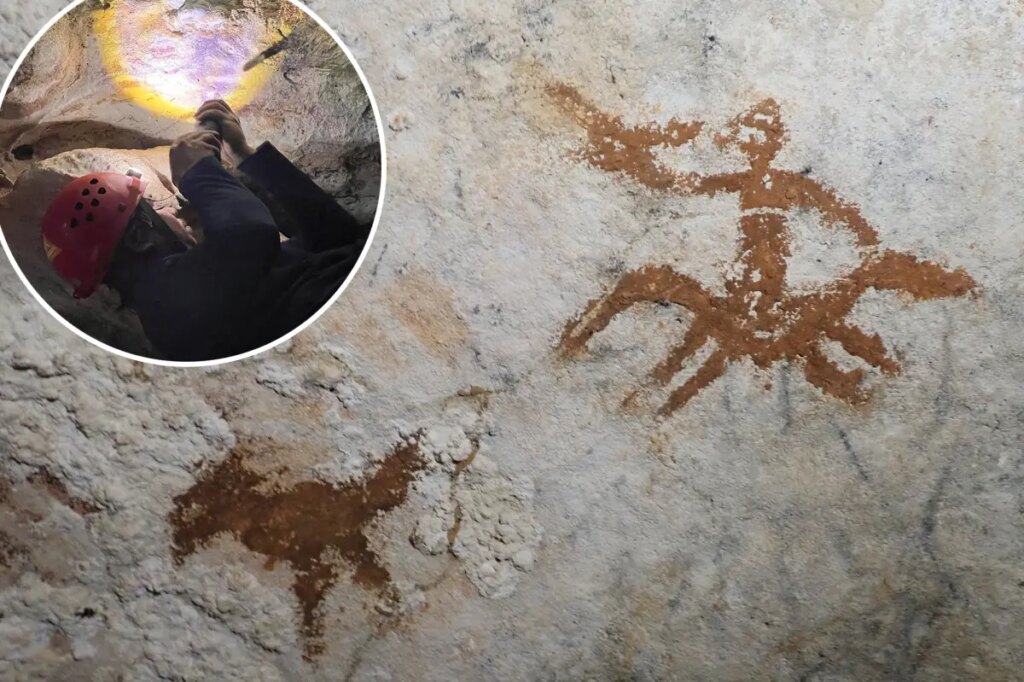
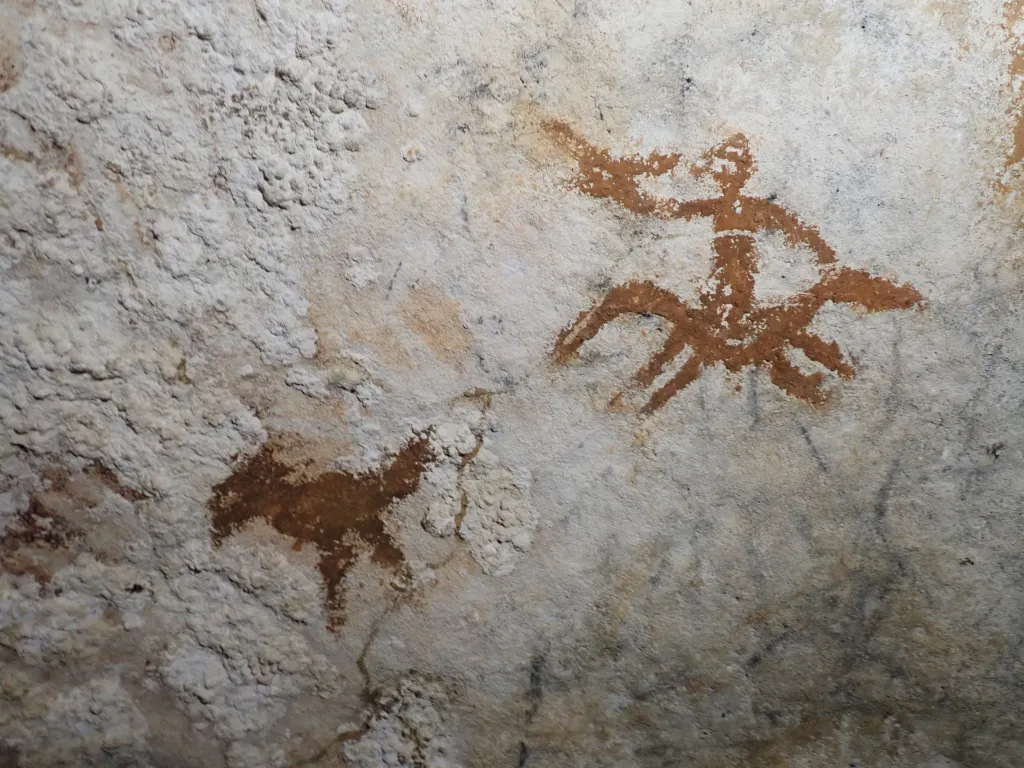
That’s 15,000 years older than the underground opus previously believed to be the world’s oldest cave painting — a depiction of humanoid figures interacting with a pig that was found on the same island.
It’s also 30,000 years older than the oldest cave painting in France, proving that humans were expressing themselves artistically for much longer than previously thought.

However, it’s not just the artwork’s age that’s impressive. The art prehistorians noted that the primeval Picasso was crafted in a style unique to Sulawesi — a prehistoric form of expressionism if you will — with hands that had been meticulously reshaped to resemble animal claws.
The researchers theorized that “altering human hands in this manner may have had a symbolic meaning, possibly connected to this ancient society’s understanding of human-animal relations.” The researchers were reminded of a 48,000-year-old cavern creation, also from Sulawesi, that portrayed human figures with bird heads and other animal features, evoking the human-beast hybrids of Greek Mythology.
This primeval graffiti demonstrated that the human knack for abstract, symbolic thinking wasn’t borne in Ice Age Europe 40,000 years ago as previously believed, but was potentially innate in our species.
“When I went to university in the mid to late 90s, that’s what we were taught – the creative explosion in humans occurred in a small part of Europe,” Professor Adam Brumm of Griffiths University in Australia, who co-led the project, told the BBC. “But now we’re seeing traits of modern human behavior, including narrative art in Indonesia, which makes that Eurocentric argument very hard to sustain.”
The researchers postulate that human creativity stretches back to Africa, where we evolved. They point to ochre, beads and abstract marks from South African repositories such as Blombos Cave, some of which were between 70,000–100,000 years old.
These Southeast Asian cave creations weren’t one-offs, either. Brumm claimed that Indonesian colleagues have uncovered hundreds of these subterranean art salons, with some caverns used repeatedly for tens of thousands of years.
These discoveries have broader implications that extend beyond art prehistory, namely that they perhaps prove that our species, Homo sapiens, reached the Australia–New Guinea landmass, known as Sahul, much earlier than many researchers believe.
It was previously thought that humans arrived around 50,000 years ago, but the recently-discovered Sulawesi cave painting turns that date back by at least 15,000 years.
“The people who made these hand stencils in the caves of Sulawesi were very likely part of the population that would later cross the sea and become the ancestors of Indigenous Australians,” the researchers wrote.
The researchers hope to explore other parts of Indonesia, which they note is largely “archaeologically unexplored,” with the hope of finding “equally ancient, or even older, cultural traditions may still be waiting on cave walls across the region.”
The post The world’s oldest cave painting was just discovered — and it could rewrite origins of human history appeared first on New York Post.