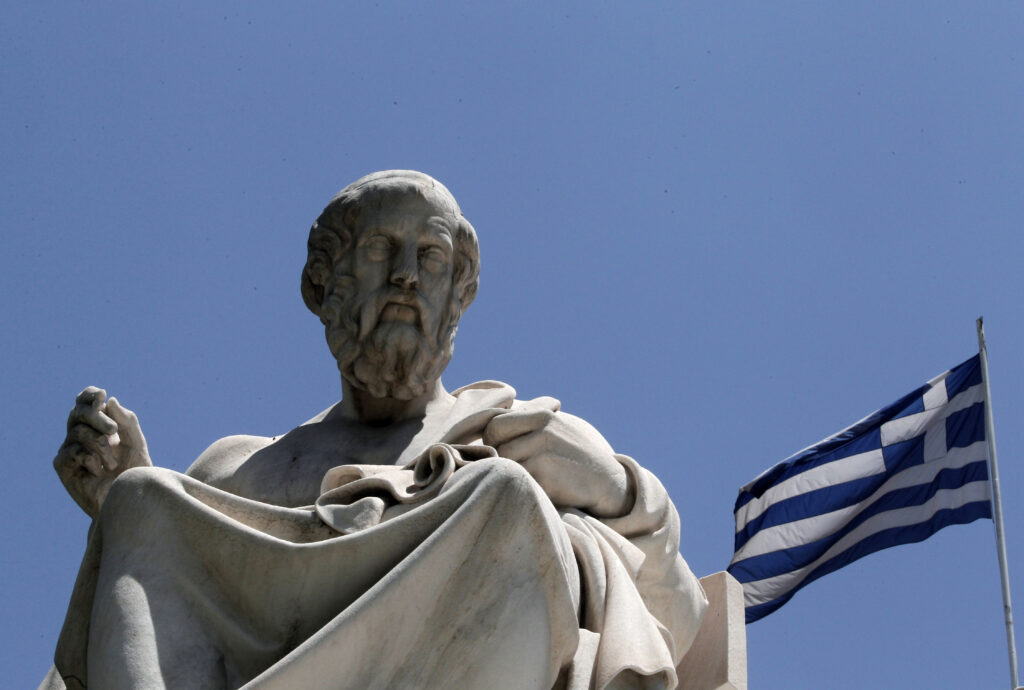
The Jan. 14 editorial “Plato falls victim to campus culture wars” underscored a troubling irony. The Socratic method, developed by Socrates in the 5th century B.C. and conveyed through his student Plato, has profoundly shaped Western reasoning. That some of his teachings are being rejected because they might corrupt our youths is ironic because Socrates was sentenced to death for allegedly corrupting the youths of his time.
Texas A&M’s rejection of some of Plato’s teachings to comply with the Trump administration’s guidelines from his executive order on gender ideology suggests that, despite increased knowledge, we have not gained much wisdom over the millennia.
Mark Evers, Lake Oswego, Oregon
Universities need independent boards
Regarding the Jan. 18 Metro article “Virginia colleges see new boards”:
The recent resignations and shake-up on the University of Virginia’s Board of Visitors highlight the high stakes involved in public university governance.
Boards are meant to protect a school’s long-term mission. That gets lost when trustees are picked for ideological reasons and treated like political actors. The result is what we’re seeing now: leadership turnover, confusion and instability that affect students, faculty and staff.
Politicized boards also make it harder to attract good leaders, raise private support and keep universities moving forward.
Virginia has stepped back from this kind of interference before. Doing so again would mean choosing board members for their experience, preparing them for the job and letting universities focus on what they do best. This means focusing on education instead of politics.
Strong universities need independent boards.
Ross Mugler, Hampton, Virginia
The writer is interim president and CEO of the Association of Governing Boards of Universities and Colleges.
One way to encourage more responsible speech
Discussions of free speech often miss the point that just because something is legal does not mean that it should be done without inhibition. What one can do, legally and without fear of prosecution, can be very different from what one should do as a decent human being.
Greg Lukianoff’s Jan. 15 Thursday Opinion essay, “Where ‘hate speech’ censorship is even worse than on U.S. campuses,” provided a number of examples of heavy-handed European governmental efforts to limit hate speech. The examples proved only that governments are not very adept at restraining people who do not have self-control. They do not prove that there should be no restraints. If such people are unwilling or unable to restrain themselves and cannot be “free” without verbally abusing their peers, then some other means must be found to control them. Getting them to listen to the sound of their own recorded voices might have a sobering effect.
Vic Bermudez, Springfield, Virginia
‘Members Only’ critics reveal snobbery
Monica Hesse’s Jan. 16 Style column, “The agony of knowing your millions don’t buy respect,” on the Netflix series “Members Only: Palm Beach” was entertaining and well written. The comments that I’ve heard about the series are similarly interesting. Viewers, and commenters under Hesse’s column, seem to be united in their disgust of the women on the show. Women competing with one another? Women wearing lots of makeup and revealing clothing? Women who have had a lot of “work” done? These complaints could be made about just about anyone in Hollywood. But I thought those same people love celebrities with all their awards shows and snarky political speeches?
As Hesse’s column pointed to, it’s the show’s connection to Donald Trump that’s the problem. I had forgotten the silent rule that anything associated with him and his administration is bad, wrong, tacky and just not to be tolerated by refined people. To commenters: Your snobbery is showing.
P.M. Hughey, Jacksonville, North Carolina
How to protect whales
Regarding the Jan, 17 Metro article “Whale that charmed Cape Cod found dead on Del. beach”:
The death of a whale is always heart-wrenching. But when I heard that the latest victim — a humpback probably struck by a ship — washed up in Bethany Beach, Delaware, it hit closer to home. I’ve been to Bethany almost every summer of my life. I can easily picture the young whale’s body on the sand.
Federal speed limits give whales some protection from ship strikes. This incident and the deaths of other whales, including the animal found dead this month on the bow of a container ship in New Jersey, show that these beautiful creatures need more help.
Federal officials must take a harder look at where ships and whales are colliding and expand vessel speed limits.
Growing up hours inland in D.C., watching ocean life in the wild was enthralling. Kids along the Atlantic deserve to keep having similar experiences, and slowing ships down for whales helps the entire ocean thrive.
Natalie Jones, Berkeley, California
The writer is a senior media specialist at the Center for Biological Diversity.
The post Plato’s fall to culture wars carries a troubling irony appeared first on Washington Post.