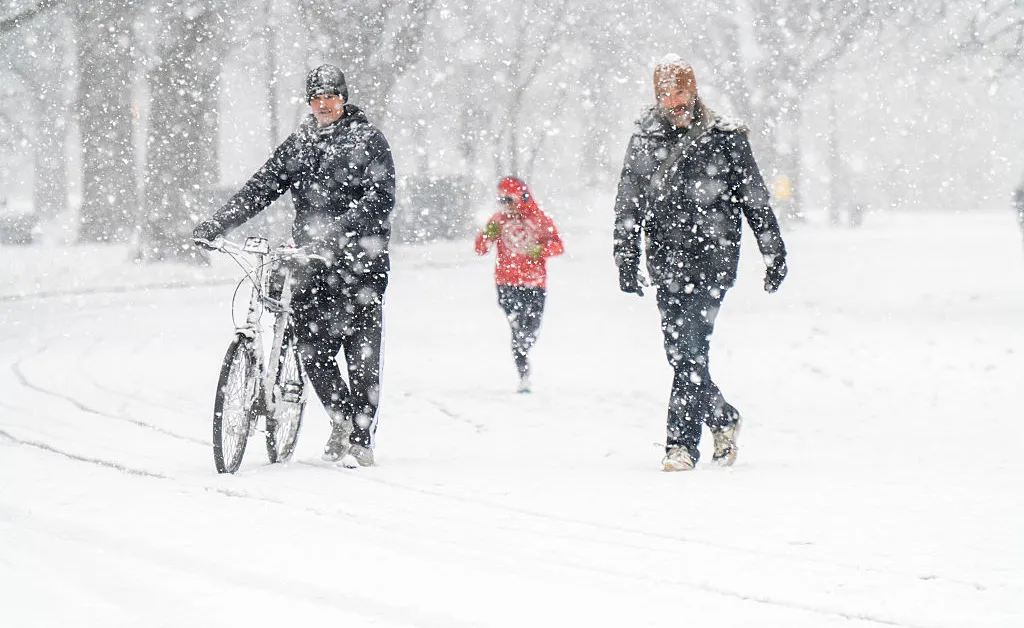
Record cold temperatures are expected to hit parts of the United States this week. Arctic air amassing in northern Canada is expected to surge into the central U.S. late this week and into the weekend, sending temperatures plummeting from the East Coast to as far south as Texas.
As of Jan. 22, 43 states across the U.S. are facing weather advisories, watches, or warnings, according to CNN. The National Weather Service issues an extreme cold watch when dangerous cold temperatures or chill are possible, but uncertain, when temperatures are expected to go below 32°F for a long period of time. An extreme cold warning is issued when dangerous cold conditions or wind chill values are expected or occurring, while an advisory is issued for dangerously cold conditions that are not expected to reach warning criteria.
[time-brightcove not-tgx=”true”]
Extreme cold could be dangerous—and life threatening. Exposed skin risks frostbite if outside for too long, while not dressing properly for the temperatures can lead to hypothermia, shock or even cardiorespiratory failure in those who are immunocompromised. But there are ways you can protect yourself from extreme cold temperatures.
Read more: How Climate Change Impacts Winter Weather
If you’re inside, make sure you’re warming up in a safe way. Asefeh Faraz Covelli, associate professor in the family nurse practitioner program at The George Washington University School of Nursing, says that during cold spells most of the injuries she sees come from unsafe heating methods. Don’t use your oven or camp stoves to heat your home, and follow safety rules for space heaters: plug them into wall outlets rather than extension cords and keep them off carpets. Generators are also common culprits for house fires, Faraz Covelli says. “That’s the other big thing we see when temperatures fall, so ensure that the generators are used outdoors and far from windows.”
If you’re venturing outdoors, dressing properly is key. “Dressing in layers, wearing loose fitting layered clothing is the best to trap heat and stay dry,” says Faraz Covelli. A hooded coat or hat will help prevent heat from leaving through your head, while swapping gloves for mittens will keep your fingers cozy.
Read more: How to Dress Warmly for Cold Weather, According to Science
To keep warm, it’s important not to sweat or get your clothes wet. “Sweat is liquid, and liquid gets into your garments, and that decreases the insulation value,” says Gordon Giesbrecht, professor emeritus at University of Manitoba whose research focused on human responses to extreme environments. That’s why layers are important for keeping your temperature regulated, he notes. “As you start to feel warm you can open up your jacket.”
If you can, limit your time outdoors to the middle of the day, when it tends to be warmest. Monitor your body temperature for symptoms of hypothermia or frostbite. Hypothermia occurs when your core body temperature drops below 95.0°F. “If you shiver for a couple of minutes, it’s not a big deal. But if you’re shivering for 10 or 15 minutes, that is a warning sign that you are maybe losing the battle there and your core temperature is starting to decrease,” says Giesbrecht. The first sign of frostbite, on the other hand, is numbness. “You feel numb because your nerves and receptors are so cold they’re not working properly,” says Giesbrecht.
Read more: How to Help Your Body Adjust to Colder Weather
If you feel any of these symptoms coming on, the solutions are the same: move your body to produce more heat and get to a warmer environment.
But more common than hypothermia or frostbite are injuries from slipping on ice, experts caution. Move a little slower when you’re walking outside, take small steps in icy areas, and keep your hands out of your pockets to better catch yourself if you do fall.
But if you can, Giesbrecht says that the easiest way to stay safe from the cold is to avoid it entirely. “The best thing you can do is just stay inside for that day.”
The post How To Stay Safe and Warm In Extreme Cold Weather appeared first on TIME.