BRUSSELS — President Donald Trump’s U-turn on Greenland — proclaiming a “framework” of a deal and dropping his threat of punitive tariffs — eased some pressure in the tense standoff with America’s once-closest allies in Europe, but European officials said Thursday that the matter was not settled and they remain on guard.
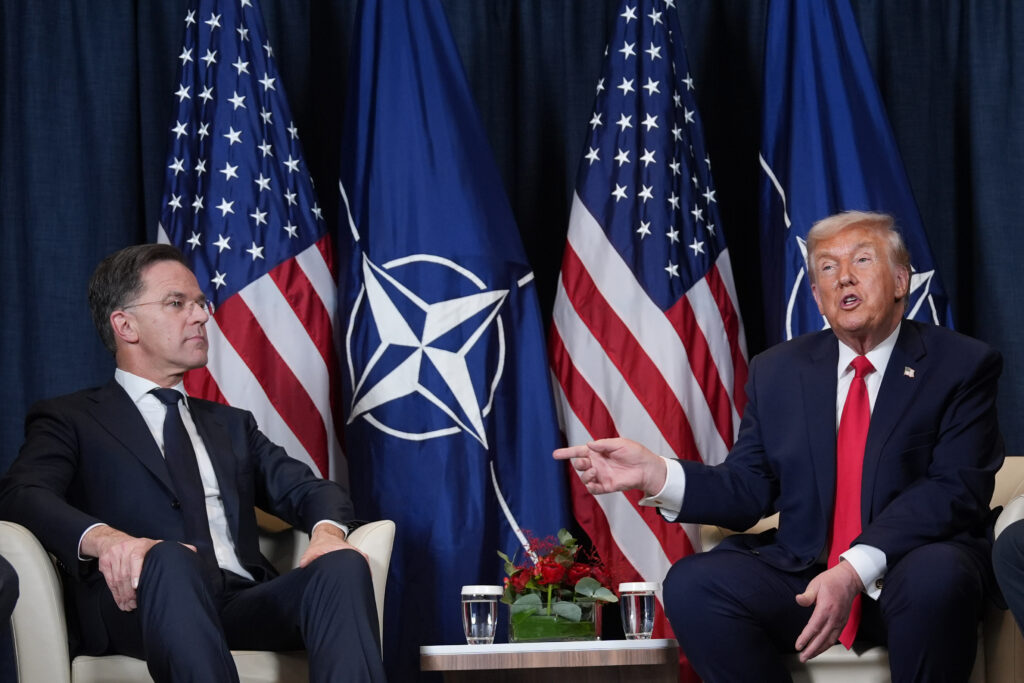
Trump suspended his tariff threat on Wednesday after meeting with NATO Secretary General Mark Rutte at the World Economic Forum in Davos, Switzerland, where the president said he had secured “the framework of a future deal.” Trump had declared the tariffs on eight European nations that opposed his demand for Greenland, which is an autonomous territory of Denmark, would go into effect on Feb. 1.
While providing no details, Trump said the deal would be “really fantastic.”
In recent days, European and NATO officials, including in Denmark, had stressed that there was already an agreement in place that would allow the United States to expand its military presence in Greenland, a vast icy and strategically located expanse.
European officials said they expect the continuing negotiations with the White House to touch on expanding the presence of U.S. troops and bases in Greenland, offering U.S. greater access to investment in mineral extraction, and boosting NATO efforts to secure the Arctic. Danish and NATO diplomats had presented all of these issues to address Trump’s grievances, in exchange for the president dropping his threats and demands for “ownership” of the territory.
Trump’s announcement signaled a retreat from his aggressive bid to seize a NATO ally’s sovereign land, which had roiled markets as the European Union weighed retaliatory measures that could have hit the lucrative services sector, in which the U.S. enjoys a major trade imbalance.
At Davos and around Europe, officials stunned by the head-spinning developments were seeking details about what precisely had been discussed or decided. A NATO spokeswoman said that Rutte did not propose a compromise of territorial sovereignty with Trump.
Danish leaders seemed to breathe a sign of relief that Trump’s swerve “took the heat out” out of the conversation — as Danish Foreign Minister Lars Loekke Rasmussen put it. The Danes indicated, however, that they expect thorny negotiations ahead.
Danish Prime Minister Mette Frederiksen said Thursday that NATO is “fully aware” of Denmark’s position. “We can negotiate on everything political; security, investments, economy. But we cannot negotiate on our sovereignty,” Frederiksen said.
“I have been informed that this has not been the case either,” Frederiksen added, stressing that “only Denmark and Greenland themselves” can ultimately make decisions on the territory’s future.
Rasmussen said that the United States would not “own” the Arctic territory.
Rutte, as the political leader of the NATO alliance, is not empowered to negotiate transferring land from one NATO nation to another.
European officials, who were deeply shaken by Trump’s repeated threats, warned that it was too early to let their guard down or believe the transatlantic rift is over. Many said Trump’s crusade for Greenland had caused a breach of trust that would spur ongoing rethinking of Europe’s relationship with Washington.
An emergency summit of E.U. leaders was scheduled for Thursday evening in Brussels and would proceed as planned, officials said.
“After the back and forth of the last few days, let’s wait for the substantive details on what agreement is reached between Mr. Rutte and Mr. Trump,” German Vice Chancellor Lars Klingbeil told German broadcaster ZDF.
Klingbeil said he welcomed the move toward dialogue but sounded a note of caution, calling on Europeans to take broader lessons about the need to shield the continent’s economy and strengthen its defenses. “Whatever happens next, Klingbeil warned, “One mistake must not happen now: that we in Europe sit back and say, ‘Well, everything turned out all right in the end, it’s not so bad after all.’”
Members of Trump’s Cabinet who were traveling with him in Switzerland had been scheduled to do an event with corporate executives on Wednesday evening, but canceled because of the ongoing Greenland negotiations, said a person familiar with the plans who spoke on the condition of anonymity to discuss confidential scheduling decisions.
Danish officials said earlier this week that Denmark and Greenland had also proposed a NATO mission to the territory in a meeting with Rutte.
In a speech at the World Economic Forum in Davos, German Chancellor Friedrich Merz on Thursday praised Trump for backing off his threats to invade Greenland or impose new tariffs, but delivered a rebuke of his great-powers approach to diplomacy that places national interest above allies.
Merz welcomed the U.S. focus on Arctic security, while adding that the purpose of talks between Denmark, Greenland and the United States must be “to agree on closer cooperation among allies.”
Such was the severity of the moment that all 27 of the E.U.’s heads of state and government had changed their schedules at the last minute to huddle in Brussels on Thursday. They were set to weigh their options to retaliate.
The summit is going ahead after Trump’s pivot, and will touch more broadly on what E.U. officials see as a crisis in transatlantic relations.
E.U. leaders will deliberate on retaliation in case talks fall apart, seek clarity about plans for Greenland and debrief on their contacts with the Trump administration in recent days including at Davos, said a European official, speaking on the condition of anonymity to share internal deliberations.
The Greenland standoff in recent days threw a harsh light on the risk of dependence and fueled a once-unthinkable conversation about “de-risking” from the United States — an approach the E.U. had kept for its ties with China.
“We’re not out of the woods,” Swedish Deputy Prime Minister Ebba Busch said on CNN. “Let’s be very clear. The last few weeks, apart from a very turbulent first year, have been very damaging for the relationship between the European Union, Europe as a whole, and the U.S.,” she added.
Aaron Wiener in Berlin, and Emily Davies and Cat Zakrzewski in Davos contributed to this report.
The post As Trump drops Greenland threats, Europeans say they are still on guard appeared first on Washington Post.