Government officials have long grappled with a question that seems like the purview of philosophers: What is the value of a human life?
Under both Democratic and Republican administrations, the answer has been in the millions of dollars. The higher the value, the more the government has required businesses to spend on their operations to prevent a single death.
But for the first time ever, at the Environmental Protection Agency the answer is effectively zero dollars.
Last week, the E.P.A. stopped estimating the monetary value of lives saved when setting limits on two of the most widespread deadly air pollutants, fine particulate matter and ozone. Instead, the agency is calculating only the costs to companies of complying with pollution regulations.
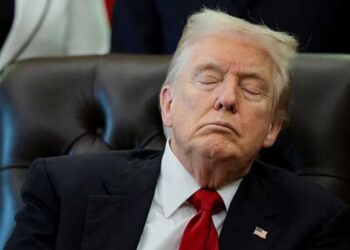
“The Trump administration is saying, literally, that they put zero value on human life,” Marshall Burke, an environmental economist at Stanford University, said in an email. “If your kid breathes in air pollution from a power plant or industrial source, E.P.A. is saying that they care only insofar as cleaning up that pollution would cost the emitter.”
It’s a drastic change to the way the government weighs the costs of curbing air pollution against the benefits to public health and the environment. It could lead to looser controls on pollutants from coal-burning power plants, oil refineries, steel mills and other industrial sites across the country, resulting in dirtier air.
And it appears to shelve a powerful tool, known as the value of a statistical life, that agencies have used for decades in the cost-benefit analyses that justify new regulations.
The E.P.A. has used the tool to assign a dollar value to the lives saved by clean-air rules, causing the benefits of these rules to dwarf the costs by at least a 30-to-1 ratio. That has allowed it to defend pollution controls that companies would otherwise challenge as too costly.
Other federal agencies have used the metric to justify regulations affecting everything from safety features on cars to cancer warning labels on cigarette packs.
Brigit Hirsch, an E.P.A. spokeswoman, said in an email that the agency was still considering the health effects of fine particulate matter and ozone, but was no longer assigning them a dollar value in cost-benefit analyses. “We’re not putting a dollar value on those impacts right now,” she said. “That does not mean E.P.A. is ignoring or undervaluing them.”
Ms. Hirsch did not comment on whether the agency would stop using the value of a statistical life for all regulations beyond clean-air rules. But in general, she said, “saying we aren’t attaching a dollar figure to health effects is like saying we aren’t putting a price tag on clean air or safe drinking water. Dollars and cents don’t define their worth.”
For the past 30 years, the E.P.A. has pegged the value of a statistical life at around $11.7 million. Although experts have recommended increasing the value, the agency has updated the metric only to account for inflation and wage growth.
The value of a statistical life is a sensitive subject in Washington. Lower values have led to outcry from public interest groups, while higher values have drawn complaints from a range of industries, including oil and gas drillers, truck drivers and toy manufacturers.
Some critics have raised moral objections to using the tool at all, saying a human life is priceless. But supporters say its use has helped prevent hundreds of thousands of premature deaths from air pollution, which kills more Americans each year than vehicle crashes.
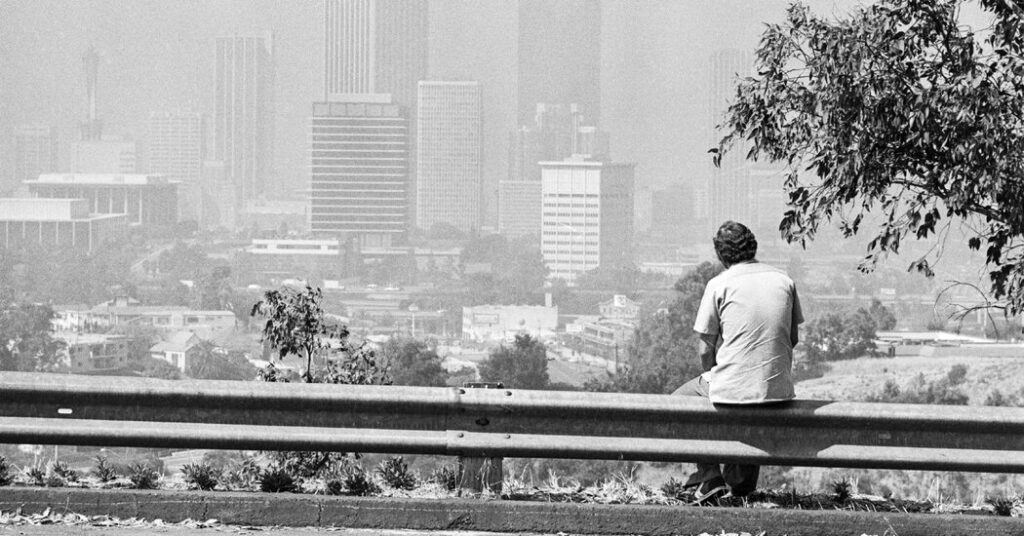
The biggest driver of those deaths is fine particulate matter, or PM2.5, which refers to particles less than 2.5 micrometers in diameter, small enough to enter the bloodstream. Another silent killer is ozone, a smog-causing gas that forms when emissions from power plants, factories and vehicles mix in the air on hot, sunny days.
A robust body of research has linked long-term exposure to both pollutants to premature death as well as asthma, dementia, and heart and lung disease. Even moderate exposure to PM2.5 can damage the lungs about as much as smoking, studies show.
But in a document posted online on Monday, the E.P.A. claimed that the economic benefits of reducing PM2.5 and ozone were too uncertain. The E.P.A. said that it would stop tabulating these benefits “until the agency is confident enough in the modeling to properly monetize those impacts.”
Some regulatory experts had mixed reactions to the move.
“On one hand, the administration does make some valid points that E.P.A. statements have implied a false precision in the past,” said Susan Dudley, who led the White House Office of Information and Regulatory Affairs during President George W. Bush’s second term and now teaches at George Washington University. “On the other hand, the way to rectify that is not to stop quantifying the health effects altogether.”
Others were less circumspect in their criticism.
“If the rationale is that benefits are uncertain, well, costs are uncertain, too,” said Alan Krupnick, a senior fellow at Resources for the Future, a nonprofit research group. “Considering costs without considering benefits is like trying to cut a piece of cloth with one blade of the scissors: The cut is likely going to be inaccurate and rough.”
Michael Greenstone, an environmental economist at the University of Chicago, said the change could result in dirtier air, undercutting the gains made since Congress strengthened the Clean Air Act in 1970. Steep reductions in PM2.5 pollution have added 1.4 years to the average American’s life expectancy since 1970, according to research by the University of Chicago’s Air Quality Life Index project.
“Clean air is one of the great success stories of government policy in the last half-century,” Dr. Greenstone said. “And at the heart of the Clean Air Act is the idea that when you allow people to lead longer and healthier lives, that has value that can be measured in dollars.”
Dr. Greenstone and other economists said the value of a statistical life has often been misinterpreted as the value that the government assigns to a single person’s life. But it is actually the value that the government assigns to slightly reducing the risk of death for a large group of people.
To determine this value, government economists have turned to studies on the labor market, which show that workers demand higher wages before agreeing to perform jobs with greater risks of workplace fatalities.
Say that employers must pay lumberjacks an additional $1,000 a year to perform work that generally kills one in 1,000 workers. It follows that most Americans would forgo $1,000 a year to avoid that risk and that 1,000 Americans would collectively forgo $1 million to avoid the same risk entirely. Therefore, in this example, the value of a statistical life would be $1 million.
Tweaking the tool raises thorny ethical and philosophical questions, said W. Kip Viscusi, an economist at Vanderbilt University whose research on the value of a statistical life has been cited by many agencies.
“Should the government place the same dollar value on everybody’s life?” Dr. Viscusi asked. “Should rich people’s lives be valued more? Should old people’s lives be valued less?”
The American Petroleum Institute, a trade group for major oil and gas companies, has urged the E.P.A. to consider using a lower value for older people. In a 2018 public comment, the group wrote that most of the lives saved by stronger ozone standards would be “among the elderly population — not individuals in their highest earning years.”
Scott Lauermann, a spokesman for the institute, said in an email that the group was still reviewing the E.P.A.’s new approach but that it appreciated the agency’s focus on “sound science.”
In 2003, during George W. Bush’s first term, the White House proposed that the E.P.A. use a 37 percent lower value of a statistical life for people older than 70. But the backlash was intense: Older Americans and environmentalists protested what they called a “senior death discount” at E.P.A. hearings. The AARP, a nonprofit group that advocates on behalf of older Americans, ran ads featuring an older woman with a “37 percent off!” tag hanging from her glasses.
The Bush administration ultimately abandoned the idea, and the “environmental critics won the P.R. battle,” said John D. Graham, who led the White House Office of Information and Regulatory Affairs at the time and now teaches at Indiana University Bloomington.
“My students tell me I should have started by pushing a premium on the value of saving the lives of children, since they have so many high-quality years of life ahead of them,” Dr. Graham said in an email. “In hindsight, that might have been a better approach.”
Dr. Viscusi said that if other agencies followed the E.P.A.’s latest approach, they would leave Americans more vulnerable to a range of threats to their lives and livelihoods.
“Whether it’s highway safety, job safety or consumer product safety, the biggest benefits of regulations are from saving lives,” he said. “If saving lives is made irrelevant, it will undermine the justification for all forms of protective policies.”
Maxine Joselow covers climate change and the environment for The Times from Washington.
The post Trump’s E.P.A. Has Put a Value on Human Life: Zero Dollars appeared first on New York Times.