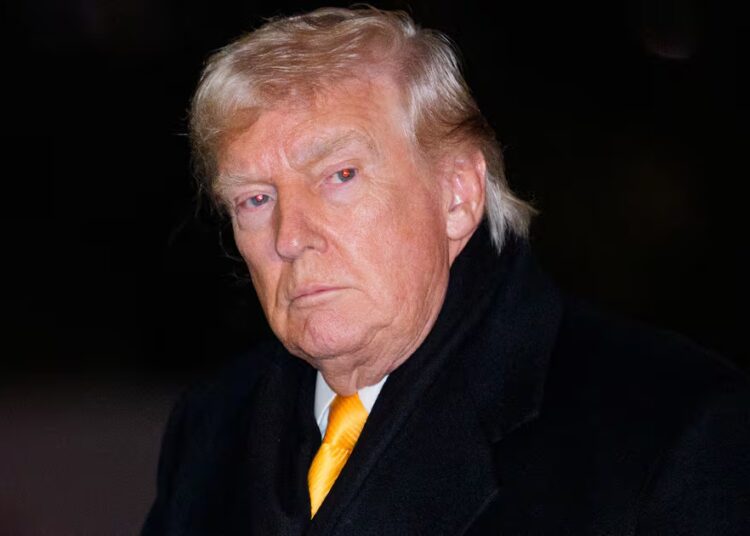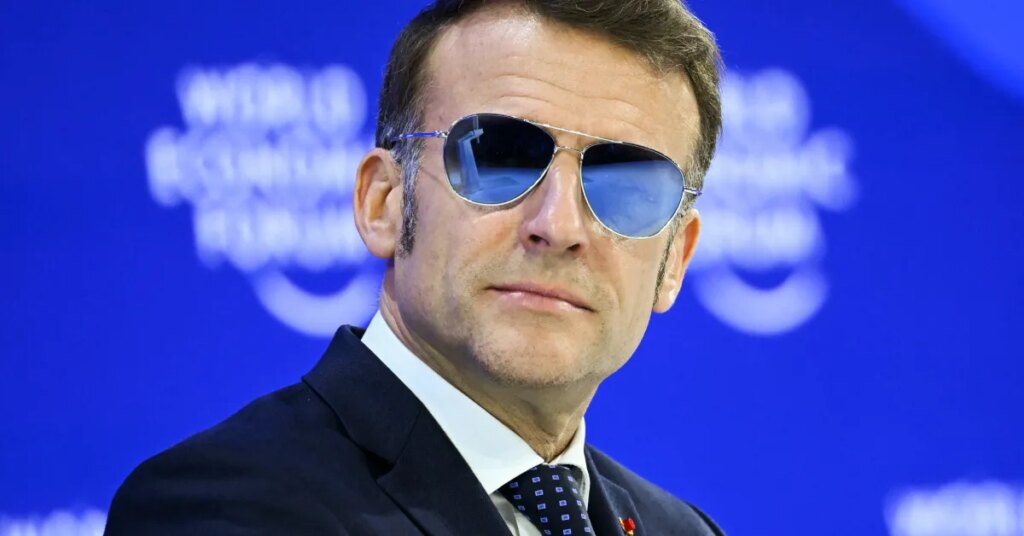
European leaders are bracing for an all-out trade war with the U.S. once again after President Trump threatened to impose a 10% tariff on imports from from countries that oppose his demand to take control of Greenland.
The potential tariff would put the U.S.-EU trade deal struck last summer in jeopardy. The agreement includes $750 billion worth of energy purchases from the U.S., $600 billion in EU investment, and billions of dollars in reduced tariffs on imports from European countries.
[time-brightcove not-tgx=”true”]
European Commission President Ursula von der Leyen warned during her speech at the World Economic Forum that the EU’s response to the tariff threats will be “unflinching, united and proportional.”
“In politics as in business—a deal is a deal. And when friends shake hands, it must mean something,” von der Leyen said.
Trump, however, remains adamant on taking over the Arctic island. In a series of posts on Truth Social, Trump said he had spoken to NATO Secretary-General Mark Rutte regarding Greenland and told him that “there can be no going back.”
Here are five ways the European allies could respond to Trump’s threat to acquire the island:
Retaliatory tariff
The EU could respond by imposing a reciprocal tariff on a range of U.S. goods.
During the trade negotiations last year, Brussels came up with a list of 4,800 types of U.S. exports to impose tariffs on, ranging from whiskey and soybeans to planes and cars, totaling $108 billion. The list will go into effect on Feb. 7 unless the European Parliament votes to freeze it.
Since Trump revived his interest in Greenland, the proposal to let the EU Parliament pass the tariffs has gained momentum. On Tuesday, France’s Foreign Minister Jean-Noel Barrot said France supports the European Parliament’s push to suspend the trade deal between the U.S. and EU.
Still, the European Commission Spokesperson Olof Gill said the current priority is still to engage and avoid the imposition of tariffs.
“This will ultimately harm consumers and businesses on both sides of the Atlantic,” Gill said.
Trade “bazooka”
Another measure that the EU could take is activating the Anti-Coercion Instrument, also known as the “trade bazooka.”
The policy, which was adopted in late 2023, aims to deter foreign countries from blackmailing European countries through economic pressure. The “trade bazooka” is much more expansive than reciprocal tariffs, because it can not only impose additional tariffs, but also restrict imports and exports through quotas and licenses, limit access to direct investment in the EU’s financial markets, or suspend intellectual property rights.
“Since the EU is America’s largest commercial partner, this would cause substantial damage to the U.S. economy, most likely generating a US recession and a global downturn, as well as raising costs on many everyday staples,” said Dan Hamilton, nonresident senior fellow at the Brookings Institution’s Center.
This is, however, the EU’s last resort for countermeasures for multiple reasons. For one thing, it would take up to 10 months for the European Commission to investigate and determine whether there is any coercion and retaliation from the concerned country. It would also need a supermajority of 27 Parliament members to back the measure after the investigation, which could take a maximum of 10 weeks to deliberate. The bazooka has also never been used before, and some European countries, like Germany, are still looking for ways to deescalate.
“We simply want to try to resolve this problem together, and the American government knows that we could also retaliate,” German Chancellor Friedrich Merz said on Monday.
Dumping U.S. assets
European countries hold trillions of dollars in U.S. bonds and stocks. The EU could dump a huge amount of its assets to drive up the cost of borrowing and sink the U.S. financial market, adding more uncertainties to retirement account investments, running a business, and buying a home. But selling U.S. assets on a large scale is much harder to execute than it seems.
Most of the U.S. assets owned by the European countries are owned by private entities and not the government, according to FT. Even if European governments can compel a sale of U.S. assets from their public wealth funds, it would also be hard to find a buyer who could absorb even a fraction of what the European countries own.
More importantly, an abrupt sale of the U.S. assets would sink the value of the dollar and drive up the euro, which could quickly upend European countries’ own economies.
Treasury Secretary Scott Bessent brushed off this idea on Tuesday in Davos as a “false narrative” that “defies any logic.”
“I am sure that the European governments will continue holding it and as I said, I think everyone needs to take a deep breath,” Bessent said.
The Supreme Court
Like many Americans, European leaders are also waiting for the U.S. Supreme Court to deliberate on the legality of Trump’s tariffs, with a ruling expected as soon as this week.
The White House argued that a national security law dating back to the 1970s—the International Emergency Economic Powers Act (IEEPA)—gives the President the authority to declare an emergency and slap down tariffs on his own.
Before the case reached the Supreme Court, the Court of Appeals for the Federal Circuit ruled in a 7-4 decision that none of the emergency powers granted the President under the IEEPA law “explicitly include the power to impose tariffs, duties or the power to tax.”
But regardless of the Supreme Court’s ruling, the Trump administration is determined to keep the tariffs. In an interview with the New York Times last Thursday, the U.S. Trade Representative Jamieson Greer said the Trump administration plans to begin replacing them almost immediately with other levies if the high court strikes down Trump’s tariffs.
Defending Greenland by force
Despite Trump’s suggestion of seizing Greenland by force, a military option remains unlikely. Still, Denmark, a NATO ally, has been boosting its military presence in the Arctic island in response to Trump’s brinkmanship.
Denmark’s defense minister, Troels Lund Poulsen, announced that Denmark would increase military activity in and around Greenland, citing an increasingly unpredictable security environment. Several European NATO allies confirmed that they were also sending personnel to the island.
Asked on Monday whether he would use force to seize Greenland, Trump told NBC News “no comment.”
The post The Five Ways Europe Could Respond to Trump’s Greenland Threat appeared first on TIME.