
Dr. Ania Jastreboff has channeled the mindset shift that Oprah Winfrey has publicly undergone into one word — “enough” — helping to signal an entirely new way of thinking about weight loss and banishing shame for good.
The word “enough” serves multiple purposes, the director of the Yale Obesity Research Center told Business Insider. It offers a new way to emphasize how obesity functions as a chronic disease. When someone has obesity, their body works to maintain a certain level of fat storage and also pushes them to eat to maintain that level, subconsciously.
“We would never ask one of our patients with diabetes to concentrate really hard to make their blood sugars normal,” she said. “And yet we have, for years, asked our patients to do that for obesity.”
Winfrey was one of the patients struggling to do just that: control her body weight with willpower. That is, until she teamed up with Jastreboff, and — in a flash of insight — the doctor brought their new book title to life on a Post-It note.
A wagon of fat symbolized Oprah’s willpower — but it wasn’t enough
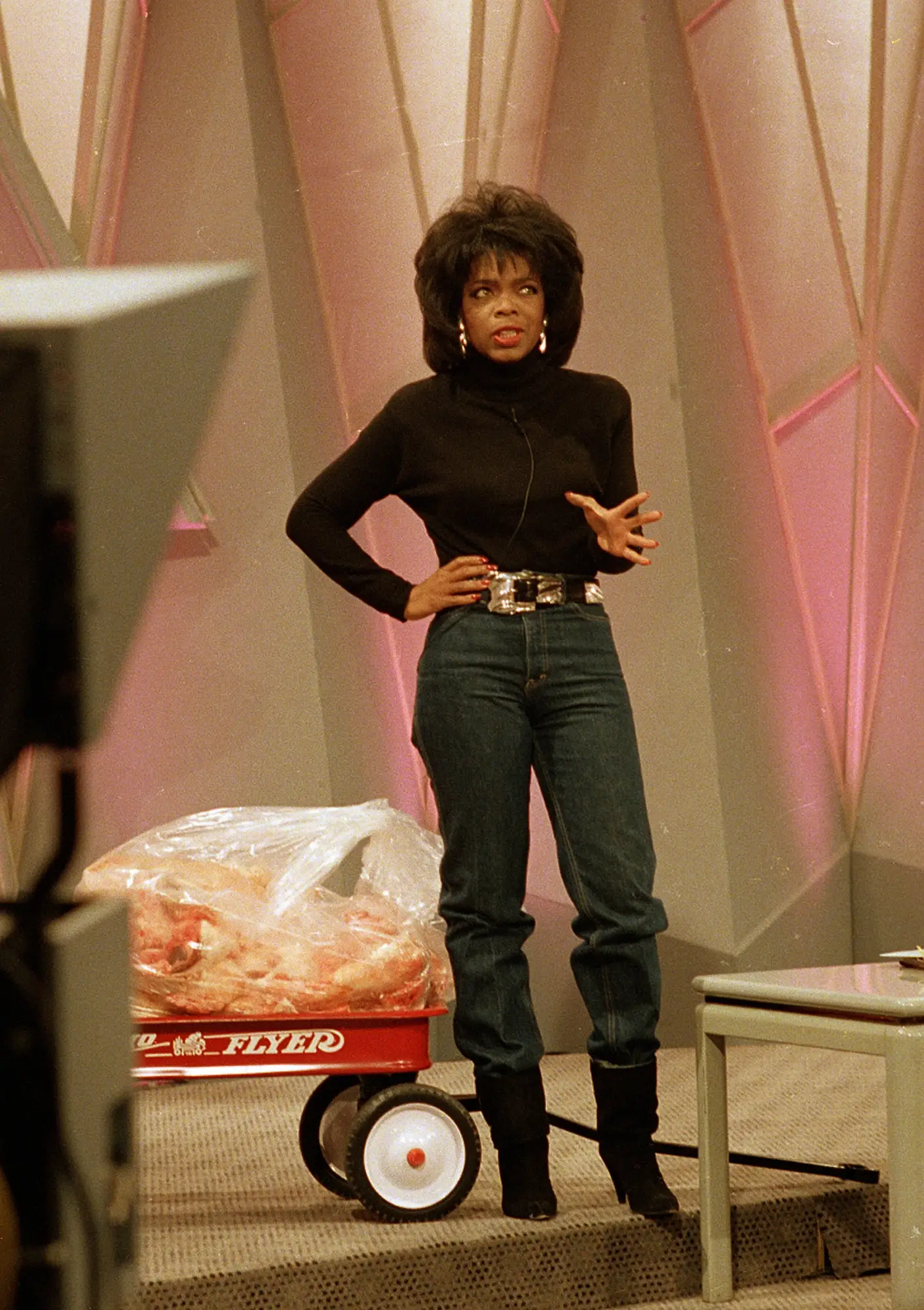
It was about 37 years ago when talk show host Oprah Winfrey rolled out a red wagon of fat on national TV — 67 pounds worth of it from the Chicago-based Moo & Oink meat company — to symbolize the weight she’d recently lost.
She was proud, later saying that she’d “literally starved” for about four months before the dramatic wagon haul. She was also hungry.
“Up until six weeks, I ate absolutely nothing,” she said on her show in 1988 after rolling out the little red wagon, explaining that she was on a “liquid protein medically supervised” fast.
Then she admitted that, at the mid-point of her diet, “I did, I cheated,” she said, pausing, the disappointment visible in her face before adding that it was “controlled cheating” during her producer’s wedding reception.
“If you can believe in yourself, and believe that this is the most important thing in your life,” Winfrey said, “you can conquer it.”
At the time, she felt this wagon was her proof: losing weight is about willpower, and she had a cartful of it.
Almost four decades later, Winfrey is part of a relatively new and ongoing cultural revolution in how doctors, patients, and families think about weight, and specifically, obesity as a chronic disease.
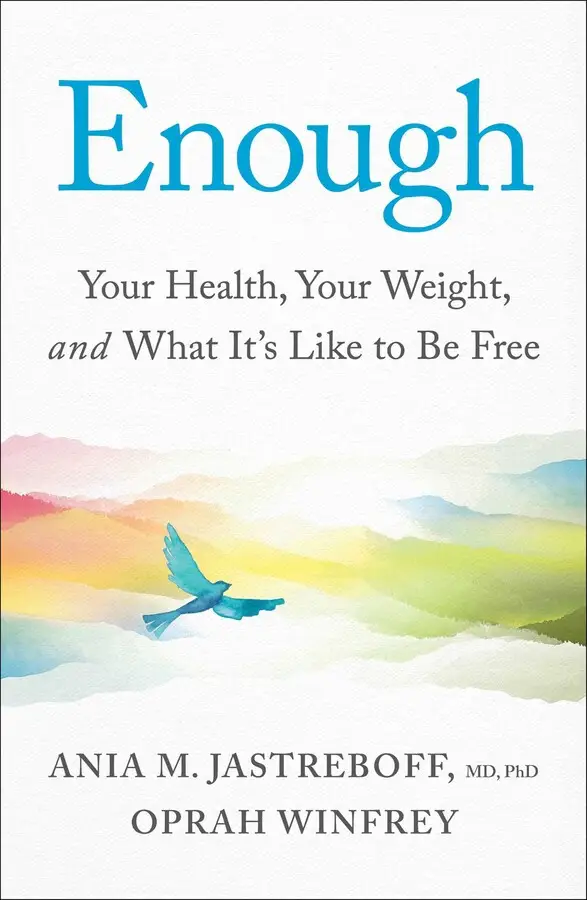
Her new book, “Enough: Your Health, Your Weight, and What It’s Like to Be Free,” cowritten with Jastreboff, is part diary, part guidebook to navigating the new world of GLP-1 drugs for obesity and diabetes.
As recently as 2024, Winfrey still wanted to believe she could control obesity with willpower, and skip medication

Jastreboff has been leading obesity drug trials and treating patients with obesity for years as director of the Yale Obesity Research Center. Her mission has been to help patients feel better and achieve their goals, not weight loss goals (though sometimes they have those, too), but health goals and life goals.
As recently as 2023, Winfrey was still struggling to justify taking a GLP-1, feeling a weight of shame and responsibility for her obesity, which she’d carried for decades.
During a September 2023 CNN taping, she said that she’d hesitated before taking an injectable GLP-1, fearing it was the “easy” way to lose weight before knee surgery. She did it anyway. Then on her 70th birthday in January 2024, she resolved to stop taking the medication and “see if I can do without it,” as she later told People.
A few months later, in May 2024, Jastreboff met Winfrey when they worked together on a live virtual event for Weight Watchers. Winfrey wanted to learn more about the science of obesity, so she invited Jastreboff over to her California home to tape 90 minutes of conversation about GLP-1 drugs and the evolving science of obesity medicine.
Their conversation ran long. Really long. Four hours later, the two emerged from Winfrey’s Montecito podcast studio after a marathon discussion on how the disease works. The talk clearly left an impression, because immediately afterward, while they were sharing a meal, Jastreboff remembers Winfrey turning to her and saying, “You should write a book, and I will help you.”

“In that moment I thought, ‘Well, this is going to help millions of people,'” Jastreboff said. “And so the answer was clear.”
The book’s title, however, was not very clear. It wasn’t until later, when the idea came to Jastreboff in an early-morning flash of insight. She woke up on a beautiful winter’s day and ran downstairs to her desk like a kid on Christmas morning to write a single word on a Post-It:
Enough.
“I thought this has to be the title,” Jastreboff told Business Insider. “This is the title for the book.”
It crystallized exactly what obesity is, and also served as a stigma-replacing mantra.
‘Enough’ is a new way of framing what obesity is, and it also signals a mindset shift
GLP-1 drugs act on the gut, slowing down digestion, and improving blood sugar control but they also have a huge impact on the brain, quieting food noise, and recalibrating hunger signals that have gone off-target when someone has obesity.
“Their brain is constantly telling their body that they don’t have enough — They don’t have enough fuel. They don’t have enough fat. They need to eat more,” Jastreboff said. That’s where the drug comes in to recalibrate the signals — by mimicking one, and sometimes two, key hunger hormones, and re-setting that internal “enough point” that the brain has determined will keep the body from starving.
“The enough point was this idea: your body has had enough, enough food. I don’t need more. I’ve had enough. So that’s where ‘enough point’ came from, and this idea that your body has enough fuel, has enough energy, has enough fat,” Jastreboff said. “Enough also means many other things. So enough shame and blame, like enough misunderstanding about obesity.”
This is what Winfrey says “enough” really means to her. Enough blaming people for having a disease that isn’t their fault, but is a result of complex forces in our genetics, in our environment, in our food, and in our lifestyles, all working together to make bodies bigger, and drive the collective ‘enough point’ up, in some people more than others, as the book explains.

After a year off GLP-1 medication, by early 2025, Oprah had regained 20 pounds, despite continuing to eat a healthy diet, while hiking, walking, and working out every day. So, she went back on an injectable GLP-1. Now, Winfrey says, just as she takes blood pressure medication to control a disease that runs in her family, she also takes a GLP-1 drug to control her enough point (she has declined to specify which drug she takes, but so far there are only two on the market: semaglutide from Novo Nordisk, and tirzepatide from Eli Lilly).
It’s true that lifestyle factors like exercise and healthy eating have a role to play in a person’s risk of developing the disease of obesity and are key for disease prevention. But, once the disease develops, they are not enough, on their own, to control the disease in which a person’s brain instructs their body to both consume more food and burn less energy. People with obesity may be able to lose weight, but maintaining the weight loss is the difficult part, as a person’s biology fights back, Jastreboff said.
The problem with ‘eat less and move more’
“‘Eat less and move more’ is not an effective treatment for obesity,” Jastreboff said. “That is like asking someone to hold their breath for the rest of their lives, to control every morsel of food that they are going to consume for the rest of their lives. That is not a way to treat the biology of a complex disease.”
These relatively new drugs, developed to mimic hunger hormones that we produce naturally, are also teaching scientists, including Jastreboff, about the mechanisms of the disease. Terms like “food noise” weren’t around a decade ago, because doctors didn’t understand this was an issue that people with obesity faced, the constant signals from the brain about food.
Freedom from food noise opens up space for new adventures
Winfrey says she has found new freedom from food noise, which has allowed her to explore new ways of being herself. Recently, she woke up one day in Colorado and decided she wanted to go to a bluegrass festival. So she did. By herself. The medicine, as she writes in the book, has “opened up the aperture of adventure and possibility and new experiences.”

“We want to be able to live out the truest, purest, highest possibility of ourselves as human beings,” Winfrey says in the closing chapter of the book. “What this medicine allows me to do is to reach another level of that possibility, without having to strive for it, battle for it, fight my own self for it. It’s just there, because all the crap, the angst, the cloudiness, the fuzziness, the worry that I’ve spent on my weight—that’s energy. Anxiously anticipating what the next meal was going to be or what it was going to do to me, or how it was going to affect my body, and the guilt and the shame and all of that — that’s energy too. Now that I’ve released it, I am free — to behold whatever is new and possible for myself.”
Read the original article on Business Insider
The post The eureka moment that drove Oprah to reframe weight loss and banish shame involved a Post-It appeared first on Business Insider.