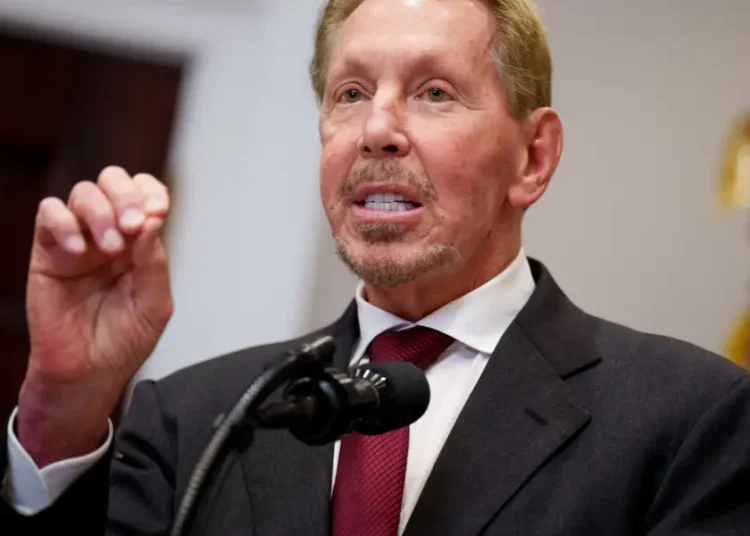
WATER VALLEY, Miss. — A crowd turned out to hear a politician talk big about improving school, but it wasn’t a Republican railing about transgender athletes or school vouchers or any of the issues the GOP has used to put Democrats into a defensive crouch.
On this night, the politician taking questions was a Democrat — former Chicago mayor and President Barack Obama’s chief of staff Rahm Emanuel — talking about reading. For the last several years, Republicans have dominated the education debate with a focus on culture war politics. Emanuel, who is exploring a 2028 presidential run, makes the case for returning to the education part of education: achievement and learning rather than books bans and gender identity.
That would benefit students and, he says, Democrats, who have not led a national conversation about student achievement since Obama was president. Instead, Republicans have been able to make up ground, capitalizing on anger about school closures during the pandemic and heated fights over transgender rights, race and other subjects.
Emanuel talks about school achievement with a frequency and urgency rarely heard from Democrats in recent years. And he says both parties have wasted time on education culture wars.
“This distracts us from the priorities of education,” he said in an interview. Questions around gender identity, he said, affect “less than 1 percent of the population and yet dominate 99 percent of the conversation. … You want to pick a pronoun? Great. Now can we focus on the other 35 kids that don’t know what a goddamn pronoun is?”
While a dozen or more Democratic presidential hopefuls scramble to carve out their identities in advance of the 2028 election, many of them better known than he is, Emanuel is betting that a renewed focus on education can fuel a Democratic victory — and more immediately, his own prospects.
As Chicago mayor, Emanuel successfully pushed several school reforms, including a longer school day, and saw graduation rates jump. But he had a contentious relationship with the teachers union and his tenure was marred by a seven-day strike. He also angered many Chicagoans by closing 50 schools. He says he’s learned from his mistakes and hopes to take some of his successes national.
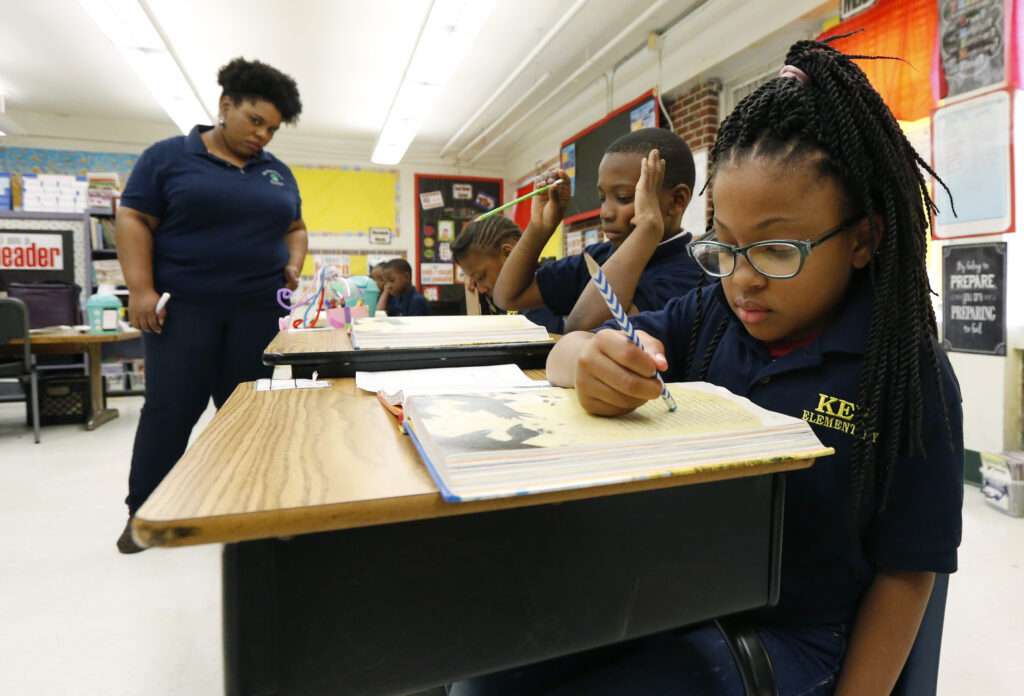
Emanuel traveled to Mississippi this month to examine and promote the state’s success in teaching reading. On fourth-grade tests, the state moved from 49th in the nation in 2013 to ninth in 2024 by focusing on what’s called the science of reading — instruction built on sound-it-out phonics. The state combined that with increased funding, a heavy dose of teacher training and support, and a requirement that third-graders pass a reading test to advance to fourth grade.
Emanuel argues that Washington should use federal dollars to incentivize other states to do the same. And he is proposing renewed federal standards and accountability, ideas that faded a decade ago.
At the town hall meeting in Water Valley, a tiny town in the north of the state, more than 125 people gathered. There were no questions about race, gender or culture wars, giving Emanuel space to drive home his central thesis.
“We’ve got a 30-year low in reading scores,” he said. “Has a single governor called for an emergency meeting of the governor’s association?”
Left unsaid was that he might run against some of those governors in a 2028 Democratic primary.
Emanuel brought a film crew with him, and within a day of leaving the state, he had postedvideo from the visit to his social mediaaccounts.
An education evolution
Emanuel likes to hark back to an era when education reform was in vogue. A national movement centered on standards and accountability began in the states and culminated with the bipartisan passage of the No Child Left Behind Act in 2001. Schools were required to make progress on annual tests or face escalating consequences.
Eight years later, Obama continued pressing for accountability with the Race to the Top competition that awarded states with extra federal money for adopting favored policies such as Common Core standards and using student scores to measure teacher quality.
But by the end of Obama’s tenure, opposition had built to the high-stakes testing that the accountability system was built on. The Race to the Top program ended and most of the requirements under the 2001 law were reversed. The bipartisan consensus collapsed, and soon, the political parties gravitated to their partisan corners.
Democrats backed increased funding for public schools and racial equity initiatives. They adopted policies in support of transgender students. Today, most Democratic governors continue to focus on new funding — for prekindergarten, community schools, teacher pay, free meals and other priorities.
Republicans promoted tax dollars for private school vouchers. During the pandemic, they blamed Democrats for keeping schools closed too long and for requiring measures like masks once school buildings reopened. Conservative parent groups that formed around pandemic issues soon used that momentum to build support for book bans and how educators should address race and LGBTQ+ issues. GOP legislatures and conservative school boards passed laws and policies restricting how those topics could be dealt with in school.
Republicans began eating into Democrats’ commanding lead on education issues. In 2006, a Fox News poll found Democrats with a 17 percentage point leadwhen asked who they trust on education issues, though their advantage was not that big in other surveys. By 2022, Republicans had narrowed the gap significantly — some polls found the parties virtually tied. (Several newer polls have found Democrats regained their advantage following President Donald Trump’s election.)
In the wake of the pandemic, scores on national math and reading exams slid to a 30-year low.
The Trump administration repeatedly cites this data in making the case for closing the Education Department and for school choice policies. Now, some Democrats are arguing that their party needs its own response to the slide.
“It is deeply frustrating to me as a Democrat that we completely ceded this issue,” said Lanae Erickson, senior vice president for social policy, education and politics at Third Way, a centrist Democratic think tank. “We have absolutely no ideas on the table.”
In the 2024 presidential election, President Joe Biden and Vice President Kamala Harris, who took his place on the ticket, put forward only vague education goals. One day before the election, the Center for American Progress, a leading Democratic think tank, published a set of education recommendations.Even then, there was not much about student achievement.
Jared Bass, senior vice president for education at CAP, said the group is now working on a new set of proposals that will squarely address academics.
“There’s a real sense of humility within the party. We used to be the party that was trusted on education,” he said. “We need to get it right.”
Even with a hunger for action among Democrats, Emanuel’s ideas are likely to face pushback inside his party and beyond. Many progressives argue that racial inequity and racism are to blame for low achievement rates of many students of color, and they may resist leaders who want to pivot away from those topics. Teachers unions, who are active in the Democratic Party, strongly oppose the accountability systems that rely on standardized testing that Emanuel hopes to bring back.
Randi Weingarten, president of the American Federation of Teachers and a longtime power in the Democratic Party, said she would oppose a return to accountability systems that too often, in her view, devolved into blaming teachers. Still, she agrees that Democrats need a new vision.
“Democrats are all too reactive and a result they have lost ground on education,” she said. “It’s very frustrating.”
A new Race to the Top
Emanuel is betting that while other Democratic presidential candidates concentrate on standing up to Trump, voters will want a candidate more focused on their daily concerns.
On his trip to Mississippi, Emanuel toured an elementary school in Hattiesburg, crouching beside children’s desks to peek at their work and hearing from the principal about what has succeeded. And he met with Jim and Sally Barksdale, whose $100 million donation beginning 25 years ago set Mississippi on its path to a new reading program.
“When do we get to geek out?” he asked the Barksdales as they took seats in the family’s living room with a trio of people involved in education in Mississippi. He turned to the group and asked, simply, “How did you do it?”
After a long conversation about the reading program, Jim Barksdale told Emanuel that a lot of people say they want to learn from Mississippi’s success. “They say, ‘I’m all for it. How’d you do this?’” he said. “And then they don’t do it because it costs money.”
“It also costs guts,” Emanuel replied.
Emanuel, long known as partisan brawler, says he is ready to fight for this.
In an interview, Emanuel sketched the outlines of the federal program he’d like to see. He suggested a new version of Obama’s Race to the Top that would incentivize states to adopt science of reading curriculums — what Mississippi uses — and other policy changes.
The program, he said, also could encourage high schools to offer more college courses, and he favors a policy he advanced in Chicago requiring all seniors to have a plan for college, trade school or the military to graduate from high school. He also wants to incentivize states to replicate Chicago’s promise of free community college for students who graduate high school with a B average.
States would have to adopt these types of changes to get the new federal money, he said. He contrasted that approach with the unprecedented $130 billion in covid funding that went to K-12 schools under the Biden administration, which Emanuel slammed as having too few requirements. For instance, the program was sold as a way to reopen schools, but districts were not required to reopen.
He argues that the No Child Left Behind system was too test-driven, but that the country “overcorrected.” The right answer, he said, lies somewhere in between.
As for the culture wars, he is trying to stay far away. He dismisses some of the racial equity efforts that swept through schools, mocking San Francisco’s effort to rename schools, including one named for Abraham Lincoln.
He also opposes allowing trans girls and women compete in women’s sports, saying it’s not fair to other competitors. But he said he does not know whether he would, if elected president, pull federal funding from schools that resist, as Trump has done, and he said he is not interested in discussing the finer points of these policies. The entire debate, he said, has been a “dead-bang loser” — both politically and for the children involved.
As Democrats begin to rethink their positions on education, they will need to weigh whether Emanuel’s prescriptions are the right ones and also whether he is the right messenger for them. For now, though, Emanuel is one of the few people making this case.
At the town hall meeting, a questioner asked what he had done right and wrong as mayor, and Emanuel replied that he mishandled his relationship with the teachers union at first, specifically by unilaterally canceling a scheduled pay raise.
“It created a lot of animosity,” he said, describing his first term as “hand-to-hand combat.” He said he should have tried to work with the union president to find a solution together.
“You can’t drive reform if people don’t feel part of it,” he said. “That’s like 101, and I screwed it up — Mr. Smarty Pants over here. And I learned a lot.”
The post Republicans took control of education. Can Democrats take it back? appeared first on Washington Post.