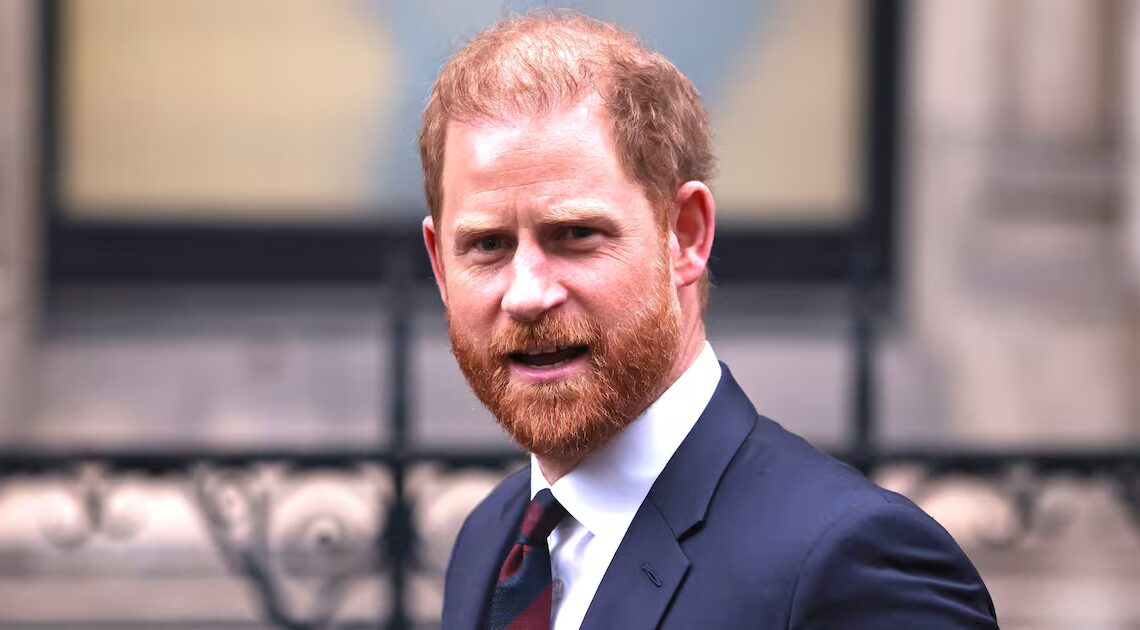
Prince Harry bristled under questioning from opposing counsel—and even pushed back against the trial’s judge—as he gave evidence in his case against Associated Newspapers Limited (ANL), the publishers of British newspapers The Daily Mail and the Mail on Sunday.
He was the first witness called Wednesday in the high-profile case against the publisher, his third and final legal battle against the British tabloids over a notorious phone hacking scandal that broke open years earlier. Together with other claimants including Elton John, Elizabeth Hurley, and Sadie Frost, the Duke of Sussex accuses ANL of using unlawful methods to gather news about him over the course of two decades. The publisher has denied the allegations.
It’s Harry’s second time testifying after he became the first senior royal to do so in 130 years in his 2023 suit against another publisher, which he won.
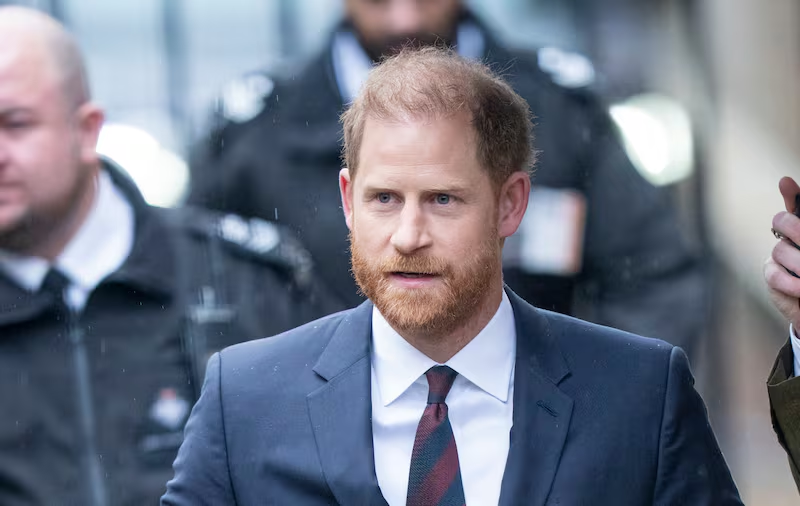
After taking the witness stand, the judge intervened twice to try to calm Harry down, urging him not to argue with ANL’s lawyer, Anthony White.
White kicked off by asking Harry why he hadn’t taken issue with many of the stories he is now complaining about at the time they appeared. “I wasn’t able to complain because of the institution I was in,” Harry explained of his position in the royal family. “It would have been very difficult. Never complain and never explain.”
He scoffed at the suggestion that he had a “good relationship” with The Mail’s royal correspondent, Rebecca English, highlighting intrusive articles she had written, including one about an “emotional” series of discussions he had with his brother, William, concerning Italian media publishing pictures of a dying Princess Diana.
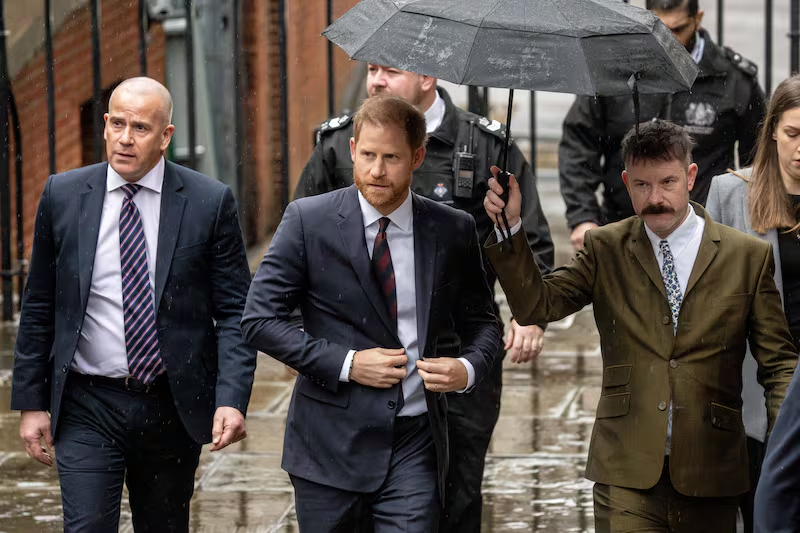
He described this article in his witness statement as “really disgusting.”
“My brother and I were relatively young at the time (I was just 21) and we were having private conversations about photographs of our dead mother which had been put into the public domain,” he said. “It was obviously a highly emotional call for William and I… If Associated was willing to publish this type of material, then it really makes me wonder how far they are prepared to go and what else they learnt but never published because they would get caught.”
Harry also strongly resisted the implication that he was friends with another royal journalist, Katie Nicholl.
“She was not part of my social circle,” he told White. “She turned up at events my friends were at… to make it look like she had all these sources.”
Harry was at one stage advised by the judge to keep his answers on point and not get drawn into back-and-forths. But later on, Harry came close to arguing with the judge about the meaning of the word “source.”
On another occasion, he was cautioned about “arguing” inappropriately by the judge, who told him, essentially, that he was well used to trying media cases and he needed to just “answer the question.”
Harry wrote at length in his witness statement of the distress he felt witnessing his former girlfriend Chelsy Davy being pursued by the media.
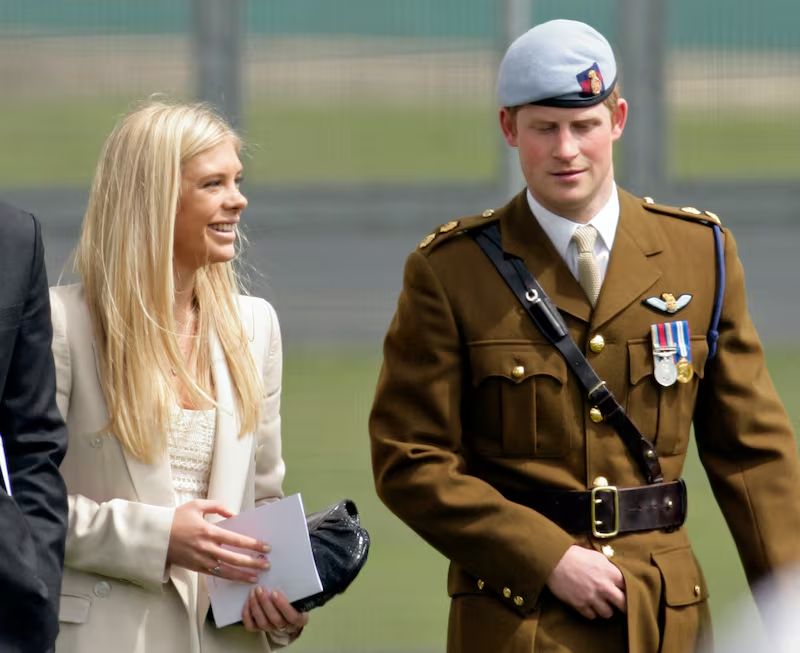
Harry and Davy met in 2004 and dated for several years before ultimately splitting in 2010.
To report a story on a “make-or-break” vacation he and Davy had taken to Africa during their relationship, Harry said that English had “paid for” information regarding Davy’s flights.
He alleged a private investigator working with English had suggested buying the seat next to her and attempting to gain information: “Suggesting that someone be planted next to a young woman, just because she is my girlfriend, is sick and creepy. It is disgusting that this was done to Chelsy… it is stalking at close range and has massive security implications.”
“If someone was dating me, they might assume that they would be photographed coming out of a restaurant or a concert, but you would never expect to experience full-blown harassment,” Harry’s witness statement continued.
“Whenever I got on a plane, or in a car, I always expected I was being followed. I was under 24-hour surveillance. Because of my position as a member of the Royal Family, both my security team and I always had security concerns… because of how often the press knew about our (my) movement, sometimes hiding at a location before we even got there. The security risk was particularly great when we were abroad and could not always rely on police assistance.”
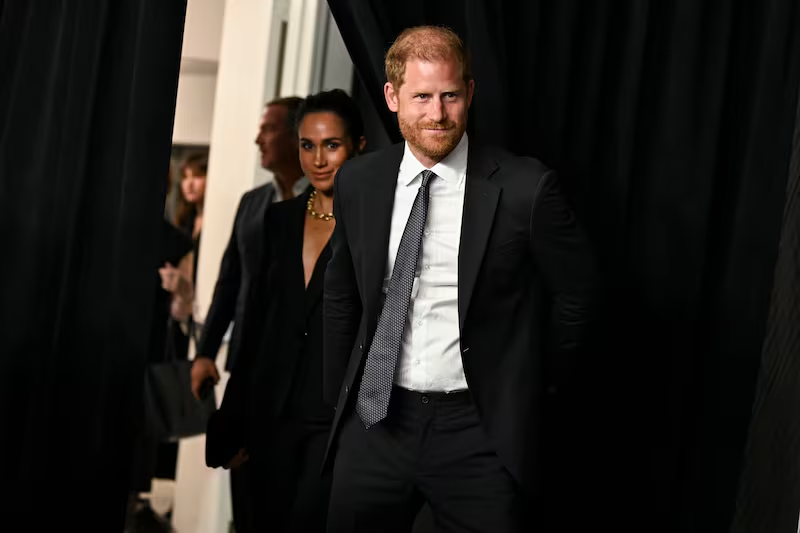
In his written testimony, Harry said such intrusive reporting had put a “massive strain” on his personal relationships and driven a wedge between him and those he was close to. He told the court on Wednesday, “They have made my wife’s life an absolute misery.”
The trial is expected to last nine weeks, with a written verdict to come potentially months later.
Want more royal gossip, scoops and scandal? Head over to The Royalist on Substack.
The post Combative Prince Harry Takes the Stand in Blockbuster ‘Hacking’ Trial appeared first on The Daily Beast.