In 2011, Ayako Oga fled her home in Fukushima Prefecture after three reactors melted down at the Fukushima Daiichi plant, blanketing eastern Japan in radioactive particles.
Ms. Oga and more than 160,000 other evacuees were eventually resettled across the country. She moved to Niigata, a quiet agricultural prefecture on Japan’s western coast that took in many evacuees fleeing Fukushima. There, the local nuclear station had been idled after the disaster, and prevailing winds had largely spared the region from the plume.
A farmer by trade, Ms. Oga, 53, tested the Niigata soil and found radiation levels comparable to pre-disaster Fukushima. She began growing carrots and other vegetables on a small plot, selling the surplus at a local roadside market. “It’s so beautiful here,” she said. “Moving here and farming again has made me feel so happy.”
Fifteen years after an 8.9-magnitude earthquake sent a tsunami crashing into the coastline and knocked out the Fukushima plant’s cooling system, memories of the nuclear crisis are receding in Japan.
The country, like many others, is turning to nuclear power to meet skyrocketing demand for carbon-free, round-the-clock electricity to power chip factories and the data centers needed for artificial intelligence. At an accelerating pace, Japan is moving to set aside concerns and restart reactors that have been mothballed for more than a decade.
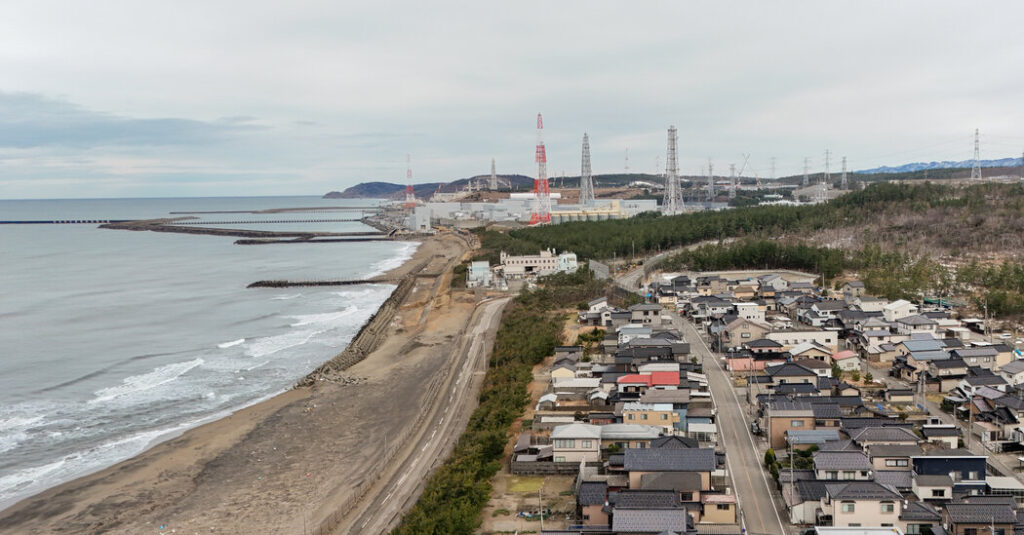
On Wednesday, Tokyo Electric Power, or TEPCO — the same utility that operated the Fukushima plant — restarted the first reactor, Unit 6, at its Kashiwazaki-Kariwa complex, one of the world’s largest nuclear facilities. The restart was delayed by a day after a safety alarm failed to sound during a test over the weekend. The plant sits about 40 miles from Ms. Oga’s home in Niigata.
Many energy analysts and officials say nuclear power is vital to meeting surging electricity demand, curbing utility costs and reducing Japan’s heavy reliance on imported fossil fuels. Unit 6 generates enough power to supply more than one million homes and will primarily serve the Tokyo metropolitan area.
For Ms. Oga, however, the restart of Kashiwazaki-Kariwa underscores a lopsided exchange — one that mirrors the situation in Fukushima, where electricity is channeled to urban centers from rural communities that shoulder the risk of hosting nuclear facilities.
With the plant’s restart, “a life of constant daily vigilance is beginning again,” Ms. Oga said. “To be honest, I’m terrified,” she added. “But I’ve put down roots here.”
Before the Fukushima disaster, Japan had one of the world’s most extensive nuclear programs, but over the past 15 years, the country has been slow to revive its nuclear facilities. Only 15 of its 33 operational reactors have restarted, largely because of a rigorous approval process from local and prefectural governments.
In Kashiwazaki, the city that hosts the plant, Mayor Masahiro Sakurai backed Unit 6’s restart after it met stringent standards set by Japan’s nuclear safety agency.
Niigata has long served as an energy hub. Kashiwazaki is known as the birthplace of Japan’s modern oil industry, with the discovery of significant deposits here in the 1880s. The city’s municipal office sits on the former headquarters of Japan’s first oil major, Nippon Oil. By the 1960s, the region pivoted toward nuclear power.
Through its years of operation, the local nuclear plant has both sustained the local economy — employing thousands and generating tax and grant revenue — and provided Japan with a stable, clean source of power, Mr. Sakurai said.
“We take pride in the fact that Kashiwazaki has supported the Japanese economy through energy — first oil, now nuclear,” he said.
Before 2011, nuclear provided about 30 percent of Japan’s electricity. Since then, the nation has struggled to scale offshore wind and solar power, leaving it reliant on imported natural gas and coal for roughly two-thirds of its needs. Japan spent nearly $70 billion on imported liquefied natural gas and coal last year.
Given limitations to renewables and Japan’s pledge to reach carbon neutrality, “the only practical option is nuclear,” said Tatsuya Terazawa, chairman and chief executive of the Institute of Energy Economics, Japan, a think tank.
For the first time since 2011, national polls have shown that a majority of the public supports restarting offline reactors. The Japanese government aims to derive about 20 percent of the nation’s energy from nuclear by 2030, up from less than 10 percent currently, which would require restarting nearly all of its plants.
Despite the recent momentum, significant barriers complicated a swift return, Mr. Terazawa said. Chief among them is the lack of public trust in the utilities that operate the plants, alongside the fraught process of securing local government consent.
In many host communities, residents have conditioned their approval of plant restarts on the construction of reinforced evacuation routes. In Niigata, local officials pressured the central government and TEPCO to fund an infrastructure overhaul as a prerequisite for the Kashiwazaki-Kariwa restart, yet the plant resumed operations even as many road and shelter projects remained unfinished.
“If an earthquake coincided with an accident, evacuation would be impossible,” said Ken Ofuchi, a member of the Niigata Prefectural Assembly. He noted that heavy winter snows often paralyzed local roads and argued that restarting the plant without new infrastructure could leave a multiyear safety gap.
The other primary point of contention is TEPCO. Niigata Prefecture released a survey in October that found that 60 percent of residents did not believe the conditions for restarting the plant were in place, and about 70 percent expressed concerns about TEPCO’s management of the site.
Some critics argue that TEPCO ignored tsunami warnings before 2011 to save costs. In the years since, the company has faced backlash for transparency lapses and technical delays in decommissioning the Fukushima site.
Since 2011, TEPCO has held numerous meetings with Niigata residents to explain the disaster-prevention measures put in place at Kashiwazaki-Kariwa. Last year, it pledged more than $600 million in investment into the prefecture over the next decade.
In a statement, TEPCO said, “We keep at the forefront of our minds that there are those who feel anxious about our restarting of nuclear reactors.” TEPCO will “work tirelessly” to improve the safety of the Kashiwazaki-Kariwa power station, it said.
The decision to greenlight the restart came after a vote in December by Niigata’s prefectural assembly to approve a petition supporting the move, which Gov. Hideyo Hanazumi endorsed. Mr. Hanazumi had pledged to “seek the public’s mandate” before granting consent — a phrase some residents interpreted as a promise for a direct referendum. Instead, the governor cited the assembly’s vote as representative of the public will.
“It is an insult to democracy,” said Hitoshi Nakayama, a Niigata City Council member. That is the “unfortunate reality” of the endemic “warped structure” of nuclear power, Mr. Nakayama said. “Local will is influenced by grants and subsidies, while risk is pushed onto a local region for the sake of massive energy consumption in a major city.”
In Kashiwazaki, Mayor Sakurai sees the plan to restart the plant differently. Beyond the economic benefits, he framed the decision as a necessity to combat climate change — a crisis that he said affected locals as much as the rest of Japan.
Mr. Sakurai said his eyes had been opened to how quickly global warming was progressing on a recent trip to the Himalayas, where he saw snowmelt overflowing hydropower dams. In Kashiwazaki, he has pushed an initiative to decarbonize the city through a mix of solar megaprojects and battery storage.
Sitting in his office, he pointed to Mount Yoneyama, a bell-shaped peak that towers over Kashiwazaki. In January, it was only partly dusted in snow. “Climate change is undeniably advancing,” Mr. Sakurai said, adding that salmon, a major industry in Niigata, are not returning to local rivers because of rising sea temperatures.
“To prevent its advance, we need stable, carbon-free electricity,” he said. “Therefore, for the time being, I believe nuclear is necessary in Kashiwazaki.”
River Akira Davis covers Japan for The Times, including its economy and businesses, and is based in Tokyo.
The post An Anxious Japan Restarts the World’s Biggest Nuclear Plant appeared first on New York Times.