If summer is the time of light beach reads, it follows that winter, with its brutal chills and long nights, is the ideal time to finally tackle some of the most substantial volumes on your shelf. The colder months are perfect for getting cozy with a long novel, taking the time to savor each page as you immerse yourself in stories of epic proportions. Whether you fancy some well-researched historical fiction, a heartfelt Victorian classic or a mordant satire, these heavy-duty books — some of them spanning 1,000 pages or more — should give you plenty to chew on throughout the season.
The Sisters
by Jonas Hassen Khemiri
This sprawling family saga — one of the Book Review’s 10 Best Books of 2025 — revolves around the Mikkola sisters, a trio of Swedish Tunisians with wildly divergent personalities. In six carefully structured sections that span decreasing periods of time, Khemiri (whose alter ego, Jonas, also appears in the novel) tells the story of the sisters’ tumultuous coming-of-age, an erratic process involving office parties, aquariums and a longstanding family curse. It’s smart, ambitious and big-hearted and, as characters in the book often remark, its leading women are striking and unforgettable. Read our review.
The Luminaries
by Eleanor Catton
New Zealand, 1866. Walter Moody, a gold prospector, comes to a small coastal town seeking his fortune. Instead, he finds 12 men, a dead body and a beguiling mystery: the irresistible building blocks of Catton’s page-turning intellectual thriller. “The Luminaries” is both sophisticated and compulsively readable — a book that combines the classical sleuthing pleasures of Arthur Conan Doyle with the conceptual alchemy of Vladimir Nabokov or James Joyce. At 826 pages, it may seem imposing; reading it, however, the pages fly by. As our reviewer put it, “Surely a book this good could never be too long.” Read our review.
Middlemarch
by George Eliot
At the risk of sounding sacrilegious, “Middlemarch,” the immortal classic by George Eliot, reads a like a great season of television. The eponymous provincial town, as well as the variously anguished and yearning men and women who reside in it, are so well-rendered as to become intimately familiar, and the mundane drama of their lives — their love affairs and friendships, their turns of fortune and twists of fate — is, in Eliot’s brisk and lively telling, powerfully addictive. Of course, this seminal work of English social realism also contains serious reflections on class, politics and the era’s social dynamics. But that’s all wrapped up in an absolutely binge-worthy read.
JR
by William Gaddis
A postmodern satire of American consumerism, this caustic, laugh-out-loud novel by the author of “The Recognitions” is, like much of his later work, written almost entirely in dialogue, without quotation marks, attributions or chapter breaks … for nearly 800 pages. It has a reputation for being a difficult read, but it’s hard to overstate how enjoyable “JR” can be once you get into its kinetic, deliriously playful rhythm. The book’s hero, a budding 11-year-old capitalist, lives a fun-house version of the American dream, and his droll exploits in gaming the stock market feel more relevant today than ever. Read our review.
Ducks, Newburyport
by Lucy Ellmann
There’s stream-of-consciousness fiction, and then there’s “Ducks, Newburyport” — a marathon of inner monologue composed as (nearly) one 1,000-page sentence. The book’s mile-a-minute thoughts, recollections and daydreams belong to a middle-aged homemaker in small-town Ohio; she prefaces each one with the oddly hypnotic phrase “the fact that.” For most of its pages, Ellmann’s novel is almost defiantly plotless; it culminates, however, in a startling act of terror that transforms all that mundanity into something sharp and devastating. Read our review.
A Naked Singularity
by Sergio De La Pava
In 2008, De La Pava, a Colombian American in his mid-30s working as a public defender in New York, self-published this novel about, among other things, the bitter lunacy of being a public defender in New York. It caught the attention of readers and, in 2012, it was published commercially and won a PEN Award for debut fiction — an honor that cemented the book’s reputation as a one-of-a-kind masterpiece and kick-started De La Pava’s literary career. Strange and mesmerizing, alternating between trenchant social realism and madcap Pynchon-esque farce, it’s a great book that remains, in a word, singular.
Foucault’s Pendulum
by Umberto Eco; translated by William Weaver
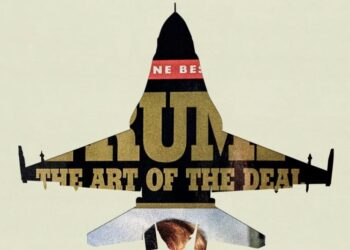
Readers of Dan Brown’s “The Da Vinci Code” will be familiar with many of the shadowy organizations, arcane symbols and historical conspiracies that populate Eco’s literary thriller, from the machinations of the Knights Templar to the world-dominating schemes of the Illuminati and the Freemasons. The difference is that Eco’s mordantly funny satire skewers such conspiracies and the minds that are susceptible to them; his examination of the treacherous desire for pat “answers” over nuanced truth resonates all the more deeply in this era of alternative facts and fake news. Read our review. (And if you want something less biting, Brown has a new book out too.)
A Game of Thrones
by George R.R. Martin
Long before it became a marquee HBO series, the first of Martin’s A Song of Ice and Fire novels introduced the world to the wildlings, dragons and would-be kings of Westeros, which comes vividly to life in Martin’s incandescent telling. Carefully constructed and masterfully paced, Part 1 of this five-volume (so far) fantasy saga spans kingdoms and continents, shifting among the decent but naïve Starks, the unscrupulous Lannisters and the ambitious Targaryens as they navigate violent action and elaborate palace intrigue.
A Place of Greater Safety
by Hilary Mantel
“Under Robespierre, blood flowed, but the people had bread. Perhaps in order to have bread, it is necessary to spill a little blood.” Plenty of blood gets shed in Mantel’s sweeping, exhaustively researched account of the French Revolution, which explores the transformative conflict by way of the personal lives of three revolutionaries: Georges-Jacques Danton, Camille Desmoulins and Maximilien Robespierre. Mantel brings her signature wit, insight and lively imagination to this story — all qualities that will be familiar to readers of her beloved “Wolf Hall” trilogy. Read our review.
The Pale King
by David Foster Wallace
Wallace is of course best known for his postmodern epic “Infinite Jest,” a worthy project for any winter reader. But you should not sleep on its long-awaited follow-up, “The Pale King.” This thought-provoking work of comic existentialism was left unfinished when Wallace took his own life in 2008; nevertheless, it is as creative and erudite as the rest of his oeuvre. A kind of obsessive meditation on the nature of tedium, “The Pale King” follows the anti-adventures of a group of I.R.S. employees in Illinois, using the Kafkaesque absurdity of tax returns as a springboard from which to look at the human condition. Read our review.
The post 10 Long Books for Long Winter Nights appeared first on New York Times.