ISTANBUL — The security of tightly guarded prisons and camps in northeastern Syria holding Islamic State detainees or their families was threatened Tuesday, after Syria’s government said more than 200 detainees had escaped from one prison and a Kurdish-led militia guarding another camp said its forces had withdrawn under fire.
The security lapses, at the Shaddadi prison and al-Hol camp, occurred amid escalating violence in the region after the breakdown of a ceasefire agreement announced Sunday between the Syrian government and the Kurdish-led militia, the Syrian Democratic Forces, or SDF.
By nightfall Tuesday, another ceasefire was announced, after the Trump administration publicly urged the SDF to reconcile with the government, in a message posted on X by President Donald Trump’s Syria envoy that made explicit a U.S. policy shift that had become apparent over the last year.
The United States, the message indicated, was moving on from its dependence on the SDF as its primary counterterrorism partner in Syria and instead privileging its partnership with the interim government led by President Ahmed al-Sharaa, a former rebel and onetime leader of al-Qaeda’s Syrian branch who led the charge to topple Syrian dictator Bashar al-Assad in late 2024.
“The original purpose of the SDF as the primary anti-ISIS force on the ground has largely expired, as Damascus is now both willing and positioned to take over security responsibilities,” wrote Tom Barrack, the administration’s Syria envoy. “… Recent developments show the US actively facilitating this transition, rather than prolonging a separate SDF role.”
Sunday’s ceasefire agreement had called for the SDF to return areas it had gained control of during Syria’s long civil war to the government, among other integration measures, including the handover of detention centers that the SDF was guarding in cooperation with U.S. troops.
When it was announced Sunday, the Trump administration hailed the agreement. But instead of an orderly transfer of power, fighting between the SDF and government and affiliated forces intensified on several fronts over the past few days, with each accusing the other of violating the agreement as well as perpetrating atrocities.
For years, the SDF has guarded prisons and camps holding Islamic State detainees or their families, facilities that are the by-product of the vanquished caliphate the group tried to establish in Iraq and Syria beginning in 2014. The facilities, where men, women and children are held without due process, have become a source of global concern: for their lawless nature, for their harsh conditions and for the extremism many feared was festering within.
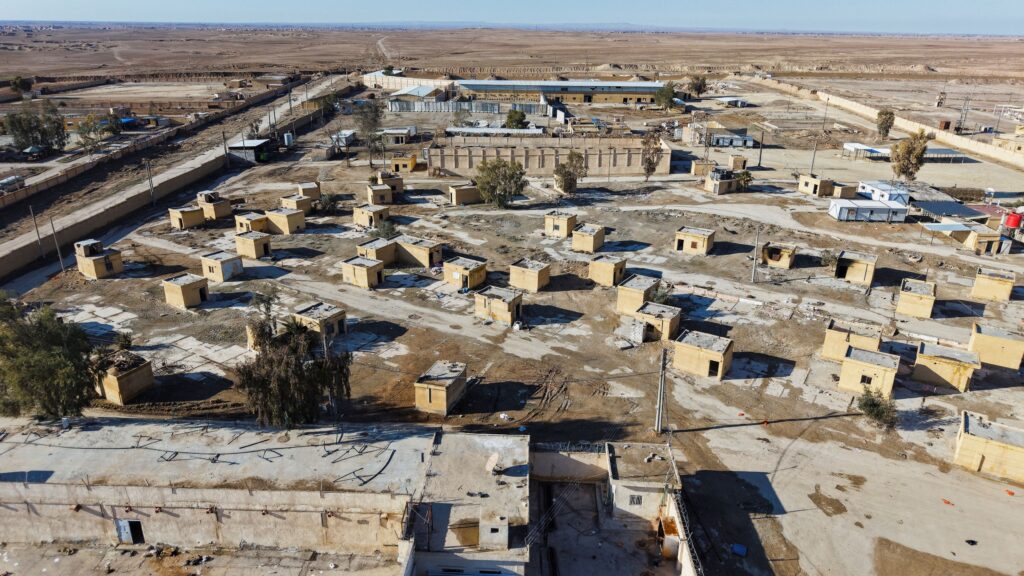
The fate of several of those facilities were imperiled late Monday and Tuesday, after the government and the SDF said that detainees had escaped from the Shaddadi prison, south of the city of Hasakah.
A U.S. defense official familiar with the escapes, who spoke on the condition of anonymity because of the sensitivity of the situation, said that roughly 200 detainees had broken out of Shaddadi on Monday, as Syrian government forces moved in and SDF guards pulled back.
It was not so much a prison break as a walkout, the official said: “No one was guarding them.” About 130 of the escapees have since been recaptured by Syrian government forces, the official said, cautioning that estimates and the situation both remained fluid.
The detainees were believed to be low-level offenders, the official said, adding that an additional 600 Islamic State suspects were moved to other facilities in the region days earlier. U.S. officials were working with both the SDF and the Syrian government to manage the conflict, particularly as it related to prisoners and people displaced by the fighting, the official said.
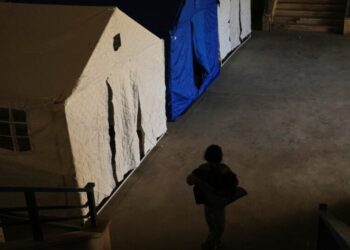
The SDF said Tuesday afternoon that its forces had been “compelled” to withdraw from al-Hol, a notorious detention camp housing thousands of women and children, many with ties to Islamist militants and forsaken by home governments that have been unwilling to take them back.
The SDF withdrawal had occurred “due to the international community’s indifference towards the ISIS issue and its failure to assume its responsibilities in addressing this serious matter,” a statement from the group said, using an acronym for the Islamic State.
Syrian officials have accused the SDF of exploiting fears of Islamic State terrorism, as well as its role in guarding related facilities, to win international sympathy and dither on agreements with the Syrian government. Syrian authorities were ready to assume control and manage al-Hol “in order to ensure the stability of the camp and to prevent any attempts by terrorist organizations to exploit this withdrawal,” Hamza al-Mustafa, Syria’s information minister, wrote in a post on X.
“We have observed deliberate procrastination on the part of the SDF in completing the handover process, in a manner that suggests an attempt to create confusion and to precipitate a new security crisis in the region,” he wrote.
The ceasefire and integration agreement announced Sunday was the fruit of months-long negotiations between the SDF and the government, brokered by the United States, that was part of determined drive by Sharaa to assert control of the fractured Syrian state. An agreement reached in March for the SDF to merge its institutions was never implemented.
In the year since Assad was toppled, Sharaa’s clamor to assert his authority has led him to send fighters to southern Syria and to its coastal regions, in episodes that have resulted in massacres and accusations that the new Syrian government was doing little to protect the safety of the country’s minorities.
Syrian authorities have vowed to hold state forces implicated in the massacres accountable.
For the SDF, the agreement meant the immediate surrender of a fledgling state it had formed in parts of northern Syria that included long-marginalized Kurdish regions, but also Arab-majority areas that bristled at SDF rule. It broke down when Mazloum Abdi, the SDF leader, asked for a five days to implement the agreement, and the government refused, Ilham Ahmed, a spokeswoman for the group, told reporters in a Zoom call.
As part of the agreement, the SDF was also forced to hand over oil fields and border crossings it controlled. Officials in the autonomous Kurdish region called for international protection Tuesday afternoon as they warned they were facing withering attacks, including in majority-Kurdish towns.
Just as bitter was the public loss of the U.S. as a protector. Salvation for Syria’s Kurdish residents “lies in the post-Assad transition under the new government led by President Ahmed al-Sharaa,” Barrack, the U.S. envoy, said in his statement.
By late Tuesday, another agreement — a “mutual understanding” — had been announced. Syria’s government, in an apparent concession, would give the SDF four days to “to develop a detailed plan” to hand over the shrinking number of areas under its command to the government. The state’s forces would not enter Kurdish villages, it said. The agreement would begin at 8 p.m. local time, it added.
In a statement, the SDF indicated it agreed, saying it would not “initiate any military action unless our forces are subjected to attacks in the future.” In a subsequent statement, after 8 p.m., it said another facility holding Islamic State detainees was under attack, by government-backed forces using drones and heavy weapons.
Chamaa reported from Beirut and Lamothe from Washington. Suzan Haidamous in Beirut contributed to this report.
The post Clash between U.S. allies in Syria threatens ISIS detention centers appeared first on Washington Post.