Classical music has been in a crisis for decades. New generations don’t seem to care about it. The institutions that support the music — the venues, the symphony orchestras, the funding foundations — have twisted themselves into pretzels trying to figure out why. The answer everyone always seems to come back to is: The music is too long, too boring, too unfamiliar to the modern ear. We need to chop it down and jazz it up. We need to make classical music more, you know, relevant.
In the 1980s, Neil Postman argued that “Sesame Street” wasn’t teaching kids to love math, only to love television. Whatever you think of Big Bird, Postman’s thinking applies just as well to the modern approach to classical music. When symphonies entice new audiences with concerts full of popular film music, the audience may rediscover their love for the films but they won’t magically develop a love for Beethoven. An audience that’s lured in to sit through an abridged version of an opera has not learned how to listen to an opera. These tactics might bring new audiences to see the symphony, but they don’t bring them to the music.
For classical music to endure, we need to demonstrate to a new audience that the form is not similar to modern music but actually very different in important and — once you acquire a taste for it — enjoyable ways. In execution, this theory works very simply: Don’t change the music; change the way you deliver it. Do the opposite of what institutions are doing when they offer radically shortened operas or watered-down symphonies.
This idea is inspired in part by my own introduction to classical music: the Disney film “Fantasia.” Here was a movie that presented the music in all its complexity but absent all the ritual of going to see a symphony orchestra. There were no musicians to watch, no formal dress required, no implied codes of audience conduct. Instead, I could sit and envision the narrative of the music through the lively accompanying cartoons.
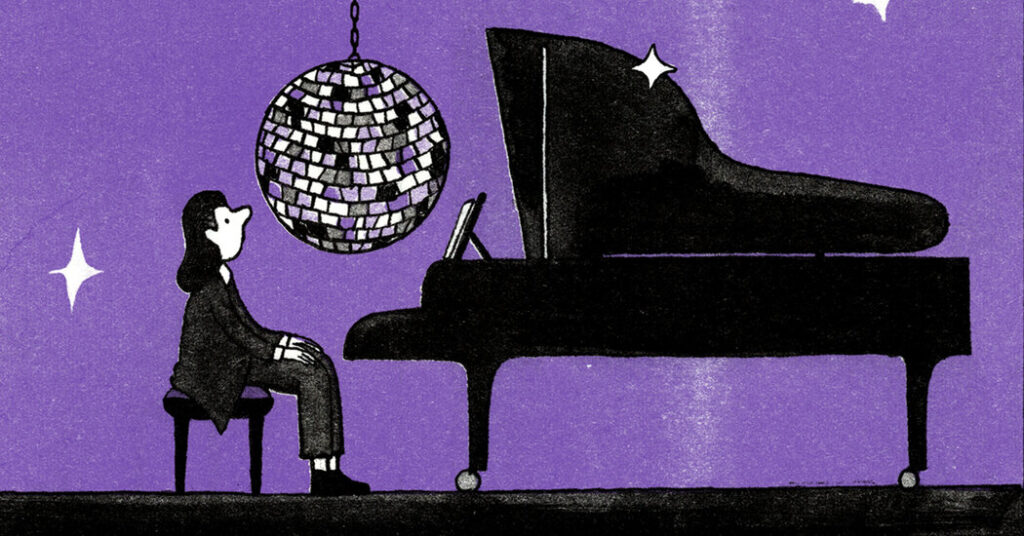
On that same premise, I founded the Bach Store in 2018, a classical music pop-up event. At every Bach Store, typically staged in an empty storefront, I sit daily at a piano and play through the complete works of Bach for five hours. There are no tickets, no set programs and no seating assignments. People come and stay for as long as they like. I also host “W.T.F. Bach,” a podcast where I dissect Bach’s transcendent music in all its complexity. (We’re currently studying revisions between early and later stages of “The Well-Tempered Clavier.”) The format resembles nothing like a concert or a preperformance lecture. It’s a new medium used to address and appreciate the unaltered music, built on the notion that classical music can’t be half-listened to and is not built for easy consumption. Bach is difficult — and rewarding.
Here’s what I don’t do: mix Bach and rap, or set Beatles lyrics to the “St. Matthew Passion.” My goal is to get people to hear the music while learning how to listen and knowing what to listen for. My audiences are eclectic, and people often write to tell me they never liked Bach or never imagined liking classical music, but now they listen in a different way.
This philosophy is bearing fruit with other projects, too. Orchestrating Dreams, a musical education program in Manhattan run by a colleague of mine, experiments with teaching pieces of classical music using MIDI files, allowing for muting and highlighting certain instruments in a dense texture, listening to sections of a piece at different tempos, and breaking down the piece in an interactive way. A group of 12-year-olds has recently been listening to Igor Stravinsky’s “The Rite of Spring” in this way — and when this audience goes to see a live performance, it will be life-changing, because they’ll arrive prepared.
Yet each year we see new examples of classical music being compromised or mutilated in the misguided belief that this is the way to win new converts. The Metropolitan Opera’s recent production of “The Magic Flute,” designed by Julie Taymor, exemplified this impulse, cutting the opera down to 90 minutes and presenting it as a “starter opera.” Abridged productions — rare for the Met — presume that attention is scarce, difficulty repels and relevance must be demonstrated through familiar cultural forms. This approach spreads a confusing message, suggesting that the value of the music lies in its resemblance to what you already like, rather than in its potential to expose you to something new and valuable. This is how you end up with images of Mozart in sunglasses: It’s the message that Mozart was his era’s version of a rock star.
Mozart was not a rock star. He’s something better: He’s Mozart. Lincoln Center is a temple of classical music — the church of Tchaikovsky — and should be regarded as such. The audience has made a trek that’s not typical of their evenings, so don’t insult them by serving them overly processed food and seating them at the kiddie table. Feed them a proper meal.
Evan Shinners is a pianist, harpsichordist and graduate of Juilliard. He hosts the podcast “W.T.F. Bach.”
The Times is committed to publishing a diversity of letters to the editor. We’d like to hear what you think about this or any of our articles. Here are some tips. And here’s our email: [email protected].
Follow the New York Times Opinion section on Facebook, Instagram, TikTok, Bluesky, WhatsApp and Threads.
The post Bach Doesn’t Need a Glow-Up appeared first on New York Times.