Williamstown Theatre Festival, a leading destination for theater in the Berkshires and influential pipeline for Broadway productions, announced today that its next full summer festival will be presented in 2027. The move not to produce this year is meant to allow the organization to continue to rethink its future after a period of radical change.
Leadership is still deciding whether Williamstown will skip only this summer or move into producing the flagship festival on a biennial basis.
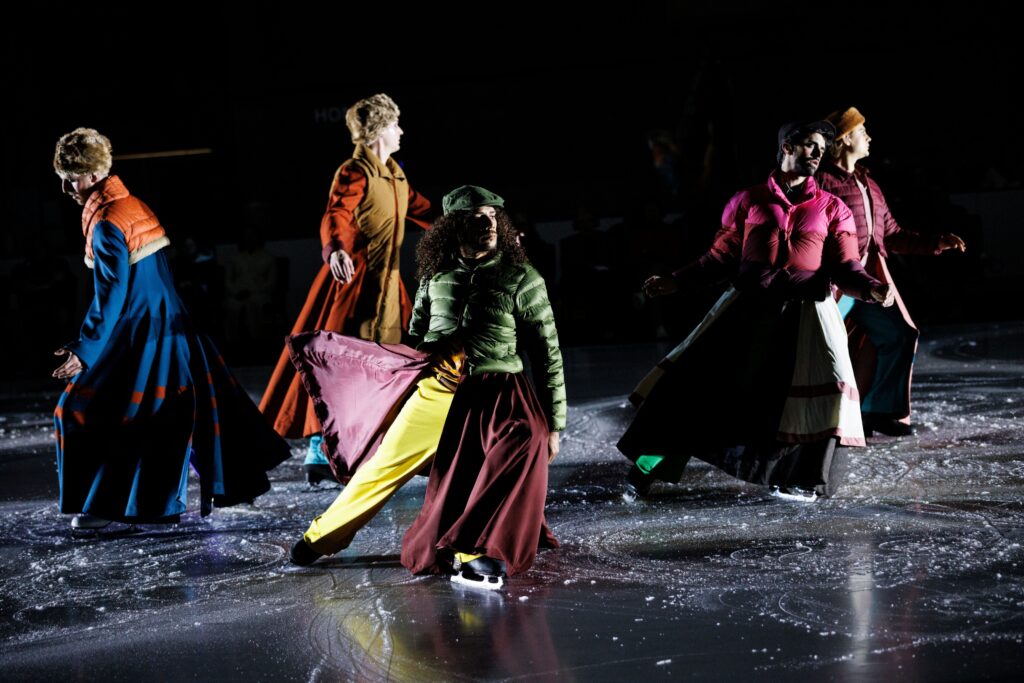
Williamstown’s 71st season in 2025 introduced a complete overhaul: Rather than a typical summer stock schedule, with about a half dozen plays that each run for a couple of weeks from June through August, W71 (as it was branded) packed a glut of multidisciplinary performances — including three plays, an opera, dance, stand-up and a piece that skated on ice — into three whirlwind weekends in July. The new format was shepherded in part by Jeremy O. Harris, the playwright and online provocateur known for Broadway’s “Slave Play,” who is serving in the newly created position of creative director.
It was possible to stay a night or two at a local hotel, as I did, and see eight (or more) shows within 48 hours. Drawing inspiration from events such as the Festival d’Avignon, the Salzburg Festival and even Coachella, W71 was a concentrated flurry of artistic activity aimed at drawing culturally voracious audiences to Western Massachusetts beyond those who may have previously stopped by to see a show or two.
Thrilling as I found the experience to be — ambitious, provocative, and more densely rewarding than is typical of a midsummer theater festival — it was also hampered by delayed start times, frantic scurrying between venues and an air of only partially controlled chaos. Smoothing out logistics and shoring up finances are among the primary goals ahead of presenting the next one.
“So many big ideas got to be rendered onstage, but it also taught us a lot about what ambition cost, both financially and spiritually,” said Harris, whose position is designed to rotate every three seasons. Harris helped convene what’s known as the festival’s Creative Collective, a group of guest curators that contributes ideas and will be different every season.
The theme of W71 was Tennessee Williams, and included revivals of his lesser known works “Camino Real,” featuring Pamela Anderson, and “Not About Nightingales,” with Chris Messina. Harris premiered a new play, “Spirit of the People,” starring Amber Heard, and Heartbeat Opera co-presented “Vanessa,” which will be performed in New York this spring.
Several offerings from the 2025 season are in talks for future productions, according to Harris, who has worked as a producer both on and off Broadway. He added, “We want to make sure that when these W71 shows go to Broadway, they’re going in a way that protects them and makes them viable inside of this really hostile market right now for theater.”
Harris hinted that 2027 season will be organized around a more abstract theme (“dreams, myths and America are things that are all percolating around my brain right now”), feature more new plays than revivals and continue to explore new storytelling forms, including potentially in gaming.
(Harris, who in November was arrested in Japan and detained for three weeks on suspicion of drug smuggling after MDMA was found in his carry-on, said that he plans to write about it: “People will be able to read my experience very soon, and I’m excited for them to do that.”)
The company also has plans to expand its reach online and potentially offer digital subscriptions, invest in developmental opportunities for artists (including a continuation of its commissions, which have been as much as $20,000) and relaunch its professional training program.
“We were doing something radically different on top of a system that was built for a very different kind of organization,” Raphael Picciarelli, who serves as the company’s managing director of strategy and transformation, said of the 2025 festival. “Part of our intention is giving ourselves more time to build the systems and infrastructure that can better support this model from a revenue perspective.”
Co-founded in 1955 by Nikos Psacharopoulos, who served for more than three decades as artistic director, Williamstown has long been considered a creative vanguard, producing serious and boundary-pushing dramas, attracting big-name stars and transferring productions to Broadway, including two in 2019: “The Sound Inside” with Mary-Louise Parker and a revival of “The Rose Tattoo” with Marisa Tomei.
But in 2021, as the theater resumed modified operations following pandemic shutdowns, an investigation from the Los Angeles Times revealed staff complaints about unsafe working conditions and unpaid labor practices through the company’s apprenticeship programs. Mandy Greenfield, who had served as artistic director since 2014, stepped down shortly afterward, and Jenny Gersten, who had led the theater for four years before Greenfield, stepped in as interim artistic director.
For the few years after that, Williamstown was characterized by reduced programming and half-empty audiences. Then, in 2024, the duel appointments of Picciarelli and Kit Ingui (managing director of operations and advancement) signaled a new era of leadership determined to reinvigorate the institution. Harris was tapped soon afterward to help lead the creative charge.
Regional theaters around the country have been working to manage rising costs and changes in viewership habits. Williamstown was also faced with answering calls for fair pay and remaking its business model.
“There is a strong commitment to making sure that we pay for labor artistically and otherwise,” said Margaret Gould Stewart, who has chaired the company’s board since 2023. Internal figures provided to The Post show that the 2025 festival employed 100 seasonal production and administrative staff, or about half as many people as the last pre-covid season in 2019 — when close to half of the workers were unpaid interns.
Stewart added, “There’s a tension in terms of what we can afford to do year over year, but I think that there is a deep sense of responsibility towards supporting artistic efforts and the cultivation of new and emerging talent.” A relaunch of what it’s calling the Next Generation Learning Programs would compensate participants and be done in partnership with colleges and universities, Ingui said.
During what leadership is calling the company’s “fallow year,” it has a fundraising goal of $12 million, to support ongoing costs as well as the 2027 festival. W71, which operated at a deficit, was produced for approximately $8 million, according to the company, including nearly $1 million to renovate a former Price Chopper into a versatile black-box venue.
That’s not a dramatic increase, adjusting for inflation, from the budget for the last pre-covid season in 2019, when the company presented two-week runs of seven plays for about $5.2 million. Still, that summer brought in more than twice as much box-office revenue and included nearly twice as many performances as the compressed three-weekend schedule.
“We have a lot of money to raise,” said Stewart, a user-experience designer who has worked with both Meta and Google. She added that funding support has been robust for the company’s new direction: “What’s exciting is we have a compelling plan to share, as opposed to just the financial need.”
In addition maximizing revenue during the three weekends of programming — through partnerships with other companies, brand sponsorships and consumer spending — there are also talks of a for-profit producing arm, which would help steer and participate financially in the future life of projects developed at Williamstown. That could include Broadway transfers, tours and even TV and film adaptations.
“There’s a lot we don’t know, actually,” Picciarelli said regarding how the company imagines its future. “There’s a lot that we’re excited to explore and think about, which I think gets to the heart of what Williamstown does and is trying to do, which is to be a generator.”
Harris added, “To rebuild a plane that’s flying is really, really difficult and it takes a lot of patience. I hope that that patience is less necessary for the people who come after.”
The post An influential theater company gets more changes and won’t return until 2027 appeared first on Washington Post.