Stewart Verdery, a former assistant secretary of policy and planning at the Department of Homeland Security, is executive director of the Global Recreation, Events and Tourism USA Coalition.
The United States is on the cusp of a once-in-a-generation opportunity, hosting the world’s most beloved and watched sporting events: this year’s FIFA World Cup, the 2028 Summer Olympics in Los Angeles and the 2034 Winter Games in Salt Lake City. For nearly a decade, the global spotlight will be on America and will attract millions of spectators to U.S. soil.
That moment will succeed only if the United States is seen not just as a great place to compete, but as a safe, welcoming place to visit. Unfortunately, a newly proposed Department of Homeland Security rule risks undermining that goal and could deter millions of qualified visitors without meaningfully improving security.
The rule would dramatically expand the personal and social media information required of travelers from America’s closest security partners. The policy risks chilling travel, generating negative headlines abroad and leaving stadium seats empty.
Travelers from 42 countries currently visit the U.S. visa-free for up to 90 days under the visa waiver program. These countries, which include such close allies as Britain, Japan and Australia, already meet stringent security standards, including sharing information with U.S. law enforcement, issuing passports secured with electronic chips, allowing air marshals on certain international flights and providing access to travelers’ criminal records. Roughly 19 million visitors use the program annually, with an almost flawless compliance record.
Under the new proposal, visa waiver travelers would have to submit additional information “when feasible” such as phone numbers and addresses for themselves and family members. More concerning, they would be required to provide a history of their “social media from the last 5 years.”
Press accounts in the U.S. and overseas have warned this program would enable DHS to screen individuals’ social media posts, perhaps with artificial intelligence tools, for content deemed anti-American or suggestive of “bad intentions.” This is a task even the largest technology companies have not mastered. Meta and TikTokhave spent billions trying to distinguish harmful content from benign speech, satire or news engagement, often with inconsistent results. A “like” on a news story about U.S. military engagement in Venezuela could indicate support for or opposition to the action itself, or merely bookmarking. Satire and humor are even harder to parse. And genuine bad actors can easily create fake or scrubbed accounts.
It’s true that all visa applicants already submit considerable information to the State Department. But those applications are reviewed over weeks or months by trained consular officers, with escalation to law enforcement when needed. Immigrants coming from countries not considered close security partners and seeking longer visits, employment or even permanent residence understandably receive even deeper scrutiny.
The visa waiver program is different by design. It requires travelers to submit a form via the Electronic System for Travel Authorization in order to conduct a rapid pretravel check of watch lists. That system is not designed to perform a political litmus test.
If DHS plans to review applicants’ social media use, much more detail must be provided as to how decisions on the content would be made, reviewed or appealed, how a trained workforce would be capable of conducting meaningful analysis on the scale of millions of visitors expected for the World Cup and subsequent events, and what specific national security risk justifies such a drastic measure. Just as Americans would bristle at foreign governments policing their online criticism, do we really want to tell a soccer fan they’re unwelcome because they criticized President Donald Trump, or any future president, online?
There’s also a reciprocal risk. As Europe and other regions continue updating their own entry systems, U.S. travelers could soon face similar scrutiny abroad.
It may be that the new requirements would be less about reviewing social media content and more about having applicants’ account names on file so law enforcement has additional information at its disposal. If DHS contemplates this more limited approach, the agency should clarify its intent before the Feb. 9 deadline for public comment.
At a White House task force meeting last May, Trump called the 2026 World Cup “a once-in-a-lifetime opportunity to showcase the beauty and greatness of America,” adding, “We can’t wait to welcome soccer fans from all over the globe.”
An alliance of travel, business and sports leaders has created the Global Recreation, Events and Tourism USA Coalition to support U.S. plans for the World Cup and Olympic competitions, and we welcome the president’s enthusiasm. But implementation of the proposed DHS rule would have a negative effect on his efforts.
Counterterrorism is about finding needles in the haystack, not shrinking the haystack. With millions of fans preparing to visit global events and contribute to record spending in the U.S., we want that haystack to be as large as possible. We urge the administration to work with travel, technology and other industries to ensure any new requirements deliver real security benefits while maximizing lawful visitation.
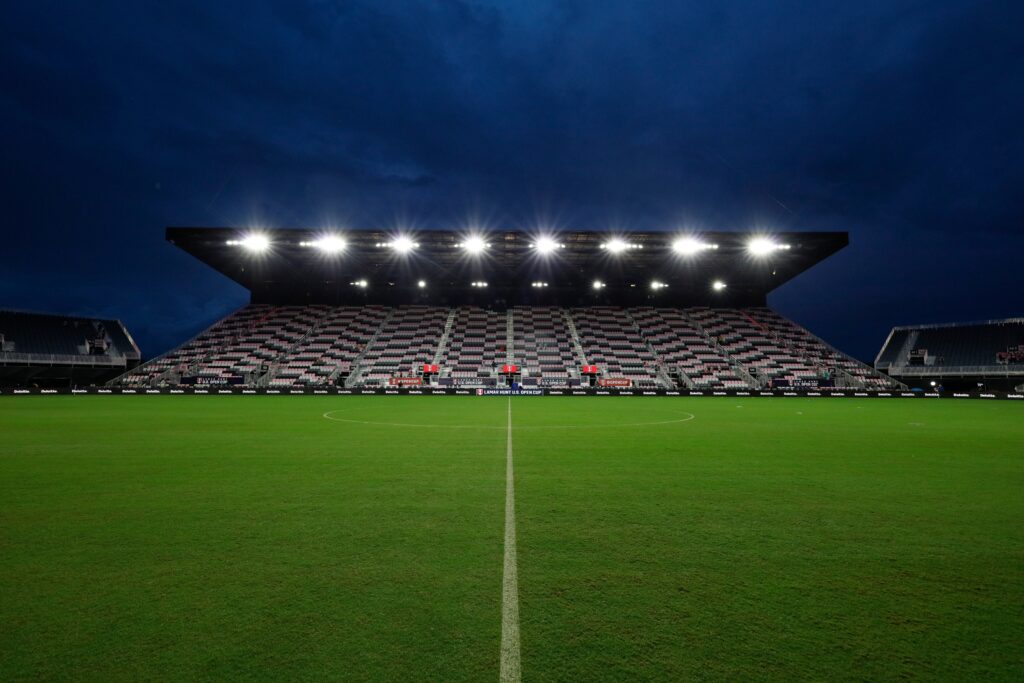
This year and into the future, our stadiums should be both safe — and full.
The post A proposed DHS rule could empty U.S. stadium seats for the World Cup appeared first on Washington Post.