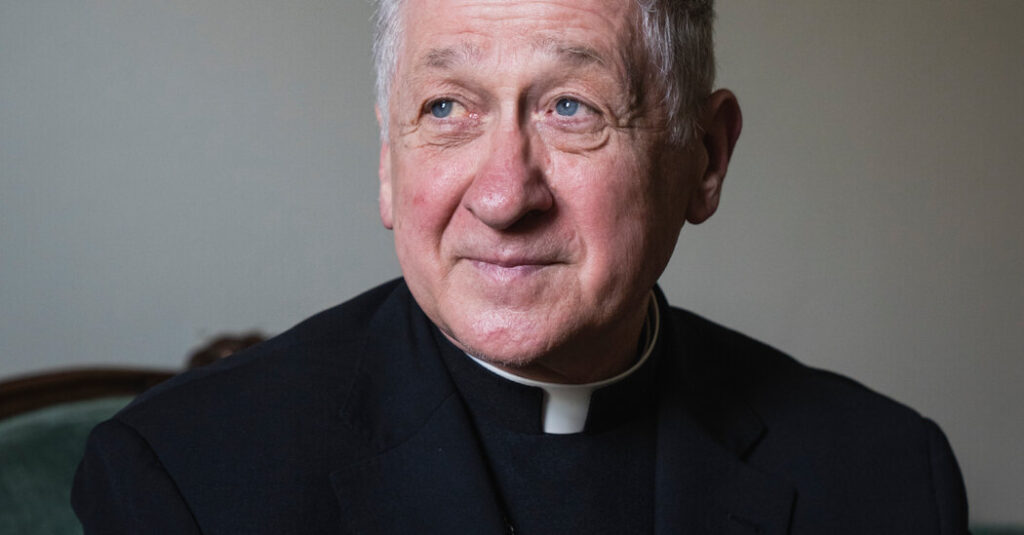
The three highest-ranking Roman Catholic clerics who lead archdioceses in the United States said in a strongly worded statement on Monday that America’s “moral role in confronting evil around the world” is in question for the first time in decades. Their critique of the Trump administration’s principles — while not mentioning President Trump by name — escalates the American Catholic Church’s denunciations of the country’s top leaders.
In 2026, the country has entered “the most profound and searing debate about the moral foundation for America’s actions in the world since the end of the Cold War,” read the unusual statement issued by Cardinal Blase Cupich, archbishop of Chicago; Cardinal Robert McElroy, archbishop of Washington; and Cardinal Joseph Tobin, archbishop of Newark.
Citing recent events in Venezuela, Ukraine and Greenland as having raised fundamental questions about the use of military force, the cardinals call for a “genuinely moral foreign policy” in which “military action must be seen only as a last resort in extreme situations, not a normal instrument of national policy.”
The cardinals did not delve into policy details, and declined to offer specifics about the countries mentioned in the statement. They specifically frame their statement as a message larger than partisan categories. But the context is clear. The president has threatened to take over Greenland “the hard way.” In Venezuela, the Trump administration has ordered U.S. troops to attack boats it says traffic in narcotics, and U.S. forces captured and extracted President Nicolás Maduro and his wife without authorization by Congress.
Pope Leo XIV has emphasized Venezuela’s “sovereignty” and has called for dialogue over violence. He has also repeatedly called for peace in Ukraine, and said President Trump’s peace plan would bring a “huge change” in the alliance between Europe and the United States.
In interviews and in their statement, the American cardinals expressed concern about the rise of a global order based on force and domination rather than one based on peace and freedom.
“The post-World War II consensus of dialogue among nations, the sovereign rights of countries, the refusal to use war to pursue questions of national dominance and national gain — that consensus is shifting away now,” Cardinal McElroy said in an interview. He was appointed by Pope Francis to the influential role of archbishop of Washington just weeks before President Trump’s second inauguration in 2025.
The cardinals’ statement was inspired in part by conversations the three men had earlier this month in Rome, at a closed-door gathering to which Pope Leo had summoned all cardinals around the world.
In discussions there with fellow cardinals, the three Americans were struck by “a sense of alarm about the way things were going in the world, and some of the actions that were being taken here in the United States,” Cardinal Cupich said in an interview. Their colleagues’ distresses included the dismantling of the U.S. Agency for International Development last year, a decision that shut off streams of foreign assistance to the world’s poorest countries.
Soon after meeting with the cardinals, Pope Leo delivered an address to the diplomatic corps to the Vatican in early January, a speech that essentially serves as the pope’s annual foreign policy statement. In the address, the American-born pope condemned “a diplomacy based on force” and a “zeal for war” without mentioning any world leaders by name.
Leo succeeded Pope Francis in May, and is seen by many observers as more reserved than his freewheeling predecessor, but generally dedicated to similar priorities of solidarity with the weak and the oppressed. In his eight months leading the world’s 1.4 billion Catholics, Leo has frequently called for peace and dialogue in thorny international conflicts, and has rebuked political leaders for what he has described as unjust treatment of migrants, the poor and the exploited.
Leo has so far avoided direct confrontations with President Trump, but his approach to the turbulent political landscape of his home country has been closely watched here and abroad. In October, as Mr. Trump escalated his deportation campaign in Leo’s hometown, Chicago, the pope urged U.S. bishops to strongly support immigrants. He later encouraged Catholics and others to read a statement by America’s bishops rebuking the Trump administration’s deportation campaign.
The new statement by the three American cardinals is framed as an interpretation of Leo’s emerging vision for international relations as an “enduring ethical compass for establishing the pathway for American foreign policy in the coming years.”
“The sovereign rights of nations to self-determination appear all too fragile in a world of ever greater conflagrations,” the cardinals wrote. “The building of just and sustainable peace, so crucial to humanity’s well-being now and in the future, is being reduced to partisan categories that encourage polarization and destructive policies.”
The statement also refers to abortion and euthanasia as impediments to the right to life, which it describes as the foundation of other human rights. And it criticizes cuts to foreign aid and “increasing violations of conscience and religious freedom in the name of an ideological or religious purity that crushes freedom itself.”
The three cardinals lead dioceses that together include almost four million Catholics, more than 550 parishes and hundreds of Catholic schools.
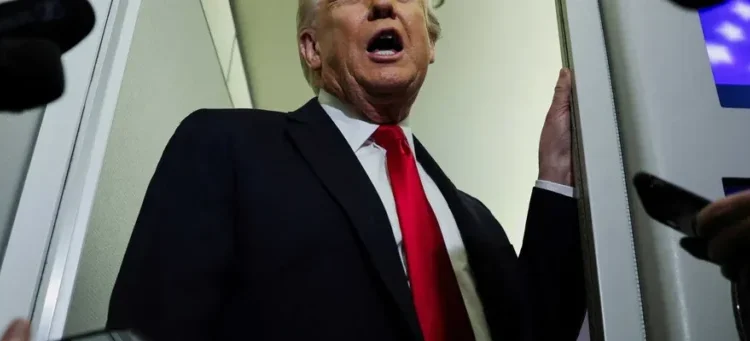
President Trump told The New York Times this month that his decisions as commander in chief are constrained only by his “own morality.”
“I don’t need international law,” he said. “I’m not looking to hurt people.”
Cardinal Tobin said in an interview that he had been struck by voices in the Trump administration who seemed to be advancing a moral framework that he described as “almost a Darwinian calculus that the powerful survive and the weak don’t deserve to.”
He added, “I would say that’s less than human.”
Ruth Graham is a national reporter, based in Dallas, covering religion, faith and values for The Times.
The post Top Catholic Clerics Denounce U.S. Foreign Policy appeared first on New York Times.