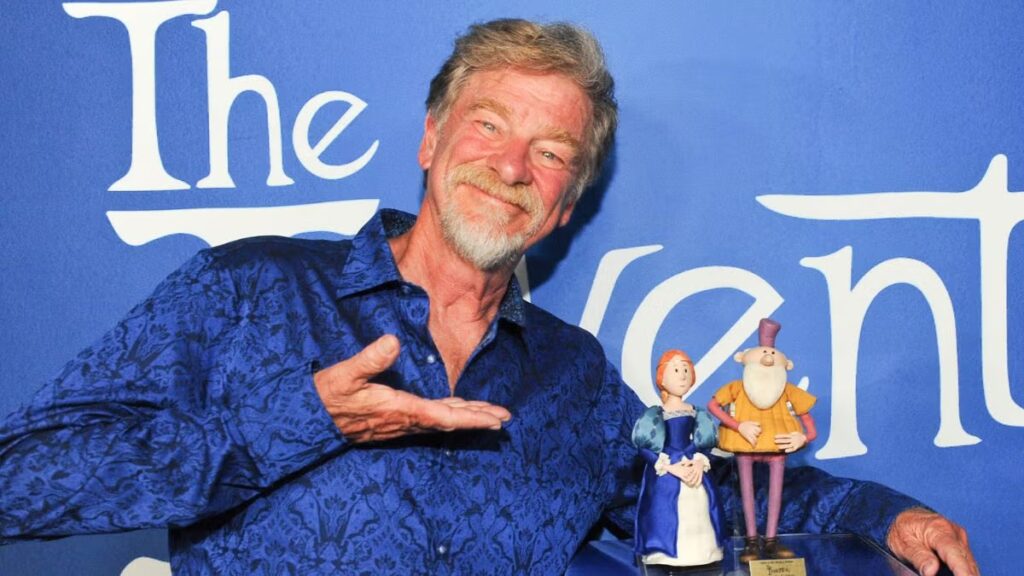
Roger Allers, a genuine legend in animation best known for directing 1994’s smash “The Lion King,” has died. He was 76.
Bob Iger, CEO of Disney, paid tribute to Allers in the wake of his death, praising the filmmaker on Sunday as a “creative visionary whose many contributions to Disney will live on for generations to come.”
He continued: “He understood the power of great storytelling — how unforgettable characters, emotion and music can come together to create something timeless. His work helped define an era of animation that continues to inspire audiences around the world, and we are deeply grateful for everything he gave to Disney. Our hearts are with his family, friends and collaborators.”
Born in New York and raised in Arizona, Allers worked on a number of hugely influential animation projects beginning in the late 1970s – first for Steve Lisberger (on “Animalympics,” released in 1980, and “TRON,” released in 1982) and Nelvana (serving as an animator on 1983’s “Rock & Rule”) and then on Japanese-American co-production “Little Nemo: Adventures in Slumberland,” eventually released in 1989, where he worked on story development and lived in Japan for two years.
He returned to America and joined Disney in the mid-1980s. It was an exciting time for the animation division, with the arrival of new studio heads Michael Eisner and Frank Wells and new film chief Jeffrey Katzenberg. Younger artists, long relegated to the sidelines by animators who had been around since Walt Disney’s day, were finally able to spread their wings. Allers was one of those artists.
Allers worked as a story artist on 1988’s “Oliver and Company” (the first animated feature produced by the new Disney regime), 1989’s “The Little Mermaid” and 1990’s “The Rescuers Down Under.” He served as head of story on 1991’s “Beauty and the Beast,” the first animated feature to ever be nominated for the Best Animated Feature Oscar.
After “Aladdin,” Disney was in development on an Africa-set movie about lions, initially called “King of the Beasts,” later “King of the Jungle” and eventually “The Lion King.” It was to be directed by George Scribner, another animation legend who had directed “Oliver and Company” and a theatrical featurette, “The Prince and the Pauper,” for the company.
“The thing I remember, that probably most people wouldn’t know, is that we were trying to get Roger to come on as co-director of ‘The Lion King,’ very early while he was still finishing ‘Aladdin,’” remembered Thomas Schumacher, who worked with Allers when Schumacher was head of Walt Disney Feature Animation (and later Disney Theatrical Group). Schumacher said that Allers was part of the famous research trip to Africa in the fall of 1991, when Scribner was still the director.
Eventually, Scribner left the project (he didn’t believe it should be a musical), with Allers and Rob Minkoff taking over directorial duties.
It was Allers, Schumacher said, who really pushed for Hans Zimmer to do the music for “The Lion King” and who encouraged the production to use authentic African voices. Later on, Allers was a key part of the success of the stage show adaptation (which is still touring and on Broadway today).
“He had an unbelievably brilliant eye for design, but he was a man of enormous compassion and enormous heart and enormous grace. There were things that didn’t work out and he handled with grace, and we all just kept working together,” said Schumacher. “He was an extraordinary guy, and I was reminded of that when we were just together, I can just hear his laugh in my head, it was so distinctive. He had an innocence about how he saw things that allowed him to accept that the audience would accept it.”
After the enormous success of “The Lion King,” Allers set to work on his magnum opus – “Kingdom of the Sun,” an elaborate update of “The Prince and the Pauper,” this time set in South America, that was so full of characters and ideas and images that it very nearly burst. The infamous implosion of the movie, captured in the still-unreleased documentary “The Sweatbox,” was bruising to Allers. The movie was radically reworked into “The Emperor’s New Groove,” which the studio gave a halfhearted release in 1999 and eventually became a cult classic.
“I can’t tell you what tripped him up. He had a big vision of an idea and for whatever reason, it just didn’t come together,” said Schumacher of “Kingdom of the Sun.” “It meant so much to him, and that was a very, very painful experience for everybody.”
After that, Allers stuck around the studio, working with Chris Sanders and Dean DeBlois on “Lilo & Stitch” and contributing to “Return to Never Land” and “The Lion King 1 ½.” He also worked on an achingly beautiful adaptation of “The Little Matchgirl,” which would have been slotted into a third “Fantasia” movie (should it ever have been made) and was released in 2006. It received an Academy Award nomination for Best Animated Short.
In his post-Disney career he directed “Open Season” with Jill Culton for Sony and “The Prophet,” an independently produced feature based on the 1923 book by Kahlil Gibran. It was released domestically by GKids.
But his legacy with “The Lion King” extended beyond the film, as he was an integral part of the success of the Broadway stage production and subsequent touring versions.
“Everybody on ‘The Lion King’ adored Roger and he was so loyal to the movie and remarkably loyal to the stage show, which he’s been part of for so long and traveled so many miles around the world to do it,” said Schumacher. “He’s always been game. You know, can we rewrite this scene because it doesn’t make any sense in German? Because culturally, things have shifted. Things that were funny once are not funny now. Roger was part of that show in a very real way. And his name remains, of course, on the title page of the show for writing the book, and he was nominated for a Tony for it.”
The post Roger Allers, Director of ‘The Lion King’ and Shepherd of Its Stage Adaptation, Dies at 76 appeared first on TheWrap.