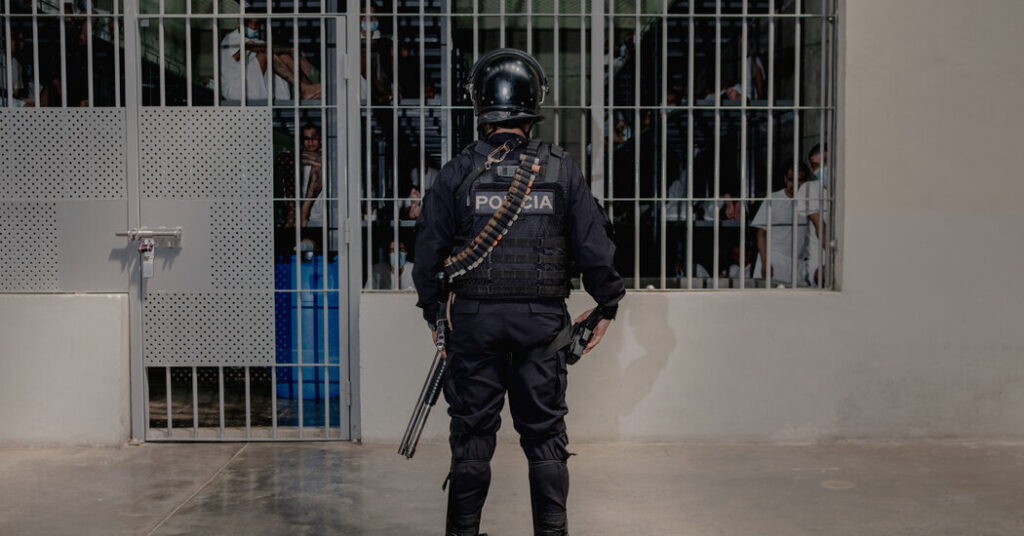
CBS News faced a firestorm last month after its new editor in chief, Bari Weiss, postponed a “60 Minutes” report hours before it was set to air. Ms. Weiss said the piece, which featured the stories of Venezuelan men deported by the Trump administration to a brutal Salvadoran prison, needed work; the correspondent who reported the segment called the decision “political.”
The 13-minute report finally aired on Sunday’s episode of “60 Minutes” without any changes to the version that the correspondent, Sharyn Alfonsi, originally finished last month. (That version was accidentally streamed by a Canadian broadcaster, and then circulated widely online.)
But CBS News added two short segments, at the beginning and the end of the report, that included new comments from the Trump administration and additional details about the criminal backgrounds of the Venezuelan men who were sent to the prison, addressing two concerns that Ms. Weiss had previously expressed.
The decision by CBS to air the segment came after days of tense discussions among top personnel. Ms. Weiss wanted to make changes within the piece that was originally scheduled to run last month; Ms. Alfonsi refused, arguing that it would set a poor precedent for the program’s editorial independence, according to two people briefed on internal discussions.
Ms. Weiss and her allies believed the changes they requested were reasonable, and they were frustrated by Ms. Alfonsi’s unwillingness to adjust her report, according to two people familiar with their thinking.
In a statement on Sunday, CBS News said that its “leadership has always been committed” to airing Ms. Alfonsi’s segment. “Tonight, viewers get to see it, along with other important stories, all of which speak to CBS News’s independence and the power of our storytelling,” the network said.
Most of the new material appeared in a concluding segment that Ms. Alfonsi taped in the “60 Minutes” studio over the weekend. She noted in the new material that 33 of the 252 Venezuelan prisoners had been convicted of a crime in the United States, and reiterated a statistic from the original report that eight had been convicted of a violent or potentially violent crime.
Ms. Alfonsi also noted that the Department of Homeland Security had provided a photograph in recent days showing that one of the two detainees featured in the “60 Minutes” segment once had a tattoo of a swastika on his arm. The man had modified the tattoo when he sat for his “60 Minutes” interview.
“He told us he got the offensive tattoo at 15 and didn’t know what it meant,” Ms. Alfonsi told viewers, adding that experts on Latin American gangs told “60 Minutes” that swastikas had no symbolic meaning for the Venezuelan gang Tren de Aragua.
Ms. Weiss’s decision in December to pull the report rattled “60 Minutes” journalists. In a memo at the time to her colleagues, Ms. Alfonsi called her story “factually correct” and wrote that she believed the decision to postpone it was “not an editorial decision, it is a political one.”
Ms. Weiss defended her decision, telling the CBS newsroom, “I held that story because it was not ready.” In an internal memo, Ms. Weiss said the “60 Minutes” team “need to push much harder” to secure comment from Trump administration officials, and suggested that Ms. Alfonsi seek an interview with Stephen Miller, the architect of President Trump’s immigration crackdown.
On Sunday night, Ms. Alfonsi told “60 Minutes” viewers that her team had tried several times since November to interview top Trump administration officials on camera. “They declined our requests,” she said.
Michael M. Grynbaum writes about the intersection of media, politics and culture. He has been a media correspondent at The Times since 2016.
The post One Month Later, CBS Airs Postponed ‘60 Minutes’ Report With Few Changes appeared first on New York Times.