In mid-December, as negotiations to end Russia’s war in Ukraine gathered pace, a group of Ukrainian officials sat in a conference room in New York for a meeting with senior executives at BlackRock, the world’s largest asset manager.
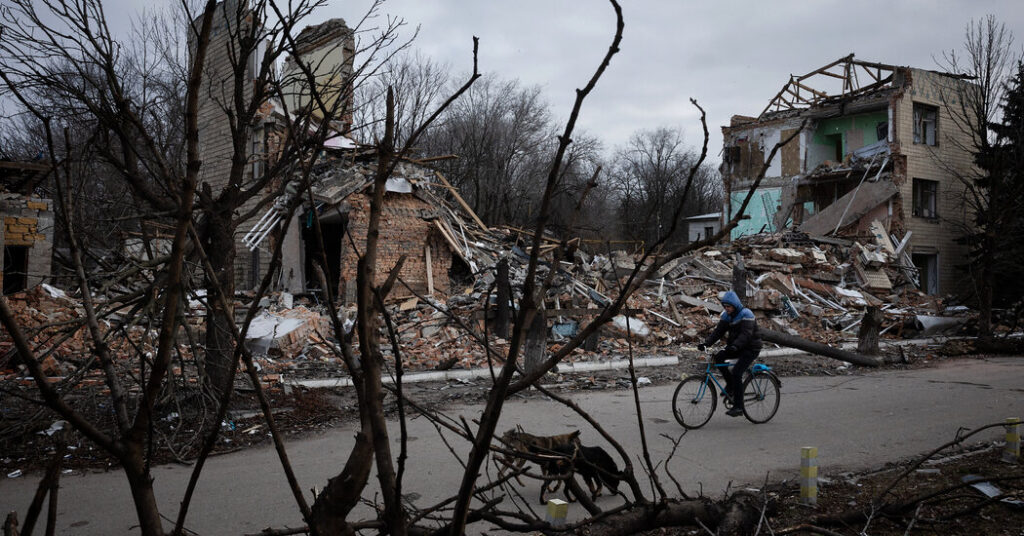
They had come to discuss a crucial element of a peace plan drafted by Kyiv and Washington: Ukraine’s postwar recovery. BlackRock had been enlisted to help build a strategy for what President Volodymyr Zelensky has called an $800 billion “prosperity plan.”
The meeting, held at BlackRock’s headquarters, kick-started work on identifying funding sources and investment priorities, according to three officials familiar with the conversation, who requested anonymity to discuss a closed-door meeting. More details are expected to be unveiled this week at the World Economic Forum in Davos, Switzerland.
But in Kyiv and other European capitals, BlackRock’s role has generated more questions than answers, as the Trump administration steers plans for rebuilding Ukraine toward American business interests. Seven European and Ukrainian officials, who asked for anonymity to discuss sensitive talks, voiced doubts about BlackRock’s ability to attract the enormous investments envisioned. Some indicated that the firm’s involvement could turn away potential investors.
Some of the officials noted that BlackRock had already tried, and failed, in the war’s early years to raise billions to rebuild Ukraine. Confidential slide presentations viewed by The New York Times indicate that BlackRock had trouble attracting investors at that time. A slide from April 2023 projected that the firm would help mobilize $50 billion to $80 billion. A year later, another slide slashed the target to $15 billion to $30 billion. The project was shelved in mid-2025.
BlackRock struggled in part because of concerns in Europe that money from its governments could end up in a privately run American fund, according to the European and Ukrainian officials. Europe is expected to fund the vast majority of Ukraine’s recovery. With BlackRock now back at the table, the European worries are likely to resurface.
So far, the firm has played a pro bono, advisory role in the new talks. It is unclear whether that mandate will expand as negotiations progress, or if peace is reached. A BlackRock spokesman declined to comment for this article. The White House and the Ukrainian economy ministry did not respond to requests for comment.
The involvement in the talks of a private firm whose main business is to maximize financial returns has reinforced concerns that the Trump administration views Ukraine’s reconstruction as a profit-making opportunity for the U.S. government and American companies, rather than as primarily a humanitarian or security matter.
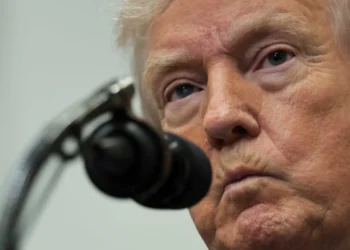
Last year, President Trump pushed for a deal granting the United States a stake in Ukraine’s mineral wealth. In peace talks with Kyiv, the president’s main negotiators have been real estate developers: his billionaire friend Steve Witkoff, and Mr. Trump’s son-in-law, Jared Kushner. BlackRock’s chief, Larry Fink, has sat next to Mr. Kushner in talks with Ukrainian leaders.
The current draft peace plan lays out an array of U.S. investment opportunities and calls for a free-trade agreement. “There’s a lot of wealth to be had,” Mr. Trump said about Ukraine’s future during negotiations with Mr. Zelensky last month in Florida.
Ukrainian officials have likened their country’s recovery blueprint to the Marshall Plan, the U.S.-funded project to rebuild Europe after World War II.
That effort, which cost about $150 billion in today’s money, would be dwarfed by the $800 billion “prosperity plan” described by Mr. Zelensky. The enormous sum has led some Ukrainian economists and business figures to view the U.S. proposal with deep skepticism.
Washington might try to tap some of the roughly $250 billion in Russian assets frozen in Europe — an idea that was included in a draft Russian-U.S. peace plan. But two of the European officials said there would be fierce opposition to handing control of the assets to a U.S.-led recovery fund. There are also fears among European officials that BlackRock’s involvement signals that the Trump administration intends to sideline Europe in postwar planning.
The Marshall Plan was led by the U.S. government. The possibility that Ukraine’s recovery could be shaped by BlackRock, a private firm, has raised concerns about transparency and potential conflicts of interest.
BlackRock’s involvement in Ukraine dates to the fall of 2022, when Kyiv began to imagine a postwar future after pushing Russian troops from large swaths of territory. That September, Andrew Forrest, an Australian mining magnate, introduced Mr. Zelensky to BlackRock’s chief executive, Mr. Fink. They discussed how the firm could advise Kyiv on setting up a reconstruction fund.
Weeks later, the two sides signed a memorandum of understanding formalizing the collaboration. Under the agreement, which was seen by The Times, BlackRock’s consulting arm would help design the fund’s structure and governance, and pitch it to potential investors.
The fund’s central idea was to draw money from governments and financial institutions, and leverage it to attract several times as much in private lending capital, said Oleksandr Gryban, a former deputy economy minister for Ukraine who worked on the fund. Public money would serve as seed capital, absorbing the first losses and acting as a de-risking mechanism to entice private investors wary of putting money into Ukraine.
The slide presentations from 2023 and 2024 show that BlackRock aimed to raise money from European development banks, including KfW of Germany and Proparco of France. None of the documents indicate that BlackRock planned to invest its own money.
But as the firm approached European countries, it encountered strong reluctance, according to European and Ukrainian officials. The Europeans cautioned that BlackRock lacked experience in Ukraine. Although the slide presentations did not name a fund manager, the officials said they had expected BlackRock to take that role.
When BlackRock halted its search for investors last year, European officials stepped in. They started their own reconstruction fund for Ukraine, with a more modest target of raising 1 billion euros, about $1.15 billion, this year.
Six months later, however, BlackRock was back in the picture. On Dec. 10, Mr. Fink sat with American negotiators as they joined an online meeting with Mr. Zelensky and senior Ukrainian officials. “This was the first meeting of the group that will work on a document regarding the reconstruction and economic recovery of Ukraine,” Mr. Zelensky said afterward.
BlackRock’s role, he later explained, will be to “organize the implementation of the strategic recovery plan.” He said the plan envisioned multiple funds covering different areas like reconstruction, economic development and human capital. Ukrainian officials say governments and financial institutions would fund needed but noncommercial sectors, such as education, while private investors would focus on commercial activities that could offer higher returns.
The approach echoes BlackRock’s original proposals. The firm’s slide presentations outlined several sector-specific funds to finance projects using a mix of public and private money. Energy, infrastructure, agriculture, manufacturing and information technology were listed as priority sectors. A slide from April 2024 identified nine potential investment projects, including the development of wind farms and lithium deposits, totaling $1.1 billion.
It is unclear whether BlackRock or the Trump administration has approached U.S. investors about participating in the recovery plan. But Mr. Zelensky suggested last month that the plan would favor American business interests.
BlackRock itself could stand to profit from the recovery as the owner of Global Infrastructure Partners, one of the world’s largest financiers of projects to build airports, bridges and tunnels. Last year, Global Infrastructure Partners stepped in to assist the Trump administration by purchasing two ports in Panama from a Hong Kong company that had become the focus of tensions between Panama and Mr. Trump.
As Mr. Zelensky presented the U.S.-Ukraine draft peace plan to reporters last month, he said that a “Ukraine Development Fund” — the same name used in BlackRock’s original fund project — would be established “to invest in high-growth sectors, including technology, data centers and artificial intelligence.”
Those are sectors that the White House has prioritized more broadly for investment, pushing for deals that have financially benefited members of the Trump administration.
The prospect of a recovery plan tilted toward high-growth sectors has drawn criticism. Meaghan Mobbs, who runs a charity in Ukraine and is the daughter of Keith Kellogg, Mr. Trump’s former envoy to Ukraine, wrote on social media that BlackRock’s involvement risked prioritizing “profitable sectors over public needs” and weakening oversight of recovery funds.
Oleksii Sobolev, Ukraine’s economy minister, said this month that some $500 billion would need to come from public sources, in the form of grants and low-interest loans from public banks. But several Ukrainian business figures and officials expressed doubt that governments and financial institutions could raise such a sum, which exceeds in value all the military, financial and humanitarian aid that Ukraine has received since the war began.
That has left many Ukrainian business figures to see Kyiv’s talk of an $800 billion recovery plan mostly as political messaging calibrated for a business-first Trump administration.
“We need to say it to please Trump,” said Sergey Fursa, deputy director of the Kyiv-based investment firm Dragon Capital. “But right now, we simply don’t see where that kind of money would come from. This is wishful thinking.”
Constant Méheut reports on the war in Ukraine, including battlefield developments, attacks on civilian centers and how the war is affecting its people.
The post At the Center of Trump’s Vision for Rebuilding Ukraine: BlackRock appeared first on New York Times.