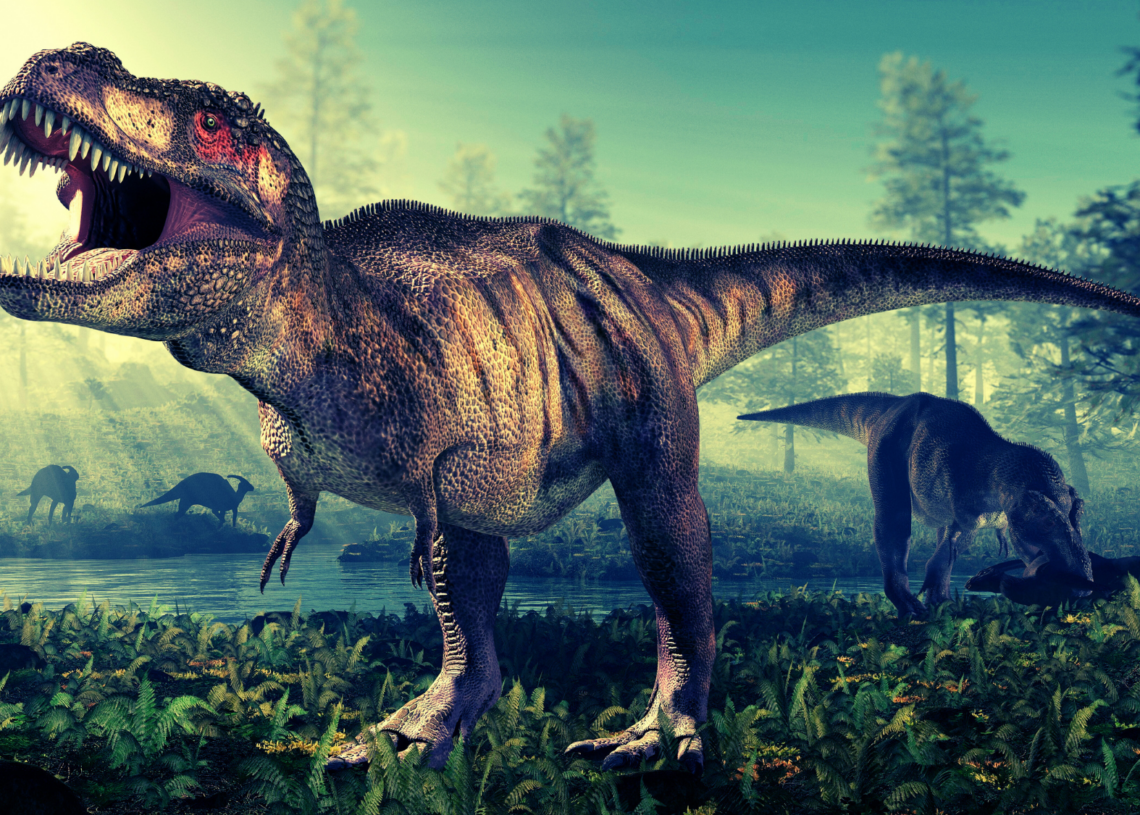
According to a new study published in PeerJ, the Tyrannosaurus rex, the largest land predator to ever live, may have needed 35 to 40 years to reach its full, gigantic size. That’s significantly longer than scientists previously thought.
A team of researchers analyzed fossilized thigh and shin bones from 17 T. rex specimens, the biggest sample size ever assembled for this species. By examining growth rings preserved in the bones, similar to those found in trees, scientists reconstructed the dinosaur’s development, year by year. Using polarized light, they found growth marks that earlier studies had missed, suggesting that the T. rex didn’t hit full size until it was around 40 years old.
If follow-up research proves that to be true, it would be a major revision of what we know about one of the most fearsome predators in history. Earlier estimates had T. rex maturation around 20 to 25 years old. Instead, this one spent an extra 15 to 20 years growing, eventually reaching eight tons. If you know anything about the Tyrannosaurus rex, you know its lifespan had previously been cut off at around 30. These new findings posit that the T. rex might have lived 45 or 50 years old, assuming the harsh realities of dinosaur times didn’t kill it first.
According to the researchers, younger tyrannosaurs may have filled different ecological roles as they grew, like hunting different prey. If that’s the case, then that additional flexibility would explain why the species came to dominate its environment at the end of the Cretaceous period.
This new understanding of Tyrannosaurus maturation and age adds a little nuance to a creature we like to exclusively think of as a ruthless killing machine that lived fast and died young. We haven’t yet compiled the full picture of one of the most iconic creatures to ever walk the earth.
The post T. Rex Took Way Longer Than We Thought to Get Gigantic appeared first on VICE.