President Donald Trump threatened this weekend to unilaterally impose 10 percent tariffs on eight European countries until a deal is reached that makes Greenland part of the United States. In other words, American businesses and consumers will pay higher prices because Denmark, a strong ally which already welcomes U.S. troops and investment in Greenland, isn’t willing to cede territory.
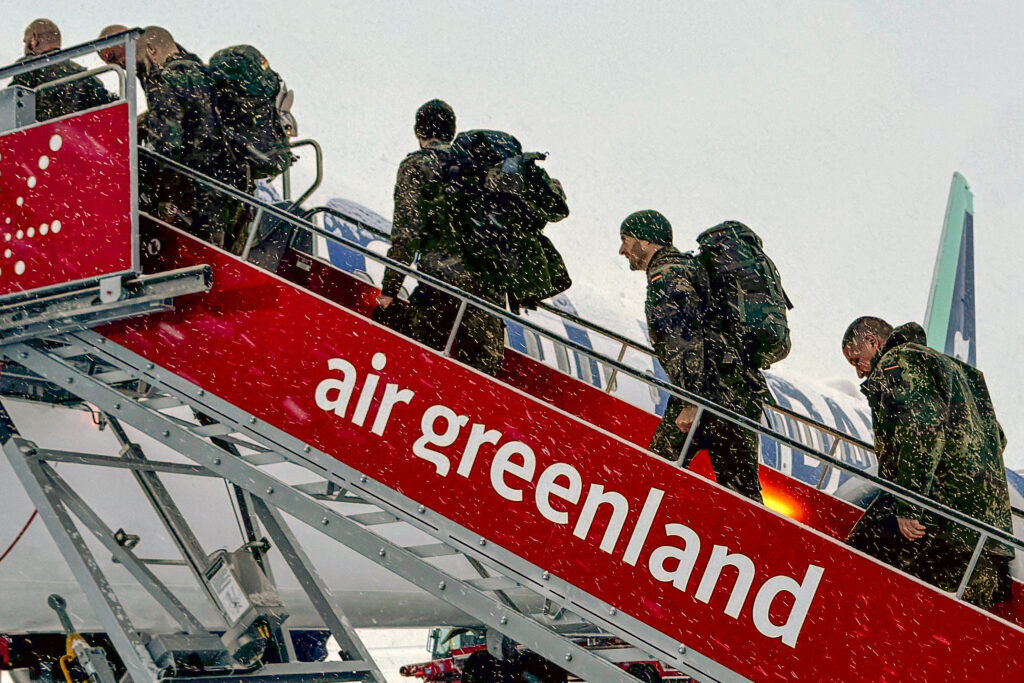
In addition to Denmark, the new tariff will also affect goods from Norway, Sweden, the Netherlands, Finland, France, Germany and the United Kingdom. Those seven each sent a handful of troops to Greenland to participate in a Danish military exercise. Trump threatened to raise the duties to 25 percent on all eight countries come June if no agreement has been reached.
Without firing a shot or breaking up NATO, Trump hopes to bully and cajole Denmark into selling a swath of its kingdom that is geographically larger than Mexico. Trump, a developer at heart, sees this as a potential crown jewel for his legacy. Such an acquisition would be slightly larger than President Thomas Jefferson’s Louisiana Purchase. U.S. planners reportedly estimate that purchasing Greenland could cost up to $700 billion, though economic coercion may lower the price tag, as does the U.S. refusing to rule out using the military to take it by force.
But Denmark insists it will never sell, and Trump’s behavior is already exacting an intangible price on the transatlantic relationship. The eight countries put out a joint statement on Sunday to say Trump’s “tariff threats undermine transatlantic relations and risk a dangerous downward spiral.” They downplayed the small contingents of troops they sent to Greenland, saying it was part of a preplanned exercise called “Arctic Endurance” that “poses no threat to anyone.”
It sure doesn’t. The French sent 15 mountain infantrymen. The Fins and Norwegians sent two officers apiece. The Brits sent one officer, and he was not James Bond.
But Trump reacted angrily, and now Americans will pay higher prices for products like Legos and Ozempic, both made by Danish companies. French President Emmanuel Macron wants the European Union to retaliate by invoking anti-coercion rules, imposing tariffs on U.S. goods and blocking U.S. investment. The E.U. is preparing a package of tariffs on U.S. products that could raise 93 billion euros, effectively a tax hike on European consumers.
The president and his allies are increasingly making the case that Greenland is strategically vital and resource rich, but America already has easy access. The Space Force maintains a base there. Denmark has been a particularly strong, committed and inoffensive partner. The Danes suffered one of the highest per capita fatality rates in supporting America’s military response to the 9/11 attacks.
Most of Greenland’s 57,000 residents, who receive subsidies and the largesse of a European welfare state, don’t want to be sold to America, despite past mistreatment by the Danes. If anything, they want independence. Greenlandic Prime Minister Jens-Frederik Nielsen joined a Saturday protest to oppose any sale to the United States.
Finally, there is the legal question of whether Trump even has the authority to impose his threatened tariffs without an act of Congress. The Supreme Court will hopefully decide soon that the president is abusing his power under the International Emergency Economic Powers Act, which does not even mention the word tariffs. Pressed Sunday on what emergency justifies imposing import taxes on European goods in pursuit of Greenland, Treasury Secretary Scott Bessent replied: “The national emergency is avoiding the national emergency.”
The post Launching another trade war with Europe won’t win Greenland appeared first on Washington Post.