A Honduran man who lived and worked in the U.S. for 26 years died after being held at a California immigration detention facility for more than a month, and his family is calling for an investigation, saying he complained of deteriorating health conditions before his death.
Luis Beltrán Yanez-Cruz, 68, died on Jan. 6 at 1:18 a.m. at the John F. Kennedy Memorial Hospital in Indio after suffering from heart-related health issues, according to U.S. Immigration and Customs Enforcement officials. He was being held at the Imperial Regional Detention Facility in Calexico before he was transferred to the hospital.
Federal officials said Yanez-Cruz was “encountered” during a Nov. 16 enforcement operation in Newark, N.J., but he was not the target of the operation, his daughter said. He was put into removal proceedings, which were pending at the time of his death.
His daughter, Josselyn Yanez, blames ICE for not taking his health concerns seriously and not providing medical attention as his health deteriorated. In a statement, ICE said Yanez-Cruz was put in the detention facility’s medical unit for chest pains before being sent to El Centro Regional Medical Center. He was then transported by helicopter to Indio.
“There needs to be an investigation because this is not normal,” Yanez said. “He started having symptoms weeks ago; they could have done something.”
In response to the family’s claims, a Homeland Security official said in a statement, “ICE has higher detention standards than most US prisons that hold actual US citizens. All detainees are provided with 3 meals a day, clean water, clothing, bedding, showers, and toiletries, and have access to phones to communicate with their family members and lawyers.”
Last September another detainee at the facility died after experiencing a seizure at the facility, ICE officials said.
As for Yanez-Cruz, officials said he illegally entered the U.S. and was arrested near Eagle Pass, Texas, in June 1993 and removed from the U.S. Between 1999 and 2012, the agency said, he submitted applications for temporary protected status but was denied.
Yanez said claims that her father was deported and never granted TPS are false. She said her father had been granted TPS when he entered the U.S. in 1999, and it allowed him to visit Honduras on at least two occasions. His status lapsed because he was unable to renew it, she said.
On Nov. 16 her father, who worked in construction, had gotten breakfast around 10 a.m. at a McDonald’s in Newark when he stopped to chat with friends in an area known for day laborers to gather and pick up work, she told The Times. Suddenly, ICE agents pulled up and began arresting people, including her father.
Yanez, who lives in Houston, said she learned of it about an hour later. Her father was in detention in New Jersey before being moved to Calexico. He spent Thanksgiving, Christmas and New Year’s in detention.
Yanez-Cruz spent 26 years in the U.S., working construction and paint jobs to help his family get ahead, Yanez said.
“He was an extraordinary father,” she said. “He was always looking out for us, even as we got older and became adults. He looked out for his grandchildren … He always worried about them and called to ask how they were doing.”
He called regularly, even while he was detained, Yanez said. But his health appeared to worsen the longer he was in detention, she said, even though he had been healthy before his arrest.
Inside the facility he was suffering from stomach and chest pains and sometimes felt like vomiting when he ate, she said. He suffered from shortness of breath walking around the facility and when he reported it to the staff, they only gave him pills to ease the pain, she said.
Yanez said the last time she spoke to her father was Jan. 3, a usual check-in when he asked about her children as she walked home from work. At the end of the call he said “Cuidate, te amo mucho.” Take care, I love you a lot.
Her brother spoke to him the next day and he seemed fine, she said. But as she waited for his call the following day she received one from a former detainee who told her he heard her father had been transferred to the medical unit after he had difficulty breathing. Yanez said she tried to call the facility but couldn’t get information until the next day when they called to tell her he died during the early morning hours.
Yanez-Cruz’s passing hit family members hard because they were not there in his final moments, his daughter said. They have been sharing stories of his life and the sacrifices he made for them.
Her father, she said, departed Honduras in 1999 after Hurricane Mitch devastated the country and left him, like millions of others, struggling in the aftermath. He traveled north to the U.S. to help his family, Yanez said, and continued to work hard. He made friends easily, she said, and when he died she received calls from people who met him and shared kind words.
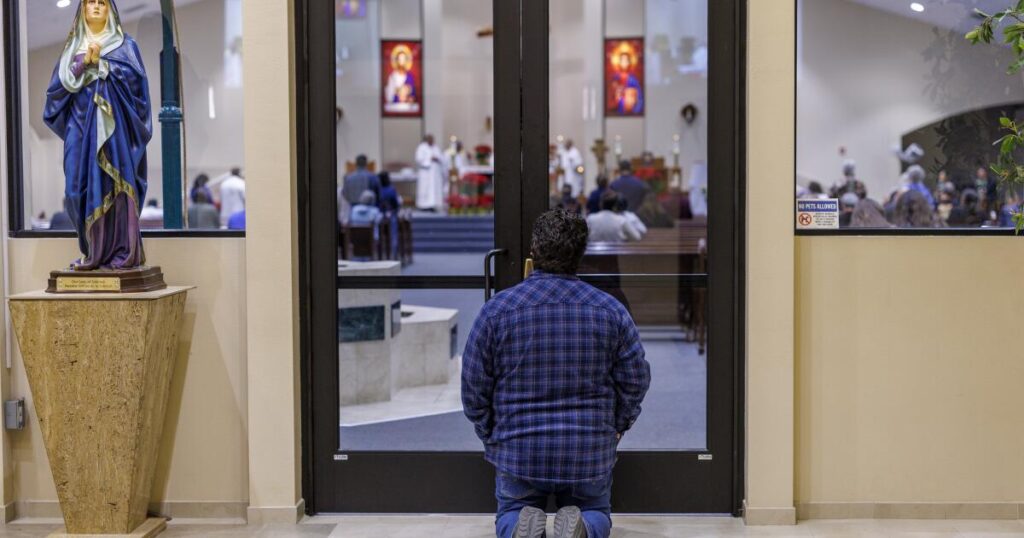
Luz Gallegos, executive director of Todec Legal Center, an immigrant rights group based in the Coachella Valley, said her group learned about Yanez-Cruz’s story after he died at the hospital in nearby Indio. On Friday the legal center helped organize a memorial mass in honor of Yanez-Cruz at the Our Lady of Soledad Catholic Church, to honor Yanez-Cruz and others who died in custody, Gallegos said.
“Although we did not know el señor Luis, his death being in our backyard, it’s so close to us,” she said. “It’s one pain after another. We did not know him, but his family’s pain is our pain.”
The post Honduran father died in ICE custody in California. His family wants an investigation appeared first on Los Angeles Times.