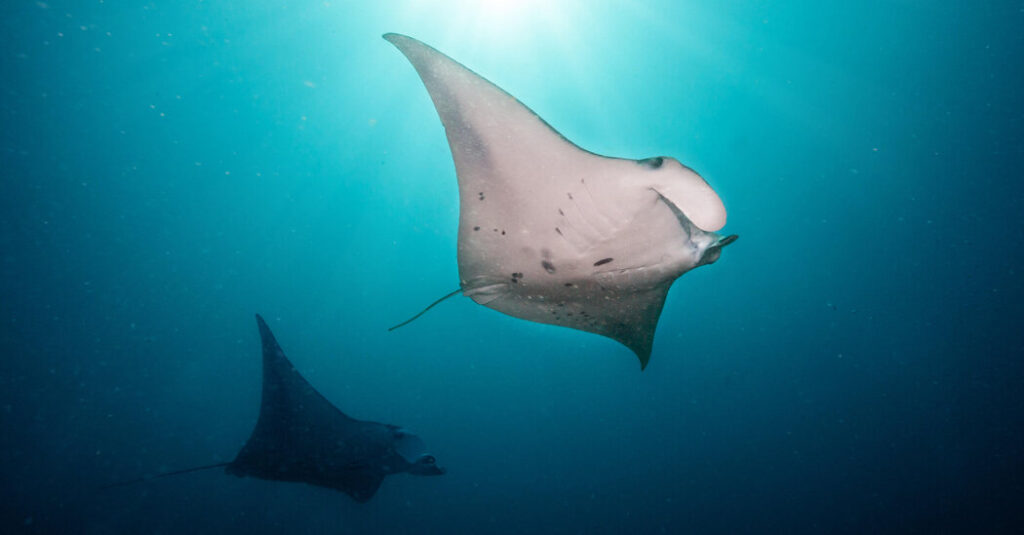
An international agreement to safeguard marine life is now in effect. Known as the High Seas Treaty, it represents the first time that international waters, which lie outside of any country’s jurisdiction and cover nearly half the globe, can be protected.
The United Nations discussed the treaty for more than two decades, and formal negotiations began in 2017. The final text makes it possible for countries to create environmentally protected zones in international waters and includes requirements for new ocean industries.
It comes into effect as the United States is reviewing a company’s application to explore the deep sea floor for precious minerals, though, seabed mining is generally covered by a separate treaty. The authority created by that treaty has spent years deliberating rules for deep sea mining in international waters, but has not yet greenlit any commercial activity.
In September, Morocco became the 60th country to ratify the High Seas Treaty, triggering a 120-day countdown for it to become international law. There are now 83 countries that have ratified it, though the United States has not. Countries that have ratified the treaty have pledged to cooperate and uphold its terms, but options for enforcing such international laws are limited.
Rena Lee, an ambassador of Singapore who led the final negotiations, said the start of the law was “a rare opportunity to make a positive difference in the high seas and deep seabed.” The treaty was motivated by a biodiversity goal set by a separate United Nations agreement in 2022 that pledged to protect 30 percent of Earth’s land and oceans by the year 2030.
The high seas, which have long been sparsely monitored and considered a maritime “wild west,” make up two-thirds of all ocean area, less than 10 percent of which is currently protected. “This is a game changer,” said Rebecca Hubbard, the director of the High Seas Alliance. “And in many ways, the work is just beginning.”
Now that the treaty is in effect, she said, the difficult task of establishing marine protected zones begins. Countries must work together to create proposals for protected zones with unique rules and regulations. These would then be presented at the treaty’s annual meetings, the first of which is expected to be scheduled for later this year.
There are several biodiversity-rich areas of the ocean already being considered, said Lisa Speer, a senior policy analyst at the Natural Resources Defense Council who specializes in high seas regulation. These include the Salas y Gómez Ridge, a large underwater mountain chain off the coast of Chile, and the Hawaiian-Emperor Seamount Chain, which is home to deep sea corals that are among the oldest living organisms on the planet.
It’s likely that the earliest a protected zone would be established would be next year, Ms. Speer said. The process is complicated and requires discussion with scientists, communities, and any nations or groups that would be affected by the change.
Existing industries, such as fishing, will not be immediately affected by the new law. But if a new marine protected zone is established, it would likely introduce limits on fishing and other activities within it.
Nascent industries and technologies, like future geoengineering projects, would also be subjected to stricter environmental assessment standards before they could begin operations. But the treaty does not override the rules for any industries that already have regulatory bodies overseeing them.
That’s the case with deep sea mining, which is already overseen by the International Seabed Authority. While ratified members of the new treaty are supposed to promote its enhanced environmental standards at discussions with the seabed authority, it remains unclear to what extent the new treaty will influence the nascent seabed-mining industry.
Sachi Kitajima Mulkey covers climate and the environment for The Times.
The post World’s First Treaty to Protect the High Seas Becomes Law appeared first on New York Times.