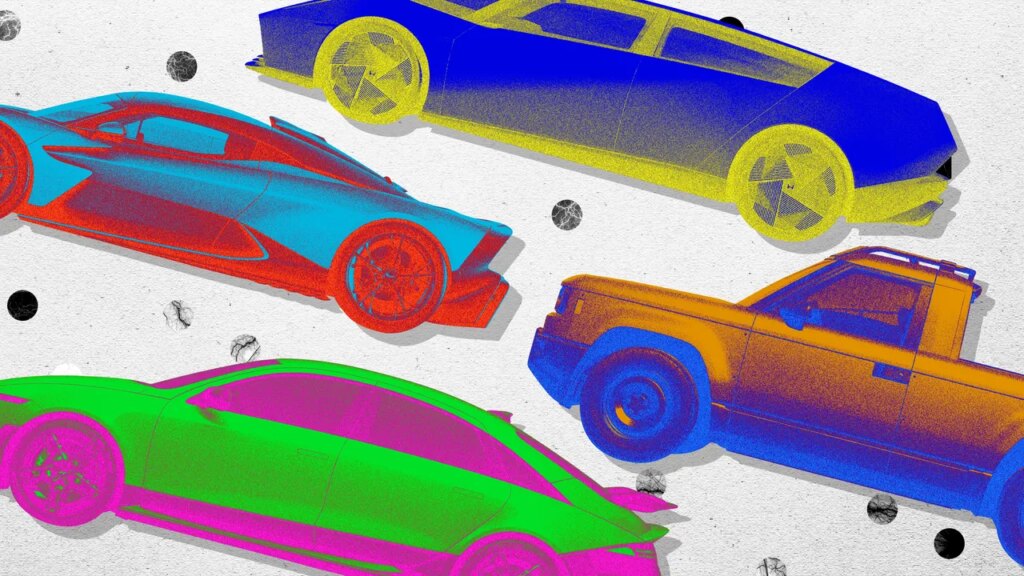
It’s going to be a pivotal year for cars in 2026. The US was the 20th century’s undisputed center of the car universe. But when CES rolled into Las Vegas at the start of January, the lack of car concepts on display was distinct, a clear illustration of the precarious state of the US automotive industry. And while America’s love affair with EVs appears to be waning now that tax credits are no more, global EV sales are in far better health.
Most significantly, BYD has overtaken Telsa in EV sales, while the rest of China’s auto industry readies itself to further expand across the globe, converting more and more new customers to their wares and away from Western marques. Why is this so important? More than half the time consumers buy a new car, they stick with the same brand.
As the center of gravity for the auto world shifts to China, big American brands like Jeep and Chrysler have announced they’re killing production of all plug-in hybrids in the US.
Let’s take a look at the EVs and hybrids—presented in alphabetical order—that WIRED is most looking forward to seeing hit the road in the coming year.
Aston Martin Valhalla
Aston’s first-ever mid-engine plug-in hybrid supercar is born from its collaboration with Red Bull Racing and so comes steeped in F1-inspired tech. At its heart sits a bespoke 4.0-liter, twin-turbo V-8 from Mercedes-AMG, but this is paired with three electric motors to deliver a staggering 1,064 horsepower and 811 pound-feet of torque. That’s enough thrust to catapult this carbon-fiber, land-based rocket to 62 mph in as little as 2.5 seconds and on toward a top speed of 217 mph.
Want to cruise using just electric power? Then you’ll have to restrict yourself to a max of 80 mph and a range of miles miles. But the hybrid system doesn’t just boost straight-line speed; torque vectoring and active aerodynamics mean the Valhalla’s handling is as thrilling as the headline figures. We’ve tried it on Aston’s private track, and it’s astounding. Limited to just 999 units, the delayed Valhalla finally started to reach customers at the very last knockings of 2025, so we’re keen to see it in the wild in 2026.
Audi R26
The Australian Grand Prix in Melbourne at the start of March will see Audi’s striking R26 line up on the starting grid for the first time, marking the German auto brand’s F1 debut. For three years now, Audi has been developing its power unit for Formula 1 in Neuburg an der Donau in preparation for the sport’s new regulations that dictate the cars must split their power source 50-50 between gas and electric.
Audi’s setup is a turbocharged V-6, energy recovery system and storage, a combined electric motor and generator, and an electronic control unit—the “brain” of the car, controlling the engine, hybrid systems, gearbox, and more. Images have just emerged of a shakedown test for the R26 in Barcelona, so expect to see the final car perhaps at the very beginning of the year. Resplendent in its minimalist design cues, yes, this is not a road car, but it is an electrified manifesto: a test bed where future Audi hybrid and EV tech is developed by the marque under the most extreme conditions.
BMW iX3
WIRED has driven the iX3, and we liked it a lot, which is fortunate considering the EV represents the single biggest financial investment in BMW’s history. The all-new iX3 arrives as more than just an electric SUV—it’s the first of six cars based on BMW’s much-trailed new modular “Neue Klasse” EV platform.
On board are new motors, new inverters, new batteries, new charging tech, new interior display wizardry (Panoramic iDrive), and a fancy new central computer brain. A sub-five-second 0-to-62 mph time means this EV is no slouch. Meanwhile, cell-to-pack batteries with liquid-cooled cylindrical cells with a higher nickel and less cobalt content deliver a 20-percent bump in energy density, and 800-volt architecture boosts charging speeds by a third and at up to 400 kilowatts. This means 200 miles can be added in just 10 minutes.
The headline stat is the 500-mile WLTP max-range figure, or 400 in the more realistic US EPA test. In our test we figured the iX3 was good for a real-world 350 miles, so not that far off the EPA figure. Inside, the Intelligent Personal Assistant will be powered by Alexa+. BMW chairman Oliver Zipse says the Neue Klasse cars are “redefining the BMW brand,” which shows how much the company is relying on the iX3 and its following five EVs to take on cheaper Chinese competitors.
Ferrari Elettrica
Without question, one of the most anticipated EVs for 2026 is Ferrari’s Elettrica, which isn’t just the marque’s first electric car—it’s the company’s most ambitious engineering statement in decades and an EV that will supposedly deliver an answer to the burning question of whether a Ferrari can still feel like a Ferrari without a combustion engine.
Riding on a bespoke 880-volt skateboard platform with four in-house motors producing more than 1,000 hp, the Elettrica will pair prodigious performance with a claimed 323 miles of range from its 122-kWh battery backed up by 350-kW fast charging. Ferrari has worked with Jony Ive’s design agency LoveFrom on the interior of the Elettrica, but rumor has it Ive and designer Marc Newson have been involved with more than just the inside.
Even the sound strategy is interesting: Rather than faking an engine note or relying on generic digital cues, the Elettrica captures mechanical vibrations from the powertrain with sensors and amplifies them in a way that supposedly feels authentic (likened by engineers to an electric guitar’s voice), evolving with throttle, regenerative braking, and torque shifts. Despite being a four-door grand tourer, with a quad-motor, all-wheel-drive layout producing well over 1,000 hp, expect 60 mph in roughly 2.5 seconds. Coming late 2026.
Geely EX2
You’re looking at Geely’s weapon of choice to dominate the European auto market. Known as the Xingyuan in China, the EX2 was that country’s best-selling vehicle in 2025. This compact electric hatchback is designed for city driving and aims to compete with the likes of Dacia’s affordable EVs by rolling out across major Euro markets this year and offering a practical size, playful design, and surprising range for the segment: 193 or 255 miles, depending on the model.
Landing in the UK and Australia in the second half of 2026, the five-door EX2’s urban-friendly size (4.13 meters long) should make it popular. Built on Geely’s Global Intelligent Electric Architecture platform, the rear-wheel-drive system puts out 58 kW (78 hp) or 85 kW (114 hp). Inside you get a surprisingly large infotainment touchscreen and digital driver display, while trunk capacity is 1,320 liters in the rear and 70 in the frunk. The price tag of around $9,400 certainly won’t transfer over from China, but expect something in the region of £16,000 ($21,500) instead.
Honda Super-N
For 2026, as well as its 0 SUV, Honda has the Super-N, a punchy micro EV that aims to bring the joy back to urban driving. Translation: This thing will be ideal for hooning around city streets.
Built on Honda’s lightest N-Series Kei car platform sold in Japan and previewed as a close-to-production prototype, the Super-N features a “Boost” mode that momentarily increases power delivery, simulates multi-gear shifts, and activates Active Sound Control, virtual engine sound inside the cabin piped through the car’s audio speakers. Final specs are still TBC, but expect around 180 miles of real-world range from this micro hot hatch expected to weigh right around 2,900 pounds.
Hyundai Ioniq 6 N
Hyundai’s Ioniq 5 N was truly remarkable, so it’s more than understandable that the Ioniq 6 N is being touted as possibly one of 2026’s most exciting performance EVs. The sleek, aerodynamic Ioniq 6 electric sedan has been injected with genuine performance, meaning this EV isn’t just quick; much like its sibling it’s engineered to feel thrilling at speed. With up to 650 PS (478 kW) and 770 Nm of torque available through the N Grin Boost system, the Ioniq 6 N rockets from standstill 62 mph in 3.2 seconds, then tops out at 160 mph thanks to the dual‑motor, all‑wheel‑drive setup and 84-kWh battery.
The excellent e‑Shift—first deployed to great effect in the Ioniq 5 N—has been supposedly improved. Switched on, the 6 N’s steering wheel paddles will combine with the car’s motors, regen braking, and speakers to simulate the gear changes of an internal combustion car. Aerodynamic tweaks like flared fenders, a swan‑neck rear spoiler, and wider stance help anchor the car at speed while adding downforce. Hyundai is going for a blend of aggressive handling and everyday usability. It looks very much like it has succeeded yet again.
Jaguar Type 00
The story of Jaguar’s Type 00 was one of the most talked‑about EV tales of 2025, and with good reason. The divisive design and ad campaign brought global attention, and now design boss Gerry McGovern has parted company with Jaguar Land Rover before the EV he championed has even hit the streets. Still, this four‑door electric grand tourer is due to arrive in 2026 as the brand’s flagship relaunch EV.
WIRED’s early drive in the prototype confirms that beneath the polarizing silhouette lies serious capability. Even in its unfinished guise with exposed wiring and camouflage covering, the car is responsive, agile, and very quick—all the product of Jaguar’s efforts to weave classic handling traits from its back catalog into its bespoke EV platform. The production GT will have three motors putting out more than 1,000 hp, delivering speeds befitting a grand tourer. The rumors suggest rapid charging and range well beyond 400 miles. As for that design, while the original concept remains mostly intact, the production model is certainly more balanced in its four‑door form. This will no doubt be one of 2026’s most intriguing premium electric launches.
Kia EV2
Kia, much like its stablemate Hyundai, is continuing its deserved transformation thanks to sharp design and its embrace of EV capabilities. At the other end of the scale to the superlative and sizable EV9 comes the diminutive EV2. This looks set to be one of 2026’s most important entry‑level EVs, bringing big‑car features to a compact electric SUV built for everyday urban adventures.
Just unveiled at the Brussels Motor Show, the EV2 is Kia’s smallest and most affordable electric model to date and should retail somewhere around $32,000. Although small in stature, the EV2 punches above its weight with two battery options: a standard 42.2-kWh pack offering about 200 miles range alongside a larger 61.0-kWh battery with around 280 miles—impressive for its class. The 400-volt e‑GMP platform means 30 minutes at a charger can take your battery from 10 to 80 percent. Inside, the layout is the quality we’ve come to expect from Kia, with a triple‑screen infotainment setup, flexible seating (available in four‑ or five‑seat layouts) and 403 liters of trunk space—all in a vehicle barely more than 13 feet long.
Mercedes-Benz GLC EQ
After sales of its seemingly much-anticipated electric G-Class SUV unequivocally bombed in 2025, Mercedes is hitting back in 2026 by reimagining one of its best‑selling SUVs as an electric flagship. This means, of course, that the sales performance of the GLC EQ will be one of the most hotly watched stats in EVs this year. Merc is hoping to instantly set the GLC EQ apart with its bold illuminated grille, consisting of 942 backlit, animated LED dots. It’s an eye‑catching feature, but will it be enough?
Behind that grille is Mercedes’ MB.EA 800‑volt platform, offering up a 94-kWh battery and dual‑motor powertrain, with the GLC 400 4MATIC version producing 483 hp and promising a very long WLTP‑rated range—more than 440 miles on the largest pack (still less than the BMW iX3). Inside, a huge 39.1‑inch Hyperscreen spans the dashboard, blending driver info and infotainment into one seamless flow, but I’ve not been so impressed with Merc’s digital systems in the past, which lean a little too much into form over function.
Porsche Cayenne Electric
In the first nine months of 2025, Porsche’s operating profit plummeted by a staggering 99 percent compared to the same period the year before. The reasons for Porsche’s misfortune are no secret: an expensive product strategy shift scaling back of EV plans; scrapping projects to make its own batteries and instead developing new combustion and hybrid models; and also the double hit of US tariffs and a slump in the Chinese market.
Despite all this, Porsche’s most exciting launch of 2026 will be the Cayenne Electric. Coming mid-2026, it will sit alongside the combustion and hybrid Cayennes. Under the shell is an 800-volt architecture with a 113-kWh battery and ultra-rapid charging of up to 400 kW that can add roughly 200 miles in about 10 minutes. Range figures are impressive, with estimates extending to 400 miles. But how does it go? Fast: 1,133 hp and 0 to 62 mph in around 2.5 seconds, making it the most powerful production Porsche ever in its Turbo guise. Inside, the highlight is most definitely the beautifully sweeping curved “Flow Display” and physical controls for key functions, creating a cockpit that feels both tactile and high-tech. The clincher? There’s even inductive wireless charging for the EV, a first for Porsche.
Range Rover Electric
With so much attention being paid to the relaunch of Jaguar, the release of the Range Rover Electric this year has been somewhat overshadowed. That doesn’t mean it’s not going to be a hit, of course, though luxury EVs have struggled in the recent past. Range Rover has taken its time to make sure this new incarnation hits all the right notes with fans of the brand, while also using that electric architecture to not only match but hopefully improve on the car’s already legendary off-road capabilities. A series of delays have pushed deliveries back from late 2025, so the auto world is more than eager to see if JLR has improved its golden child or stuffed things up.
We’ve had a drive in it, and first impressions bode well. A bespoke EV architecture tailored to electric propulsion and refined character boasts a large 117-kWh battery pack (bigger than many rivals) and dual-motor AWD performance that’s been reported to produce around 540 hp and lively acceleration while retaining the brand’s renowned all-terrain capability. Meanwhile, engineers promise refined ride quality, torque-vectoring control and off-road aptitude will be preserved. Expect more than 300 miles of range, 800-volt rapid charging, and a very high price.
Rivian R2
The Rivian R2 is causing much excitement as a smaller, more affordable version of the R1. Could it be the model that finally brings the brand mainstream? We’ll see. This compact, all-electric, midsize SUV has a targeted starting price around $45,000, which will make the the R2 Rivian’s “budget offering.”
As you’d expect from Rivian, its a handsome design that shrinks the rugged R1 language into a more city-friendly footprint, all while still feeling purposeful and spacious. Inside is Rivian’s latest interior layout with customizable haptic controls, a big infotainment screen, and some thoughtful storage. (Two glove boxes!) On offer will be single-, dual-, and tri-motor setups, with the quickest supposedly capable of 0 to 60 mph in under three seconds. Range? Expect it to exceed 300 miles in some versions, which interestingly puts it squarely in competition with the Tesla Model Y.
Slate Auto Truck
Quite simply, Slate’s modular electric Truck is going to be one of the most refreshingly unconventional EVs in 2026 when it lands late in the year. The secret to its disruptive powers is that, wisely, Slate has shunned chasing specs and has instead rethought what a truck can be. Backed by investors including Jeff Bezos, this compact electric pickup strips away excess—whimsically, the bare-bones version is called the Blank Slate—and will supposedly have an initial price target of $25,000 before incentives, making it one of the most affordable EV pickups ever proposed.
The usual bells and whistles such as electric windows and a central touchscreen are gone (instead you use your phone as the infotainment hub), and the truck comes unpainted in composite gray, but owners can personalize it with wraps. You can also add more than 100 custom accessories, from body panels and wheel options to kits that transform the pickup into a five-seat SUV, all designed for DIY installation. Power comes from a straightforward rear-motor, rear-wheel-drive setup, producing around 200 hp. A 52.7-kWh battery gives 150 miles of range, while an 84.3-kWh pack is good for 240 miles.
Sony Honda Mobility Afeela 1
In what feels like the culmination of the longest tease campaign in automotive history, in 2026 the Afeela 1 will finally be with us. The joint venture combining Sony’s software, sensor, and entertainment might with Honda’s automotive manufacturing know-how will, in the latter half of this year, deliver the first Afeela 1s in California before expanding to other states and, eventually, international markets.
A dual-motor, all-wheel-drive setup yields about 480 hp drawing from a 91-kWh battery that should be good enough for roughly 300 miles of EPA range. Sony and Honda want the Afeela to stand out in the tech stakes: the car bristles with 40 sensors—including 18 cameras, lidar and radars, and 12 ultrasonic sensors—to support the driver-assist systems and future hands-off autonomous modes. Sony’s been at work on the entertainment, too, adding 360-degree immersive audio, integrated gaming, and the ability to stream PlayStation content during charging sessions. All this doesn’t come cheap, however, as the initial Signature model will cost around $90,000.
Xiaomi SU7
When Xiaomi launched the SU7 electric sedan in March 2024, in China, such was the fervor greeting the release that the company took 50,000 orders in the first 27 minutes of sales. That’s about the same number as all the Cybertrucks sold to date. Two years on, Xiaomi is giving the EV more than just a mild facelift (we’re looking at you, Tesla), as the 2026 SU7 comes with significant upgrades. Lidar-based advanced driving assistance comes on every trim level as standard, computing power has been vastly increased (to 700 trillions of operations per second), and a 900-volt architecture will bring dramatically faster charging. With that battery comes remarkable range claims: a reported 560-plus miles on China’s kinder CLTC cycle, but still making it one of the longest-range EVs in the country. The exterior sees more subtle enhancements: wider rear tires, bigger brake calipers, and refined grille details. All this for $32,800 in its local market. Watch out, Tesla Model 3.
The post The 16 Best EVs Coming in 2026 appeared first on Wired.