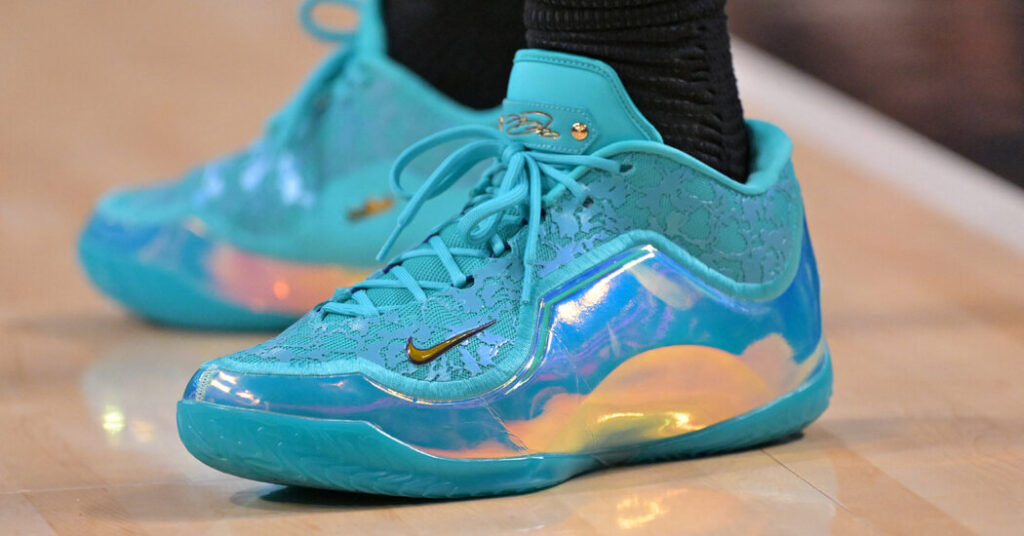
On Tuesday, one day after the 40th observation of the federal holiday honoring Martin Luther King Jr., Nike is planning an unusual tribute to the civil rights icon: a sneaker in a shade of teal inspired by the site of his assassination.
The color of the sneaker — a special “Honor the King” edition of Nike’s popular LeBron XXIII basketball shoe — nods to the exterior of the Lorraine Motel in Memphis, where King was killed in 1968. The assassination represents a painful chapter in the history of the city, one long darkened by a shadow of shame over its role in a national tragedy. In 1991, the motel was reopened as the National Civil Rights Museum.
LeBron James, the N.B.A. superstar after whom the shoes are named, debuted the sneakers during a game on Jan. 2, when his Los Angeles Lakers took on the Memphis Grizzlies. The “Honor the King” sneaker is part of a string of releases that are meant to pay homage to Mr. James’s 23 years in the league, according to Nike.
The decision to have the shoe’s color palette mimic the aqua signage and detailing of the Lorraine Motel was swiftly met with negative feedback after images of the shoes were posted online. But according to a company spokesman, that was perhaps to be expected.
“Design is so subjective, and some people the design will resonate with, and others maybe less so, and obviously that becomes a little bit more charged when you have bigger principles at play,” John Jowers, Nike’s vice president for communications, said in an interview. “I think the intent, though, was really to pay homage to Dr. King, his life and his legacy.”
This is not the first time that Nike has turned to Black history for inspiration. In 2020, the company created Martin Luther King Jr. on-court jerseys for the Atlanta Hawks, Mr. Jowers said. And in 2018, Nike released an all-black Air Force One sneaker with the word “EQUALITY” printed on the heel for Black History Month. But neither of those alluded to the tragic ending of King’s life.
“We believe that our track record of support in this area kind of speaks for itself,” Mr. Jowers said.
Some sneakerheads, like the photographer Randy Singleton, 32, found the design to be in poor taste.
“Who is this shoe for?” Mr. Singleton, who learned about the shoes from a Sneaker News post on Instagram, asked during a phone interview. “Out of all the things to relate back to Dr. King Jr., the motel where his life was taken as inspiration for the shoe is outrageous.”
According to Russell Wigginton, the president of the National Civil Rights Museum, the museum learned about the shoe a few days ago, just as everyone else did.
“We certainly don’t mind people recognizing and appreciating the work that we do and what happened here,” Dr. Wigginton said on Thursday. “But we have not been a part of any aspect of that, of the sneaker coming out.” Nike is a longtime donor to the museum, and according to Dr. Wigginton, N.B.A. teams and players including Magic Johnson and Mr. James have supported its mission in the past.
Martin Luther King III, King’s firstborn son, declined to be interviewed for this article. And representatives for Bernice King, the civil rights leader’s younger daughter and the chief executive of the King Center, said Ms. King was unavailable for an interview in the busy days leading up to the King holiday.
Nike’s brightly colored commemoration of King’s legacy comes a month after the Trump administration announced that the National Park Service would no longer offer free admission on Martin Luther King’s Birthday and Juneteenth, two holidays honoring Black history.
For Dr. Wigginton, the shoe arrives at a pivotal moment in the country’s journey.
“We are in a moment where civil and human rights dimensions are under threat and we have been here before as a society,” he said. “The civil rights movement is how we got through that.”
“One of the things that Dr. King taught us,” he added, “is you have to prepare for better days.”
Sandra E. Garcia is a Times reporter covering style and culture.
The post New Nike Shoe Evokes Motel Where Martin Luther King Jr. Was Killed appeared first on New York Times.